Water Heater: Electric, Gas or Heat Pump, What to Choose
A water heater lasts 10 to 15 years in Quebec. Past that, the question isn't if to replace, it's when and with what. Three technologies exist for residential use: electric (the standard for 40 years), natural gas or propane (less common but faster), and heat pump (integrated compressor, more expensive upfront but very efficient). The right choice depends on your current energy cost, available space, and your ownership horizon. Here's the full comparison with costs, lifespan, subsidies, and signs it's time to replace.
The 3 technologies explained
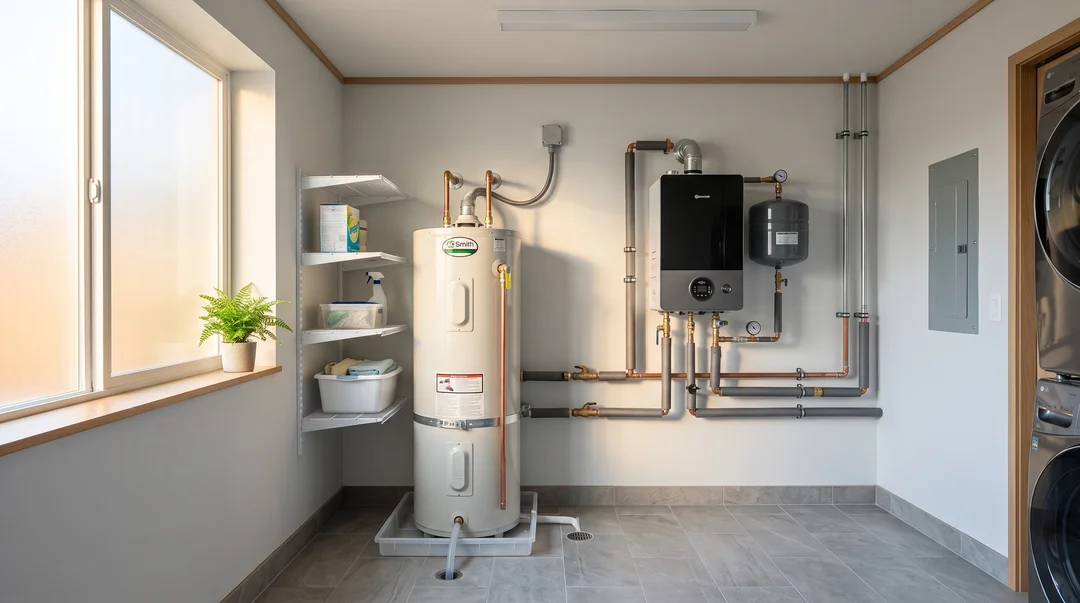
Electric water heater. A 40 to 80 gallon tank with two electric elements heating the water. Mature, simple, silent technology. It's the Quebec standard because Hydro-Québec residential electricity is among the cheapest in North America (~0,082 $/kWh on Rate D). Annual operating cost for a family of 4: 400 $ to 600 $. Needs no evacuation duct, fits in a closet, mechanical room, or enclosed bathroom.
Natural gas or propane water heater. A similar tank with a gas burner under the vessel and a vertical evacuation duct (chimney or wall-vent fan). Hot water recovery 2 to 3 times faster than an electric model of the same volume, ideal for large families or heavy use. Less common in Quebec (under 15 percent of residential stock), more common in Ontario and Western Canada. Annual operating cost: 300 $ to 500 $ depending on Énergir rate (variable). Requires gas network connection and code-compliant venting.
Heat pump water heater. A heat pump extracts heat from the mechanical room's ambient air and transfers it to the water. Consumes 2 to 3 times less electricity than a standard electric model to heat the same volume. Newest tech in Quebec, still rare but growing fast since the LogisVert subsidies in 2023. Requires a room of at least 20 m³ with adequate ventilation (the compressor acts like a reversed air conditioner). Annual operating cost: 150 $ to 300 $.
Detailed costs: purchase, installation and 10-year operation
60-gallon standard electric water heater:
- Unit: 400 $ to 900 $ (Giant, GSW, Rheem, Bradford White)
- Plumber installation: 400 $ to 700 $
- Total purchase + install: 800 $ to 1 600 $
- 10-year operation: 4 000 $ to 6 000 $
- 10-year total cost: 4 800 $ to 7 600 $
60-gallon natural gas water heater:
- Unit: 800 $ to 1 800 $
- Plumber + gas fitter install: 900 $ to 1 800 $ (venting + gas hookup)
- Total purchase + install: 1 700 $ to 3 600 $
- 10-year operation: 3 000 $ to 5 000 $
- 10-year total cost: 4 700 $ to 8 600 $
60-80 gallon heat pump water heater:
- Unit: 1 500 $ to 3 500 $ (Rheem, Bradford White, State)
- Plumber installation: 1 500 $ to 2 500 $ (plumbing hookup + condensate drain)
- Total purchase + install: 3 000 $ to 6 000 $
- 10-year operation: 1 500 $ to 3 000 $
- LogisVert subsidy: up to 1 275 $ (confirm on hydroquebec.com)
- 10-year total cost after subsidy: 3 225 $ to 7 725 $
The heat pump is the most expensive upfront but becomes competitive over 10 years thanks to reduced consumption and the subsidy. Without subsidy, it often remains more expensive than standard electric over a typical water heater horizon.
Lifespan and reliability
Electric. 10 to 15 years on average, up to 18-20 years if the sacrificial anode is replaced every 5 years (rarely done but effective). Common failure points: heating elements (replaceable for 100 $), thermostat, and mainly corrosion of the glass-lined tank once the anode is consumed. Simple to diagnose and repair.
Natural gas/propane. 10 to 13 years, a bit less than electric due to combustion-accelerated corrosion. Annual maintenance recommended (burner inspection, draft check, heat exchanger cleaning). Failure points: thermocouple, gas valve, exhaust fan, exchanger corrosion. Repairs cost more than electric because they require a certified gas fitter.
Heat pump. 15 to 20 years announced by manufacturers, still limited real-world data in Quebec (the tech has been deployed in volume only since 2020). Watch points: the compressor air filter must be cleaned every 3-6 months to maintain efficiency, the compressor can be replaced mid-life (800 $ to 1 500 $) rather than replacing the whole unit.
To maximize lifespan of any tech, annual sediment flushing remains the most cost-effective maintenance. The complete home maintenance calendar, including this flushing, is detailed in the annual home maintenance calendar article.
Subsidies in Quebec
LogisVert (Hydro-Québec) covers replacing a standard electric water heater with an Energy Star-certified heat pump water heater. Typical assistance up to 1 275 $ depending on model, with bonus if combined with other energy efficiency work. Program details evolve, verify at time of work on hydroquebec.com/logisvert. The Rénoclimat program covers the EnerGuide evaluation that can open other subsidies. It's often advantageous to combine energy subsidies in a single project (insulation + heat pump + water heater) to maximize returns.
No subsidy for replacing standard electric with newer standard electric. It's the most common replacement but also the one that doesn't qualify for any subsidy.
Natural gas. Few Quebec residential subsidies in 2026, the province favours electrification. Some municipalities or distributors (Énergir) have occasional programs to check.
Replacement signs and emergency procedure
5 signs to watch on your current water heater:
- Over 12 years old. Statistically leak risk grows exponentially past this age, even without visible signs.
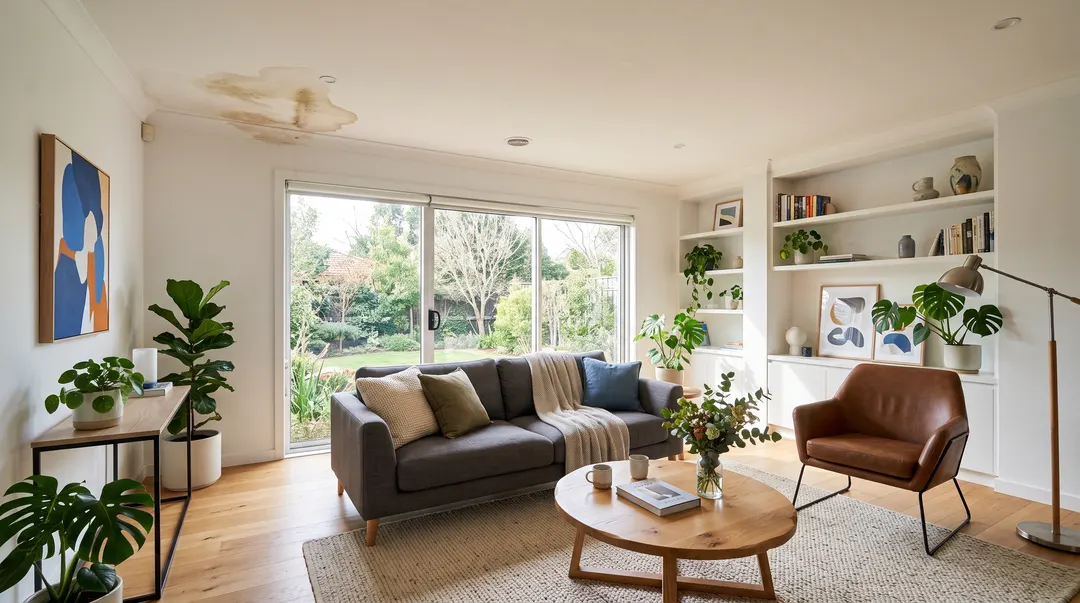
- Hot water turns rusty or cloudy at start of draw. Sign of internal tank corrosion, replacement within 6 to 12 months recommended.
- Knocking or humming noises when the water heater runs. Accumulated sediments at the bottom, flushing may extend life but efficiency is already reduced.
- Sudden cold water after a few minutes of shower when it wasn't the case before. One of the electric elements is probably burned out.
- Puddle at the base of the tank. Active leak, urgent replacement within 24 to 72 hours to avoid major damage to floor and foundation.
Emergency procedure for major leak:
- Close water supply at the valve on the cold line above the water heater.
- Close electrical supply at the water heater breaker (or shut off gas at the local valve).
- Open the drain valve at the bottom of the water heater and connect a hose to a floor drain to empty the tank without damage.
- Call a plumber for emergency replacement (24-72 h in metro region, longer in rural areas). Depending on your area, see plumbers in Montreal or plumbers in Quebec City.
- For a renovation project that includes the water heater among other mechanical work, a general contractor coordinates the whole.
Frequently Asked Questions
How long does a water heater last in Quebec?
10 to 15 years on average for a standard electric model, 10 to 13 years for gas, 15 to 20 years announced for heat pump (still limited real-world data). Water quality (hardness, sediment) and maintenance (annual flushing, anode replacement) can shift these by several years.
Is a heat pump water heater really worth the investment?
With the LogisVert subsidy and a 15+ year lifespan, yes for a homeowner staying in the house at least 8-10 years. Without subsidy or on a shorter horizon, the return is marginal compared to a standard electric. The heat pump also cools and dehumidifies the room where it sits, a plus in a damp basement.
Can I install my own water heater in Quebec?
No for gas (mandatory gas fitter permit) and heat pump (240V electrical hookup + condensate + sometimes municipal permit). Standard electric is technically doable for an advanced DIYer, but the manufacturer's warranty almost always requires professional installation and 240V wiring requires a certified electrician to avoid insurance issues in case of loss.
Should I flush the water heater annually?
Recommended, yes, annual sediment flushing extends life by 2-4 years on average. Takes 30-45 minutes with a hose connected to the drain valve. Most homeowners never do it and replace their water heater sooner than needed.
Is a tankless water heater relevant in Quebec?
Rarely. Instant electric models require huge amperage (120 A for family flow) that most 200 A residential services can't dedicate. Instant gas models (Rinnai, Navien) work well but cost 3 000 $ to 5 000 $ installed, a premium rarely justified for typical Quebec residential use.
Ready to start your project?
Describe your work, choose how many quotes you want to receive, and compare qualified contractors near you. Free and no commitment.