

Annual Home Maintenance: Complete Month-by-Month Calendar
A Quebec home needs about thirty maintenance actions a year. Without a calendar, you easily forget half of them, and that's what turns a 200 $ check into an 8 000 $ repair three years later. The furnace filter that eventually clogs the blower, the French drain that quietly sabotages itself, the window caulking that creates a slow infiltration. Here's a month-by-month calendar, what to keep in your maintenance kit, and the line between what you do yourself and what you delegate.
The month-by-month calendar
This calendar covers standard tasks for a single-family home or duplex in Quebec. To adapt for condos (shorter list, since the syndicate handles exterior).
| Month | Key actions |
|---|---|
| January | Monitor roof snow load after every storm. Calcium or abrasive on balcony and stairs. Visual check for ice forming at gutters. |
| February | Replace furnace filter (mid-season). Test smoke and CO detectors. Check basement humidity (water stains, window condensation). |
| March | Inspect snowmelt buildup at the base of foundation walls. Test heat pump in cooling mode before the first warm spell. |
| April | Full exterior inspection: roofing, brick, window seals, rotted wood. Open outdoor taps after the last frost. Clean gutters. |
| May | Annual inspection of balconies and decks (flexing planks, wobbly railings). Start AC or heat pump in cooling mode. Install window screens. |
| June | Check caulking around windows and doors (before summer storms). Visual foundation inspection (cracks that appeared after thaw). |
| July | Replace AC filter. Check toilet seal and water drains. Visual inspection of pool or spa. |
| August | Clean the dryer vent line (the #1 fire risk in mechanical systems). 2nd annual test of smoke and CO detectors. |
| September | Close outdoor taps if early frost is forecast. Drain garden hose. Schedule a furnace inspection by a pro before startup. |
| October | Furnace startup + new filter. Chimney sweep (every 1-2 years based on use). HRV inspection. Final gutter cleaning (leaves). |
| November | Final shutoff of outdoor water. Inspect French drain before the last rains. Caulk drafts identified in fall. Stage shovels and abrasive. |
| December | 3rd annual test of smoke and CO detectors (before holidays). Inspect fire extinguishers (expiry date). Check outlets used for decorations. |
The real rhythm: 2 to 4 tasks a month for half the year (spring-fall) and 1 or 2 in quiet months (June, December). No more than 3 to 5 hours a month on average.
The 5 actions you can't skip (ranked by financial impact)
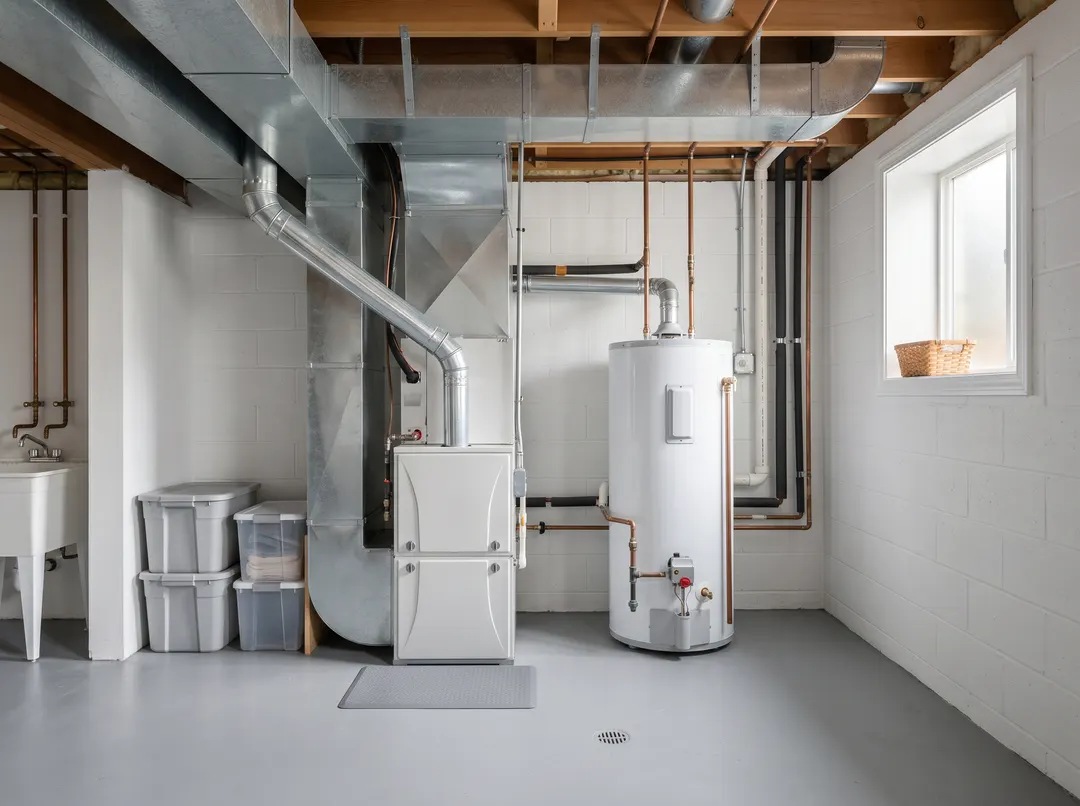
1. Regular furnace filter replacement. Every 3 months during heating season, every 4 to 6 months off-season. A clogged filter strains the blower, which overheats and fails in 2 to 5 years. Filter cost: 15 $ to 30 $. Cost of a burned-out blower motor: 800 $ to 1 800 $. Cost of a prematurely replaced furnace: 6 000 $ to 12 000 $.
2. Annual roof inspection. Ideally in spring after the last melt. A slow leak undetected for 2 years can damage joists, insulation and the ceiling below. Cost of a visual ground inspection with binoculars: 0 $ (15 minutes of your time). Cost of a late repair with interior damage: 15 000 $ to 30 000 $.
3. Spring French drain check. Visual inspection of drain outlets and cleanouts (if accessible). If water doesn't drain after heavy rain, schedule a camera inspection (300 $ to 600 $). A blocked drain saturating the foundation for 3 years causes cracks and infiltration costing 14 000 $ to 28 000 $ to repair. See the guide on basement waterproofing for warning signs.
4. Smoke and CO detectors tested 3 times a year. Battery replaced each fall (October), button-test after each replacement plus 2 other tests during the year. Battery cost: 5 $ to 10 $. Cost of a failed detector during a fire: potentially someone's life, and almost always a coverage exclusion from the insurer if it wasn't functional.
5. Exterior caulking on windows and doors. Annual visual check, redo joints that are cracked or detached. Cost of a tube of sealant and 30 minutes of work: 15 $. Cost of water infiltration in the exterior wall over 2 winters: rotted framing, redo insulation, water damage at 3 000 $ to 8 000 $.
What to keep in your maintenance kit
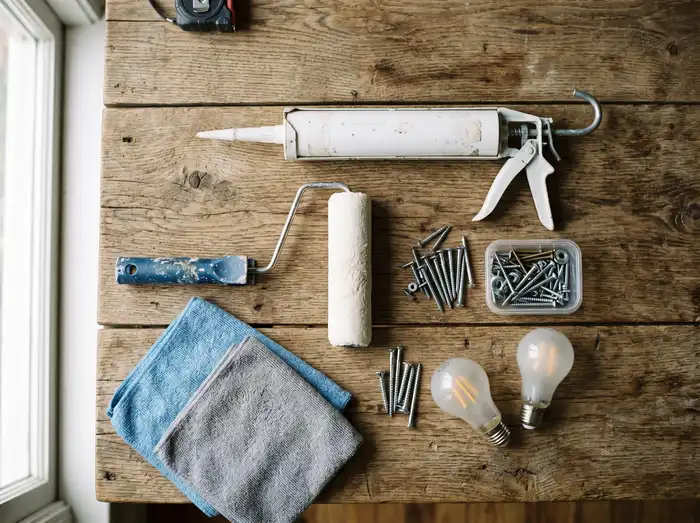
The standard maintenance kit for a Quebec home holds these items. Initial investment between 250 $ and 400 $, built up over time.
Basic tools: caulking gun, tape measure, spirit level, hammer, multi-bit screwdriver, drill driver, wrench set, 4 m articulated ladder, wet/dry vacuum.
Frequent consumables: 4 furnace filters per year (buy at the start of the season to save), interior and exterior silicone sealant cartridges, replacement LED bulbs (matching the colours and wattages used at home), 9V batteries for detectors.
Winter storage: 2 bags of calcium or abrasive, metal snow shovel, roof rake (with extendable handle if the roof is accessible), drain salt, insulated covers for outdoor taps.
Summer storage: garden hose, extra hose nozzles, tool battery charger, insect repellent for the balcony, deck cleaning product.
Documentation: a maintenance journal (paper, app or spreadsheet) listing each task with date, cost and next reminder. Becomes a resale argument at 5 or 10 years.
DIY or call a pro
You do it yourself:
- Filter replacement (furnace, AC, dryer)
- Exterior caulking on windows and doors
- Testing and replacing detector batteries
- Cleaning gutters (with safety in mind, ideally with a second person)
- Replacing light bulbs
- Visual roof inspection (binoculars from the ground)
- Water heater flush (once a year, better than no pro at all)
You call a pro:
- Chimney sweep
- Professional roof inspection (every 3-5 years)
- Camera inspection of the French drain
- Annual furnace service (before heating season)
- Plumbing repairs that touch main lines
- Any electrical work beyond outlet replacement
You must call a pro (RBQ or professional order required), for instance among HVAC contractors in Laval, plumbers in Montreal or roofers in Quebec City:
- Any natural gas or propane work
- Modifying the electrical panel
- Structural modifications to load-bearing walls
- Asbestos removal (hazardous materials)
To pick the right contractor when you need a pro, apply the method described in the guide on renovation permits (some heavier maintenance jobs require one).
The maintenance journal: why keep one
Nobody remembers the last time they had their furnace inspected. Without a journal, you flip between paranoia ("is it due?") and neglect ("I think I did that already"). The journal solves both.
Simple format: a spreadsheet or a paper sheet with columns "date, task, cost, next reminder". No fancy app needed. The point is to answer "when did we last do X?" in 30 seconds.
Priority entries:
- Annual furnace service (done by a pro), date, technician, cost
- Professional roof inspection, date, condition reported, action required
- Chimney sweep, date, condition
- French drain camera inspection, date, result
- Major appliance replacement (water heater, furnace, AC), date, brand, warranty
Resale benefit. A serious buyer always asks "do you have a maintenance history?" An organized journal is a trust argument that can justify a sale price 1 to 2 percent higher on a 15-year-old home, because the buyer knows they aren't buying a bad surprise. On a 500 000 $ home, that's 5 000 $ to 10 000 $ more at sale.
For precise seasonal inspections, we've published dedicated guides: spring home inspection (which details the April-May check after winter), and the calendar of the Quebec construction holiday (worth knowing when scheduling big work with a pro). If the inspection turns up a questionable balcony, see the guide on repair or replace your balcony.
Frequently Asked Questions
How many hours per month does home maintenance take?
About 3 to 5 hours per month on average for a single-family home, but unevenly distributed: 6 to 10 hours in April-May (spring inspection + outdoor startup) and October-November (winter prep + outdoor shutdown), versus 1 or 2 hours in June-July or January-February. The yearly DIY total lands at 40 to 60 hours, plus a few pro visits.
What's the typical annual maintenance budget?
Plan for 1 to 2 percent of the home's value per year for standard maintenance (excluding major renovations). On a 400 000 $ home that means 4 000 $ to 8 000 $ a year, roughly 60 percent for pro services (roofer for roof inspection, chimney sweep, HVAC contractor for the furnace, plumber) and 40 percent for consumables and materials (filters, sealant, bulbs, etc.). Surprise-free years fall under 1 percent. Big-item years (roof, furnace) push above 5 percent.
Do I need a maintenance journal if I've only owned the house 5 years?
Yes, and that's actually the ideal moment to start. A well-kept 5-year journal at resale is worth more than a poorly kept 20-year one. Track what happens from now on, and photograph the home's condition at key moments (roof, foundation, balcony), it becomes a baseline to compare against in 5 or 10 years.
What's the initial investment for the maintenance kit?
250 $ to 400 $ for basic tools (drill, tape measure, level, articulated ladder), 100 $ to 200 $ for one year of consumables (filters, sealant, bulbs), 100 $ to 150 $ for seasonal storage (calcium, shovel, salt). Total around 500 $ to 750 $ from scratch, then 200 $ to 400 $ per year in consumables.
Is it better to do a big annual maintenance check or spread it out?
Spreading it out monthly handles surprises better. A concentrated annual service in May-June (roof inspection + furnace service + gutter cleaning) runs 800 $ to 1 500 $ in one shot. Spread across smaller monthly visits, it's easier to absorb in the monthly budget and catches problems earlier.
Ready to start your project?
Describe your work, choose how many quotes you want to receive, and compare qualified contractors near you. Free and no commitment.