A Modern Bathroom in an Old House
In a century-old house, the bathroom is the room renovated most often, and the one where the house's character disappears fastest. Yet nothing forces you to choose between a comfortable shower and original charm. It comes down to two things: knowing what deserves to stay, and planning for what's hiding behind the walls.
What's worth keeping
Before any demolition, take stock. Some original pieces are almost impossible to find today, or cost a fortune to reproduce.
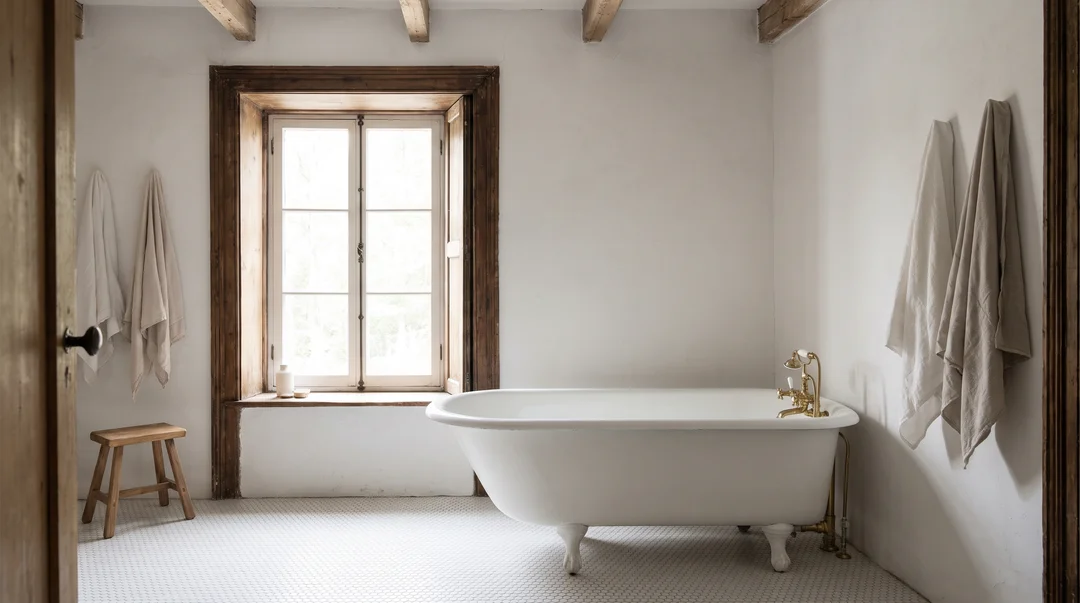
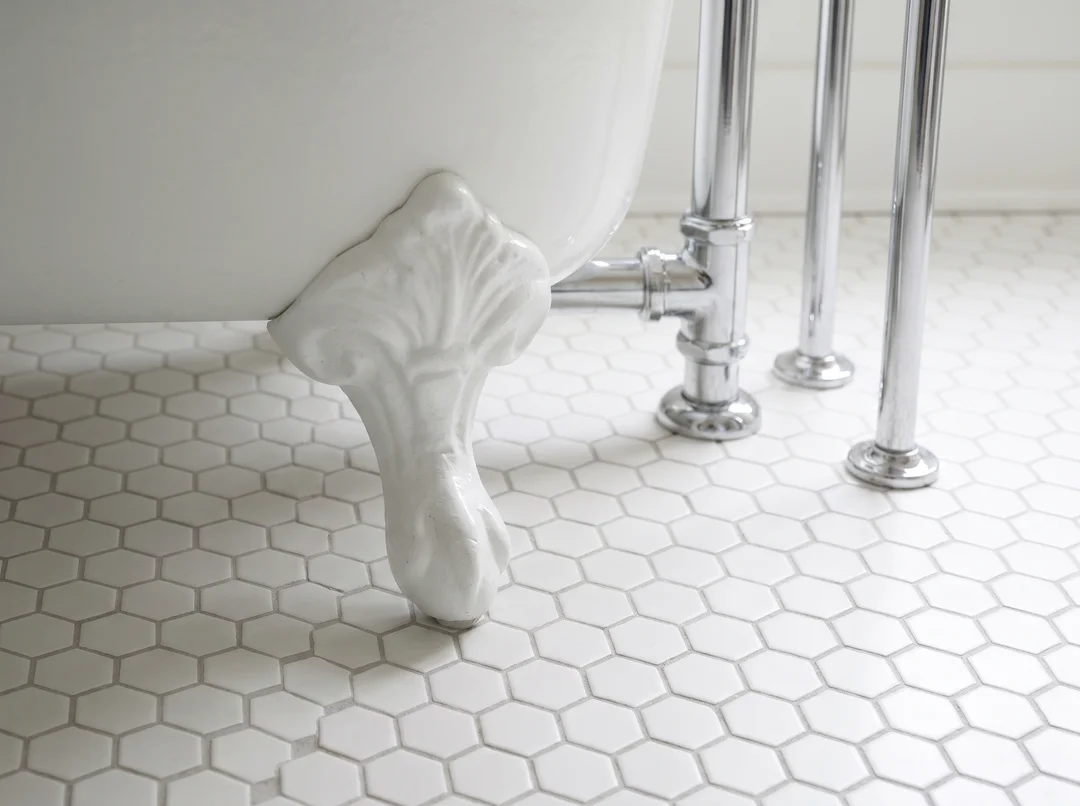
- The cast iron clawfoot tub. Heavy, durable and sought after. Worn enamel can be reglazed on site or in a shop, for a fraction of what a new tub of the same quality costs.
- Trim and door casings. They give the room its scale and depth. Stripping and a coat of satin paint is often all they need.
- The original window. A well-kept wood window can be restored. We cover it in our piece on heritage doors and windows.
- The wood floor under the linoleum. It's sometimes in good shape, but water and wood don't mix in a bathroom. Most of the time it's better protected under new tile than left exposed.
The surprises behind the walls
This is where budgets slip. A house built before 1950 almost always holds surprises once the walls are opened.
Cast iron drains and lead pipes. Cast iron can last a long time, but it rusts from the inside. Lead supply lines have to go: it's a health issue, not a style choice. Set aside a contingency and have a plumber assess the plumbing before you finalize plans.
Out-of-level floors. A few millimetres of sag is enough to crack tile. Joists often need levelling, or an underlayment added, before tiling.
Plaster and lath walls. Thicker and harder than drywall, they make new outlets and blocking harder to add. In the shower area, they're replaced with cement board and a waterproof membrane.
No ventilation. Original bathrooms relied on the window. Without a fan, moisture moves into the walls and the attic. An exhaust fan vented outdoors, ideally on a timer, isn't optional.
A focused old house inspection before you collect quotes prevents most change orders.
Materials that suit an old house
A good rule: pick materials that could have existed when the house was built, in their modern version.
- White hexagon tile on the floor, small format, light grey grout.
- Subway tile on the walls, laid straight, at wainscot height or up to the ceiling in the shower. Formats and grout are covered in our guide to bathroom tile formats.
- Cross-handle or simple lever faucets in chrome, nickel or brass.
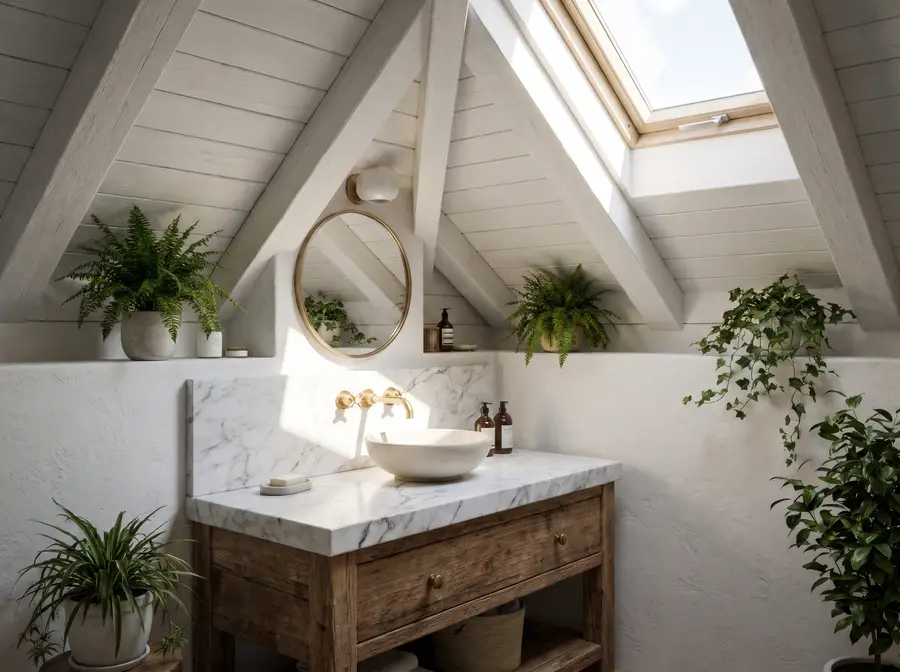
- A vanity on legs, in wood or a converted antique piece, rather than a bulky cabinet.
For installation, a tiler used to old floors will spot levelling problems before they turn into cracks.
Modern comfort that doesn't show
Modern comfort can stay discreet. A curbless shower with a single clear glass panel keeps the walls and window in view. Electric radiant heat under the tile changes everything in winter, and nobody sees it. GFCI outlets and well-placed recessed lighting handle safety and light without cluttering the room.
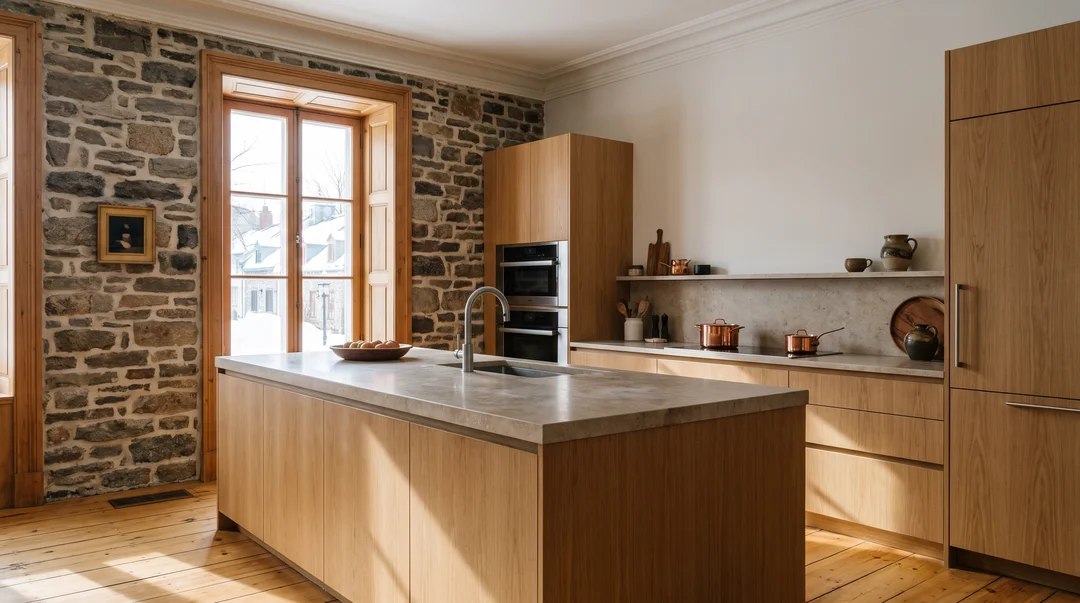
Same logic as a modern kitchen in a heritage home: the new stays quiet, the old stays front and centre.
Frequently Asked Questions
Can I keep an old clawfoot tub?
Usually, yes. A cast iron tub can be reglazed, and its faucet swapped for a modern one. Just make sure the floor can carry its weight when full.
Do I need to replace all the plumbing in an old house?
Not necessarily all of it, but lead supply lines should go. Cast iron drains in good condition can stay; a camera inspection of the drains will confirm it before work starts.
What tile suits a period bathroom?
White hexagon tile on the floor and subway tile on the walls are the most faithful choices. They're simple, timeless, and pair well with wood and cast iron.
Is an exhaust fan required in a bathroom?
In a major renovation, mechanical ventilation vented outdoors is required by most codes, and it's essential in an old house. Without it, moisture damages plaster, wood and insulation.
How long does a bathroom renovation take in an old house?
Expect a few weeks more than in a recent house, because of what turns up behind the walls. A good inspection before work begins cuts down on delays.
Post your project
Describe your work once, and contractors in your area who do this kind of work can get back to you. It's free, with no commitment.
Post a project