Fieldstone House: Maintenance and Renovation
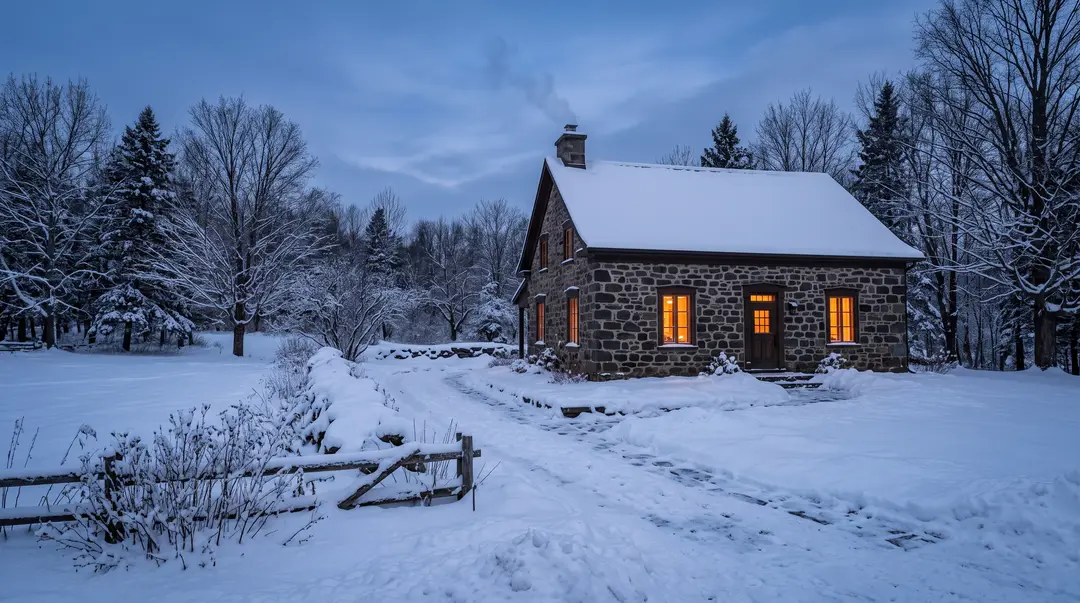
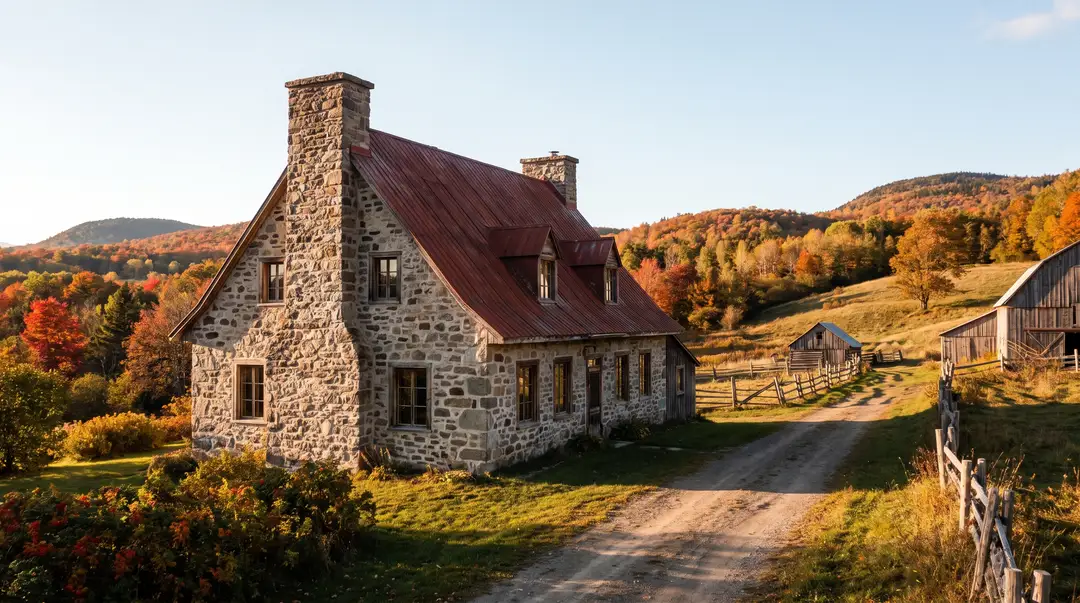
You see them along the Côte-de-Beaupré, on Île d'Orléans, in Charlevoix and along the Richelieu: houses with thick walls made of stones gathered from the fields, laid as found and bound with lime mortar. Many are more than 200 years old and still sound. They rarely deteriorate because of age. They mostly deteriorate because of renovations done with modern methods that do not suit them.
How to recognize a true fieldstone house
A few signs give it away:
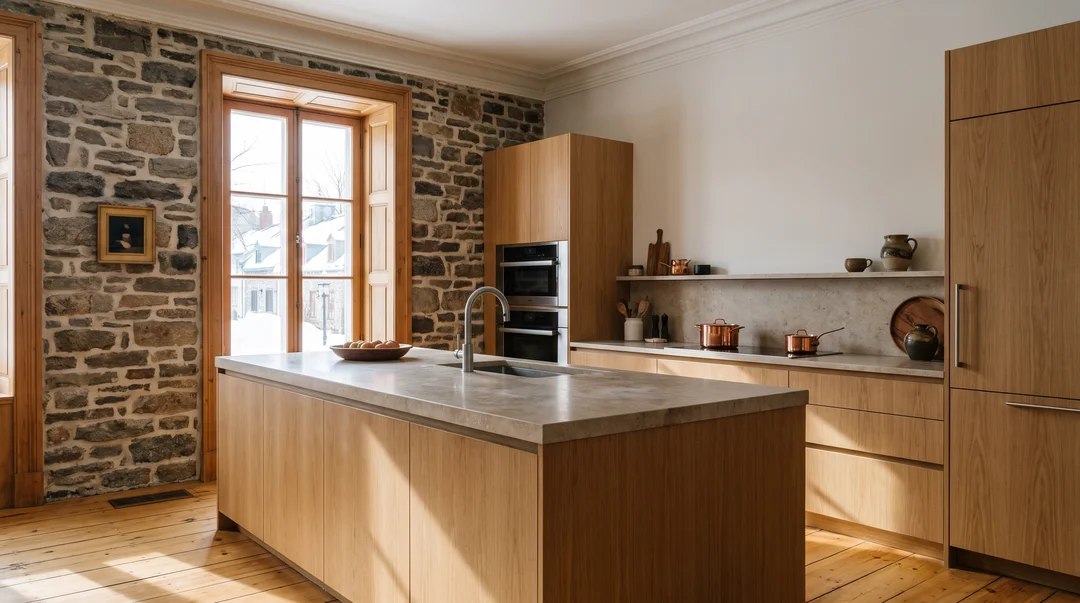
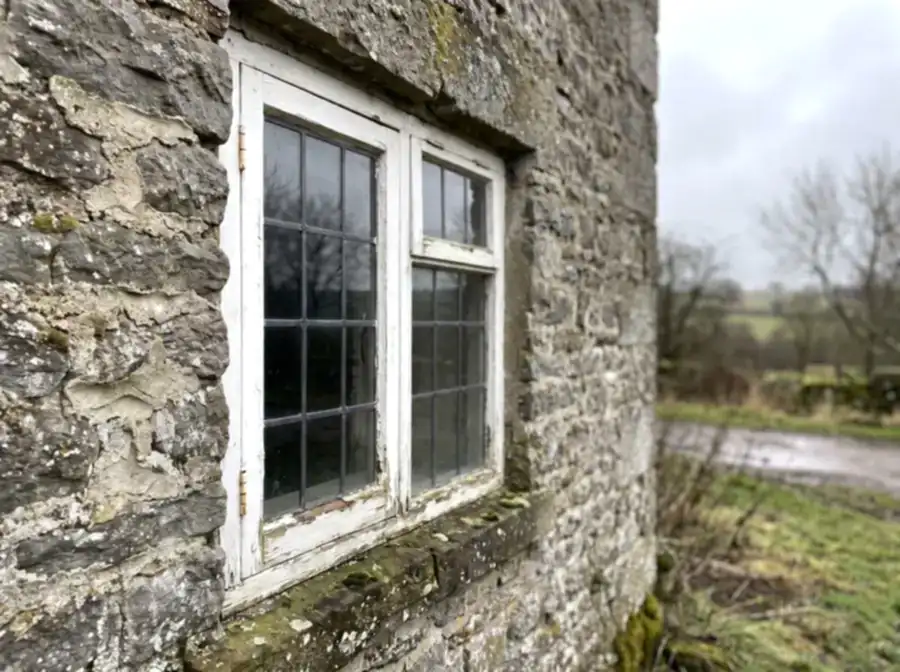
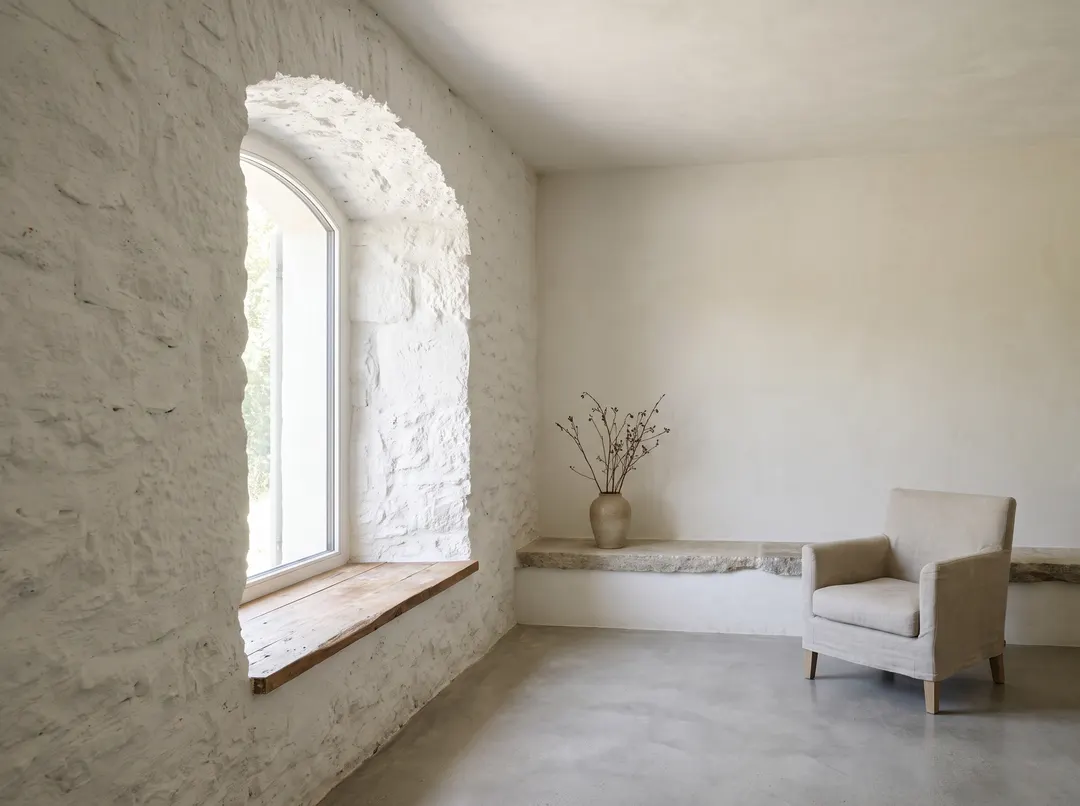
- Very thick walls, often 60 cm to nearly a metre, visible in the deep window recesses.
- Uncut stone in irregular shapes and sizes, unlike the dressed stone of city houses.
- A solid wall with no cavity, often two faces of stone filled with rubble and mortar.
- Soft, pale mortar made with lime, which crumbles slightly under a fingernail when it is original.
That last point matters most. Everything about maintaining these houses revolves around the mortar.
Lime mortar: rule number one
A fieldstone wall is not watertight, and it is not meant to be. It absorbs moisture, then lets it dry toward the outside and the inside. Lime mortar is flexible and vapour-permeable: it is what lets the wall breathe. It is also softer than the stone, so the mortar wears away instead of the stone.
The trouble comes from Portland cement, widely used to repoint these houses in the 20th century. It is hard and barely permeable. Water gets trapped behind the joints and escapes through the stone itself. With frost, the stone spalls or crumbles at the surface while the cement joint stays intact. You often see walls where cement joints stick out from eroded stones.
Repointing with a suitable lime mortar, after carefully removing the cement, is often the best investment on this type of house. Our article on why mortar matters explains the types of lime and the signs that a joint needs redoing.
Moisture and insulation: the costliest trap
A stone house is cold in winter, and the urge to insulate is natural. It is also the mistake that causes the most damage when done wrong.
Putting a polyethylene vapour barrier and batt insulation against the inside face of a stone wall stops the wall from drying inward. Moisture builds up at the dew point, often right behind the insulation. The result: mould, rot in the joists that bear on the wall, and swelling plaster.
Approaches that work better:
- Fix water sources first: gutters, grading, open joints, chimney flashing.
- Choose vapour-permeable insulation such as hemp-lime, wood fibre or cork, installed against the wall with no sealed vapour barrier.
- Accept partial insulation rather than chasing new-build performance. The comfort gain is real even with a modest thickness.
- Ventilate the house, especially the basement, to remove indoor moisture.
This is covered in detail in our guide to insulating an old wall without trapping moisture.
Cracks, lintels and foundations
A 200-year-old house has moved, and some cracking is normal. What matters is whether it changes:
- A thin, stable crack in a joint is usually harmless. A simple dated pencil mark lets you check whether it widens.
- A stair-step crack that keeps opening, or a crack running through the stones, often points to foundation movement or a drainage issue.
- Lintels over doors and windows, in wood or stone, are weak points. A rotten wood lintel lets the stone above sag.
- A wall that bulges or leans needs a prompt assessment by an engineer.
Before buying or starting work, a heritage home inspection by someone who knows traditional masonry avoids nasty surprises.
Permits and heritage protection
Many fieldstone houses stand in protected areas, such as the Île-d'Orléans heritage site. Others are individually classified or cited, or located where the municipality enforces rules on building appearance.
In those cases, exterior work such as repointing or replacing windows or the roof may require authorization from the Ministère de la Culture or the municipality, on top of the usual permit. Check with your city before signing a contract. The Répertoire du patrimoine culturel du Québec lets you see whether a house or area is protected.
Choosing the right mason
Not every mason works with lime. Before hiring a mason, ask a few questions:
- Have they repointed fieldstone walls with lime mortar before?
- How will they remove old cement joints without damaging the stone?
- Which mortar do they recommend, and why?
- Can they show photos of similar jobs?
A mason who suggests cement "because it is stronger" is not the right fit for this house.
Frequently Asked Questions
Can you repoint a stone house with cement?
It is strongly discouraged. Cement is harder and less permeable than the stone, so it traps moisture and causes the stone to spall in freeze-thaw cycles. Lime mortar remains the standard for these walls.
How long does lime repointing last?
Done properly, lime repointing lasts for decades. The joints wear slowly instead of the stone, which is exactly the intended behaviour. You then redo only the most exposed areas.
Can a fieldstone house be insulated from the inside?
Yes, carefully. Fix water sources first, then use vapour-permeable insulation without a polyethylene barrier. Insulation that is too airtight makes moisture condense inside the wall.
Are cracks in a stone wall serious?
Not always. A thin, stable crack in a joint is common on an old house. A crack that widens, runs through stones or comes with a bulging wall calls for an engineer's opinion.
Do you need a permit to repoint a stone house?
It depends on the municipality and the status of the house. On a heritage site or for a cited house, authorization is often required for exterior work. Check with your city before starting.
Post your project
Describe your work once, and contractors in your area who do this kind of work can get back to you. It's free, with no commitment.
Post a project