Heritage Windows and Doors: Repair or Replace?
The windows and doors of an old house are not just openings in a wall. They are architectural signatures, elements that date the building, reveal its style, and directly contribute to its heritage value. Yet they are often the first things homeowners want to replace, drawn in by promises of energy savings from modern windows. Before signing a contract with a PVC installer, it is worth understanding what you are about to sacrifice, and whether repair might actually be the better decision.
Windows That Tell the Story of Your Home
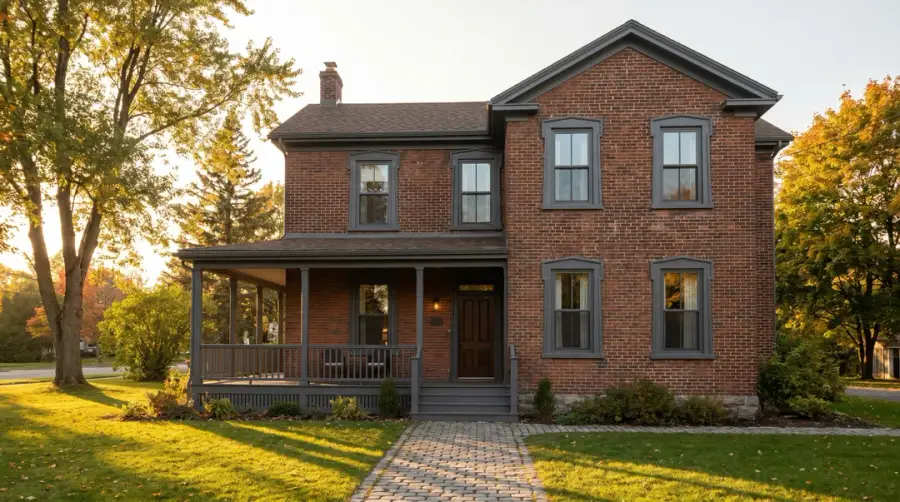
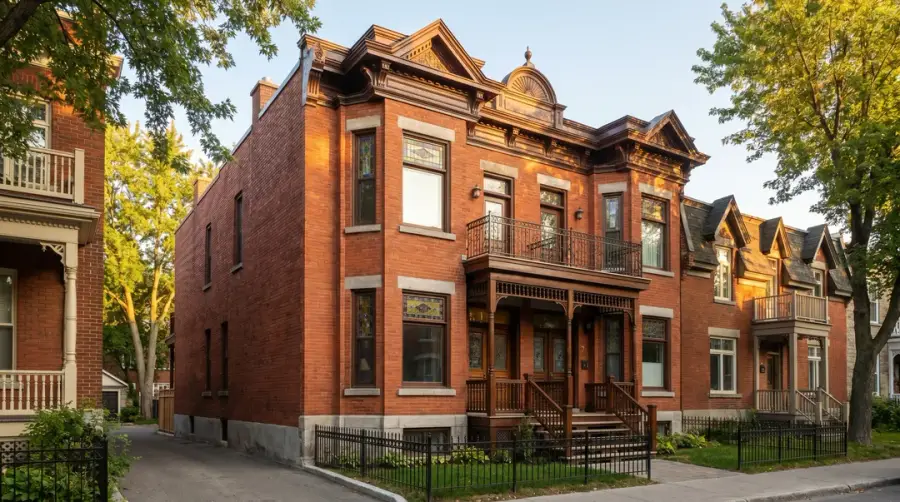
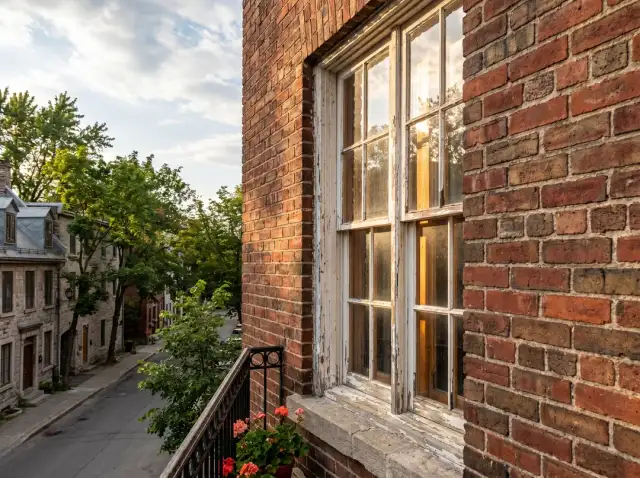
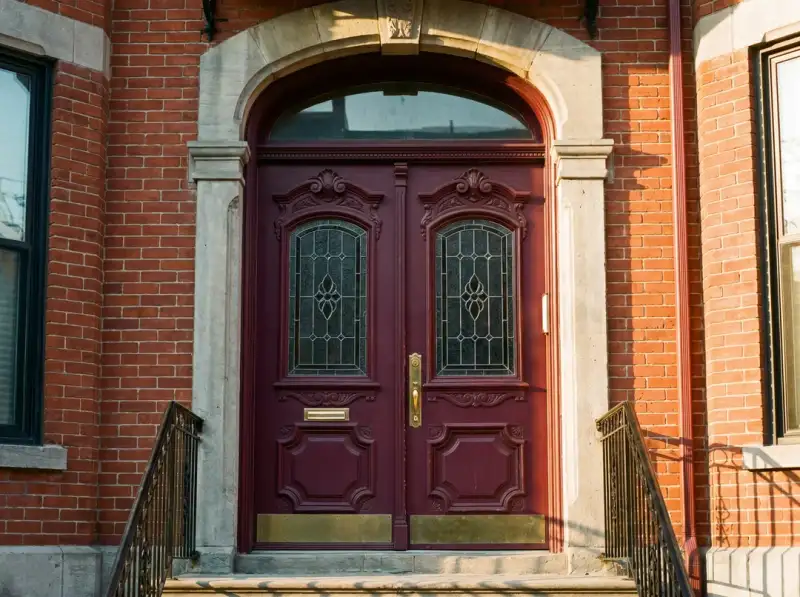
Every era has its windows. Quebec houses from the 19th century typically feature double-hung sash windows, recognizable by their two vertically sliding frames. Second Empire homes often have casement windows beneath mansard dormers. More ornate Victorian buildings incorporate bay windows, round oculus windows in the gables, and stained glass in door transoms.
These historic joinery pieces are made from solid wood (pine, oak, fir) with mortise-and-tenon assemblies. This is nothing like contemporary window construction. An original sash window, well maintained, can last 150 years. A standard PVC window rarely lasts more than 30 to 40 years before yellowing, warping, or becoming irreparable.
Repair: When It Is Possible (and Often Preferable)
The vast majority of old windows are repairable. If a window lets in drafts, it is rarely a structural problem: simple silicone caulking or V-strip weatherstripping can fix 80% of air infiltration issues at minimal cost.
A glass or polycarbonate panel can also be added inside an existing window to create an insulating air gap without touching the original frame. The thermal result is comparable to standard double glazing, and the authenticity is preserved.
If the wood is partially degraded on the surface, an epoxy consolidant can stabilize the fiber without replacing the entire piece. Heritage carpentry specialists routinely use this technique on window sills and bottom rails. As for a cracked pane, it never justifies replacing the entire sash: a glazing specialist can replace the glass individually, even in non-standard shapes. Depending on your area, see glazing contractors in Montreal or glazing contractors in Laval.
The practical rule: if the wood is sound through 80% of its cross-section, repair is economically and historically justified.
When Replacement Becomes Necessary
There are situations where restoration is no longer realistic. Deep rot that has compromised the wood throughout its full section leaves the sash structure failing beyond recovery. Irreversible warping (a sash that no longer closes properly and cannot be planed without losing structural integrity) also calls for replacement. The same goes for failed locks and mechanisms on exterior doors, which create an immediate security problem.
In these cases, replacement should ideally use wood joinery that replicates the original profiles. Shops specializing in heritage window reproduction exist in Quebec and can recreate profiles identically. PVC or aluminum is often prohibited in classified heritage zones and strongly discouraged in any heritage building.
The PVC Trap
PVC window salespeople promise substantial energy savings. The reality is more nuanced.
A repaired and weatherstripped old double-hung window achieves thermal values close to standard double glazing. The difference on your heating bill is often marginal. PVC itself yellows, becomes brittle, and cannot be repaired, at 30 to 40 years, it requires complete replacement. Well-maintained wood can last generations.
On a heritage property, replacing original windows with PVC lowers market value in the eyes of informed buyers and specialized appraisers. There is also a moisture problem that few salespeople mention: highly airtight windows block the natural vapour exchange in old masonry walls. 19th-century masonry is designed to breathe, overly sealed windows can worsen moisture problems in the walls.
Available Grants
Several assistance programs exist to support the restoration of heritage buildings. Programme Rénovation Québec (SHQ) offers financial assistance for improvement work including windows and doors. Rénoclimat may apply to energy efficiency improvements including window restoration. Montreal, Quebec City, and several other cities have specific programs for owners of buildings in heritage zones.
Before starting, a consultation with your municipality's heritage department can not only open financial doors, but also help you avoid costly regulatory mistakes.
Frequently Asked Questions
How much does it cost to restore an old double-hung window?
For a complete restoration (wood consolidation, glass replacement, weatherstripping, and hardware) budget between $400 and $900 per window depending on condition and size. This is often less expensive than a replacement with original-profile wood, and far less than a full set of quality new windows.
Can double glazing be added to an old window without replacing the sash?
Yes. Interior panel systems install inside the existing frame and create an effective insulating air gap. The thermal result is excellent without touching the original window.
Is PVC prohibited in heritage buildings?
In designated heritage zones (such as certain neighbourhoods in Montreal and Quebec City) municipal regulations specify required materials and profiles. PVC is often explicitly excluded. Check with your local heritage department before any replacement project.
How long does a well-maintained wood window last?
A solid wood window maintained regularly (painted every five to seven years, caulked annually) can last 80 to 150 years. Original windows from 19th-century Victorian houses are still in place and functional in thousands of Quebec homes.
Ready to start your project?
Describe your work, choose how many quotes you want to receive, and compare qualified contractors near you. Free and no commitment.