Insulating an old wall without trapping moisture
Insulating the walls of an old house looks like the obvious upgrade. Heating bills drop, rooms stop feeling drafty, and the building finally catches up with modern standards. Yet done carelessly, it is one of the fastest ways to damage a century-old building. Not because insulation is bad, but because it changes how the wall deals with water.
A solid stone or brick wall has lasted a hundred years thanks to a fine balance: it soaks up moisture, holds it, then releases it on both sides. Heat from inside the house is part of that balance. Take it away with six inches of batts and a sheet of polyethylene, and the wall is suddenly working under conditions it was never built for.
How an old wall actually handles moisture
A modern wall is designed as a stack of barriers: air barrier, vapour barrier, insulation, drainage gap, cladding. Each layer stops something. An old masonry wall works the other way around. It is massive and breathable. It doesn't block water, it manages it.
Wind-driven rain wets the outer face of the brick or stone, and some of that water soaks in, sometimes several centimetres deep. Traditional lime mortar, more porous than the brick around it, acts like a wick and helps the water back out. Between storms, the wall dries outward through wind and sun, and inward thanks to the warmth of the house.
That last part is what nearly everyone forgets. In an uninsulated house, heat constantly flows through the wall. It keeps the masonry above freezing for much of the winter and speeds up drying. The wall is inefficient, but it is warm, and a warm masonry wall is one that lasts.
What changes when you insulate from the inside
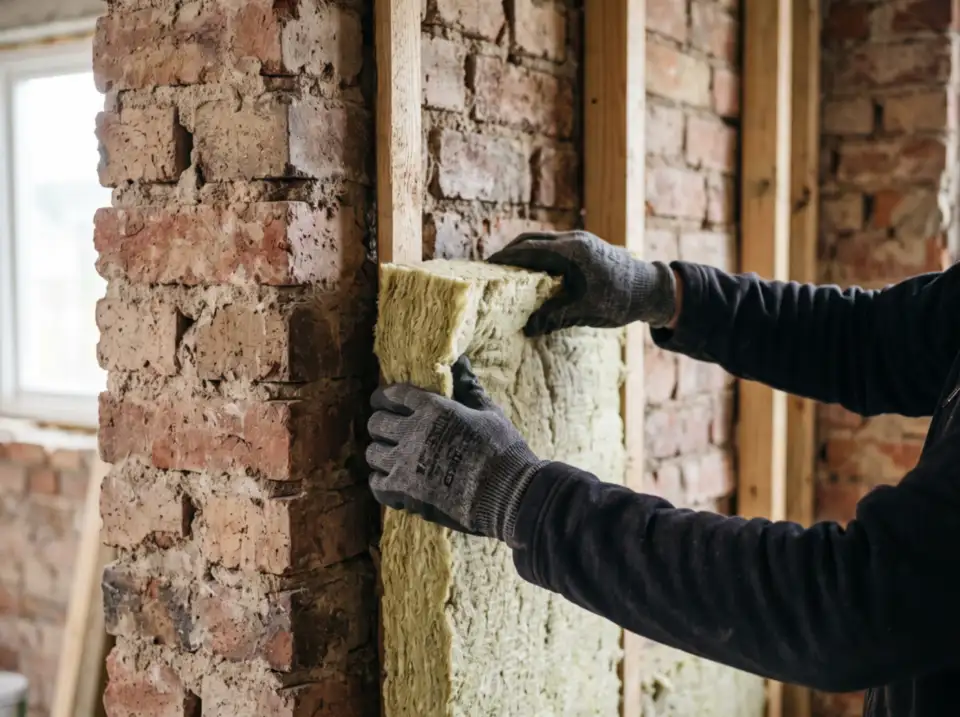
Adding insulation on the interior side cuts the wall off from its heat source. Three things follow, and they stack up.
The masonry gets colder. The brick now spends the winter at or near outdoor temperature. Every thaw followed by a hard freeze becomes a full freeze-thaw cycle inside the wall, where the house used to shield it.
It dries more slowly. Without heat flowing out from inside, rain absorbed in the fall stays in the wall longer. Cold, wet brick at the moment of a freeze is the exact recipe for spalling.
Indoor vapour can condense against the wall. Warm indoor air carries water vapour. If that vapour gets through the insulation and reaches the now-cold inner face of the masonry, it condenses, right in the hidden zone behind the insulation where nobody will see it.
Signs the wall is struggling
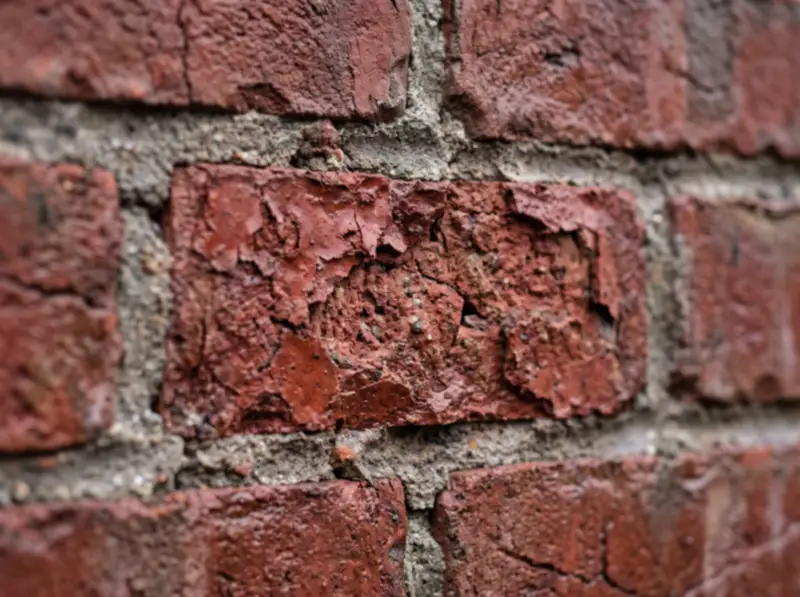
The damage doesn't show up the first winter. It surfaces over three to ten years, often after the house has changed hands, which is why the same mistake keeps being repeated.
- Spalling brick: the face of the brick pops off in flakes or chunks. It is the textbook sign of freezing in over-wet masonry.
- White efflorescence on the facade: salts carried out by water that now lingers in the wall longer than it used to.
- Mortar joints eroding faster than on neighbouring walls that were left alone.
- Musty smell or stains at the bottom of interior walls, behind the baseboards.
- Softening joist ends. In masonry houses, floor joists often bear directly in the wall. Once the wall is insulated from inside, that pocket turns cold and damp, and rot sets in quietly. It is the most expensive item on this list and one worth adding to any heritage home inspection.
The polyethylene trap
In new Quebec construction, the reflex is a poly vapour barrier on the warm side. On an old masonry wall, that reflex can backfire.
In summer, the sun heats brick that is still wet from the last rain. The vapour it gives off moves inward toward the cooler, air-conditioned interior. It passes through the insulation and hits the polyethylene, which stops it on the wrong side. Condensation forms behind the sheet, against the drywall or inside the insulation, and the mould gets discovered at the next renovation.
The fix isn't to drop vapour control altogether, since indoor vapour in winter is still a real risk. It is to use a variable-permeance membrane (often called a "smart" vapour retarder), which tightens up in winter and opens in summer so the wall can dry inward. Paired with careful air sealing, it is the safest approach for a solid masonry wall.
Forgiving materials, and unforgiving ones
Insulation materials don't all react to moisture the same way.
- Mineral wool: vapour-open, non-combustible, and tolerant of some moisture without slumping. A reasonable choice with the right membrane.
- Wood fibre and cork: vapour-open and able to buffer and redistribute moisture. Widely used on old buildings in Europe and easier to find here every year.
- Lime-based insulating plasters (hempcrete, lime-cork): modest thermal value, but they behave much like the original wall. Ideal when the main goal is getting rid of that cold-wall feeling.
- Closed-cell spray foam: airtight and vapour-tight in a single pass, which is why it is tempting. But it shuts down inward drying entirely and can hardly be removed without destroying what it covers. Some specialists use a thin layer after assessing the wall. It shouldn't be the default.
- Foam boards glued straight onto masonry: best avoided, for the same reasons, plus questionable adhesion on an uneven surface.
One rule outweighs all the others: insulate less, but better. A modest R-value keeps the masonry a little warmer and lowers the freeze risk. On an exposed wall, chasing new-build performance is often the riskiest call in the whole project.
The order of work that protects the building
Before choosing any insulation, cut down the water getting into the wall. Rain, not vapour, supplies most of the moisture in masonry.
- Deal with water sources. Overflowing gutters and downspouts, missing flashing over windows, flat window sills, ground sloping toward the foundation. Every litre that never reaches the wall is a litre that can't freeze inside it.
- Repoint where needed, with a compatible mortar. A mason used to older buildings will know how to mix the lime and avoid a mortar that's too hard, which would make the brick crack instead.
- Insulate the low-risk areas first. The attic, basement rim joists and air sealing around openings often deliver more comfort than the walls, without touching the masonry. Well-sealed heritage windows with storm sashes also go a long way.
- Assess the wall before insulating it. Exposure to prevailing winds, brick condition, joists bearing in the masonry. For a bigger project, a hygrothermal model by a building envelope professional shows how the wall will behave over several years.
- Pick a complete system, not a product: vapour-open insulation, a suitable membrane, a continuous air barrier and, where it makes sense, moisture sensors at the joist ends to keep an eye on the first few winters.
An insulation contractor who knows older buildings will ask about water and masonry before talking about insulation thickness. That alone tells you a lot about who you're dealing with.
What about wood-frame walls?
Wood-frame houses with clapboard or shingle siding raise a different, often simpler, question. When the siding has to be redone anyway, the cavities can be dense-packed with cellulose and a layer of continuous insulation added outside, which keeps the structure on the warm side.
Two checks come first before blowing anything into an old wood wall. Wiring: old knob-and-tube circuits must be removed before being buried in insulation, or they can overheat. And balloon framing, where studs run in one piece from the sill to the roof: air travels freely between floors, and those channels need blocking for the insulation to do any good.
When exterior insulation makes sense
Technically, exterior insulation is the best option for masonry: the wall stays on the warm side, shielded from frost. On a heritage facade, though, it wipes out what gives the building its character, and municipal bylaws in protected areas often restrict or refuse it.
It remains an option on a plain rear wall, on an addition, or on a wood house whose siding is due for replacement anyway. Work under the Rénoclimat program requires an energy evaluation before and after, which is also a good way to measure the real gain before deciding how far to go.
Frequently Asked Questions
Can you insulate a solid brick wall from the inside?
Yes, carefully. Reduce the water reaching the wall first, choose a vapour-open insulation, use a variable-permeance membrane rather than poly, and keep the thickness modest. Walls that take a lot of wind-driven rain carry the highest risk.
Why not just install a poly vapour barrier?
Because in summer, vapour from rain-soaked brick moves toward the inside of the house. Polyethylene stops it on the wrong side and condensation builds up behind it. A smart membrane slows vapour in winter and lets the wall dry out in summer.
Is spray foam a good idea on a stone wall?
Rarely as a default. It seals air well, but it blocks inward drying and is nearly impossible to remove without damage. Some specialists apply a thin layer after assessing the wall, never blindly.
How long before a bad insulation job shows damage?
Usually three to ten winters. The first signs are brick faces flaking off, white efflorescence and eroding mortar joints. Rotting joist ends stay hidden much longer.
Where should I start to cut heating costs in an old house?
With the attic, air sealing and the basement rim joists. These upgrades improve comfort a lot without changing how the masonry behaves. Walls come later, once water sources are under control.
Ready to start your project?
Describe your work, choose how many quotes you want to receive, and compare qualified contractors near you. Free and no commitment.