In a bathroom, tile often covers more area than any other material in the house: the floor, the shower walls, sometimes every wall from floor to ceiling. It is also a choice you will not redo for twenty years. Three decisions completely change the result: the tile format, the grout colour, and how it is laid.
Ceramic or porcelain: the difference that matters
In stores, the two words are often used as if they meant the same thing. They do not.
Porcelain is fired at a higher temperature and absorbs very little water. It is denser and tougher, and it is the right choice for floors and for inside a shower.
Standard ceramic is more porous and often lighter. It works very well on walls outside the shower and on backsplashes, where it offers a wider range of colours and glazes, including handmade tile.
As a rule of thumb: porcelain on the floor and in the shower, ceramic or porcelain on the walls.
Format: large tiles or mosaic
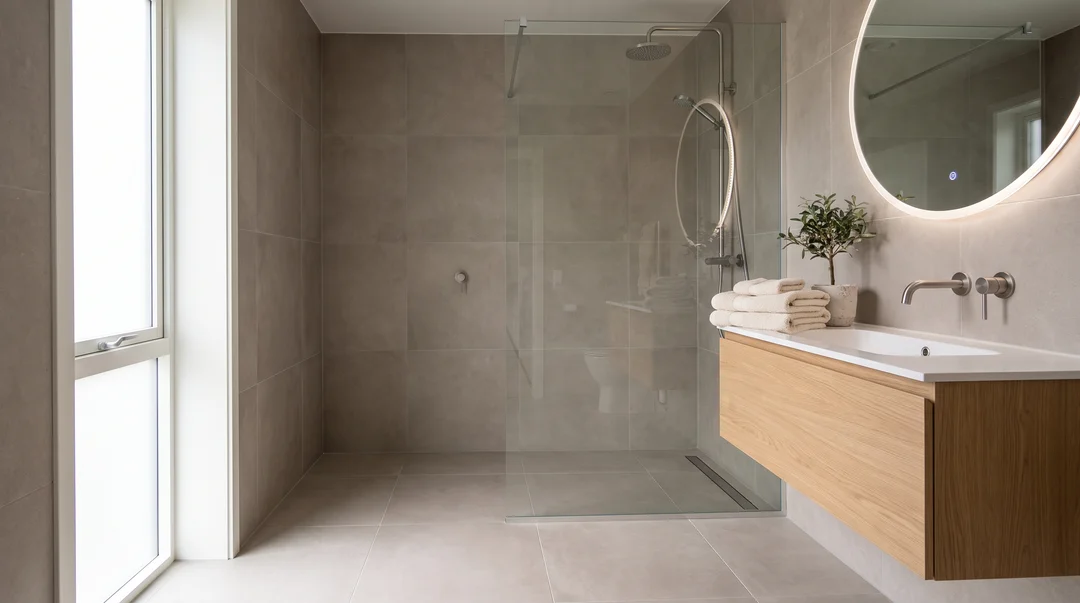
Large formats, 60 cm and up, are the big trend in recent bathrooms. Fewer joints mean a calmer surface, a room that looks larger and less grout to maintain. But they demand a perfectly flat substrate. On a wavy floor or wall, the tile edges do not line up and catch the light, a flaw called lippage. In an older house, substrate prep can cost as much as the installation.
Small formats and mosaic are the best solution for the shower floor. The many joints follow the slope to the drain without cracking, and they offer natural grip under wet feet. A large tile in a shower pan, by contrast, sits poorly on a slope running in four directions.
Elongated rectangles laid vertically make the ceiling look higher; laid horizontally, they visually widen a narrow room.
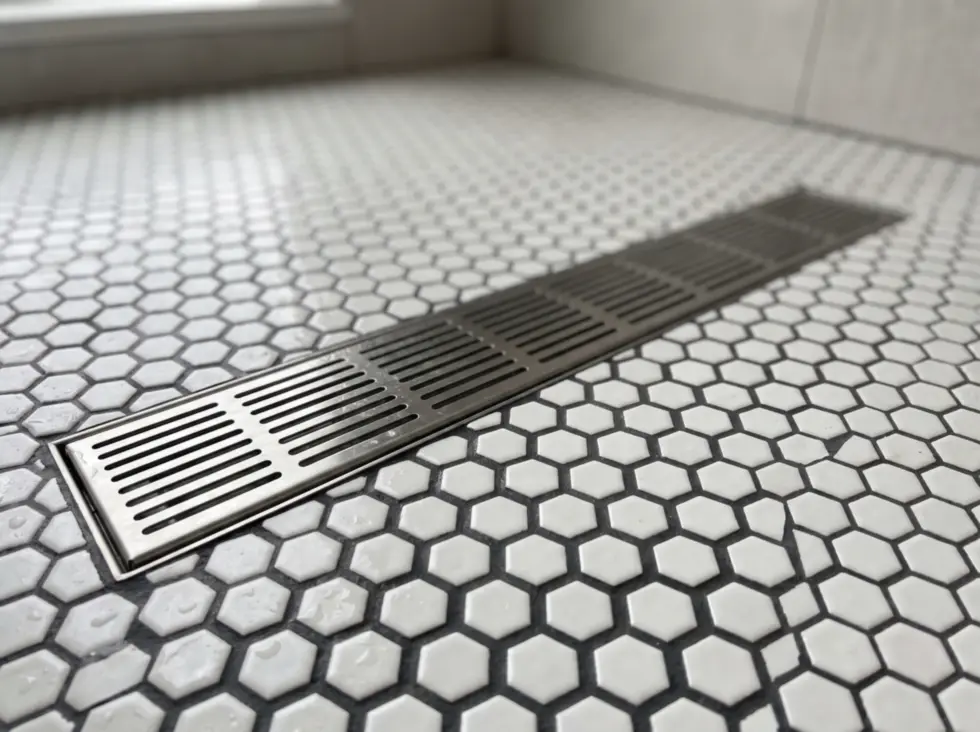
If you dream of a curbless shower with large-format floor tile, a linear drain is the answer: the slope runs in a single direction, which allows bigger tiles. Our article on the curbless walk-in shower explains how to plan one.
Slip resistance: not negotiable on the floor
A wet bathroom floor is one of the most dangerous spots in the house. For the floor and the shower pan, choose a tile the manufacturer rates for wet surfaces. Polished and glossy finishes look superb on a wall but are slippery underfoot when wet. A matte, textured or lightly honed finish is much safer.
Grout colour changes everything
The same tile can produce two completely different bathrooms depending on grout colour.
Grout matching the tile gives a uniform, calm, almost monolithic surface. That is the look people want with large formats and soft palettes. It also forgives small installation irregularities.
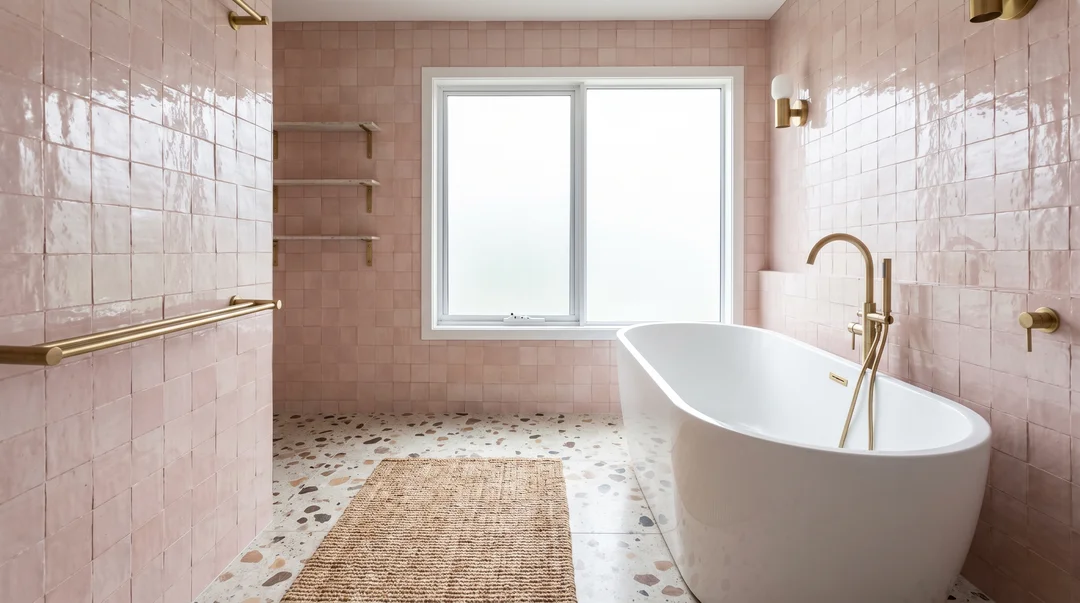
Contrasting grout, dark on white tile for example, outlines each tile and highlights the pattern: hexagon mosaic, herringbone, vertical stack. It is graphic, but every crooked line shows.
A practical tip: avoid pure white grout on the floor. It turns grey within months, whatever you do. Pale grey or a shade slightly darker than the tile keeps its look far longer.
In a shower, epoxy grout stands up to moisture, soap and mildew much better than ordinary cement grout. We cover it in our article on the kitchen backsplash too, where the same grout problem shows up behind the range.
Installation: what separates good work
The layout before the adhesive. A good tiler starts by marking, not by gluing. They centre the pattern on the most visible wall, avoid thin slivers of cut tile in the corners and line up joints with the niche, the fixtures and the edge of the tub.
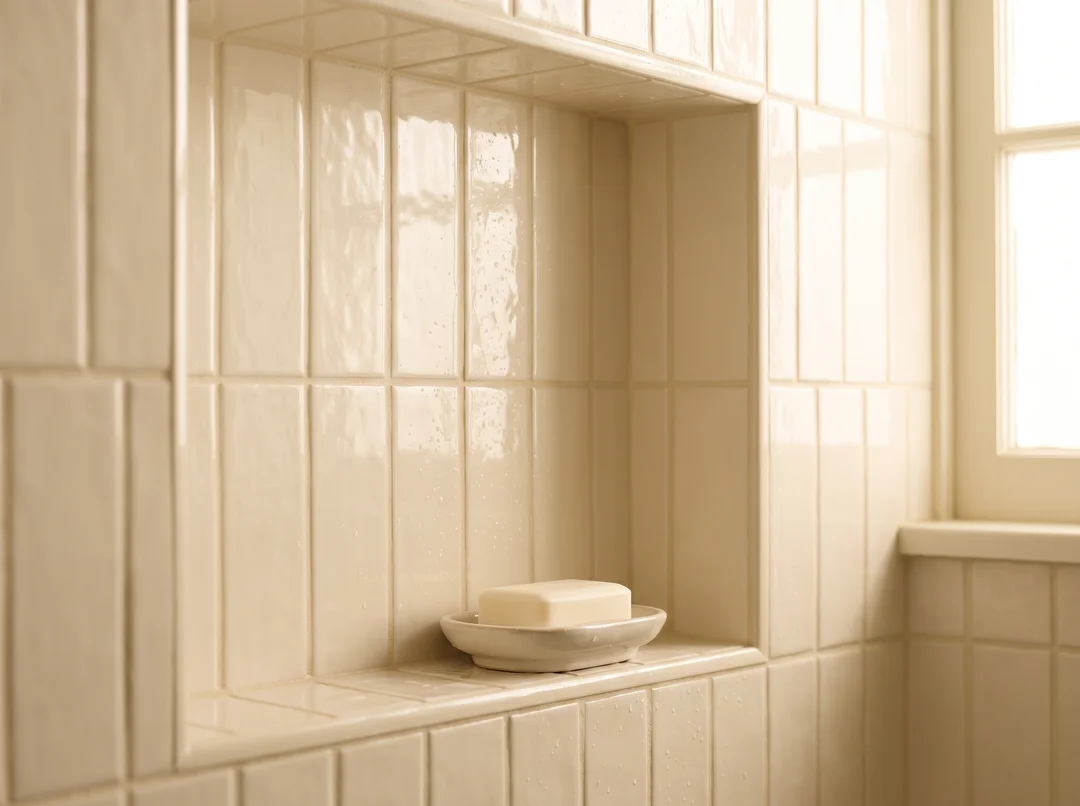
A niche designed around the tile. A niche sized to a whole number of tiles has no visible cuts. That detail gets decided during framing, not at tiling time.
Waterproofing behind, always. This is the most misunderstood point: neither tile nor grout is waterproof. What actually protects the structure is the waterproofing membrane installed under the tile throughout the shower zone. Beautiful tile on a poorly protected wall is a leak waiting to happen.
Extra tile. Order 10 to 15 % more for cuts and breakage, and keep a few boxes from the same batch for a future repair. Finding exactly the same shade five years later is often impossible.
Budget and the bigger picture
Tile weighs heavily in a bathroom budget, mostly because of labour: a large format on an imperfect substrate or a complex mosaic takes a lot of hours. Our article on bathroom renovation cost places this line item, and if you are weighing tile against other flooring for the rest of the house, our flooring renovation comparison helps decide.
Tiling a shower calls for a tiler who also knows waterproofing. Ask which membrane they use and how they handle the joint between the shower floor and walls: the answer will tell you a lot.
Frequently Asked Questions
Can you use large tiles on a shower floor?
Yes, with a linear drain, which allows a slope in a single direction. With a classic centre drain, the slope runs in four directions, and small tiles or mosaic adapt to it much better.
What grout colour works in a bathroom?
Grout matching the tile gives a calm look and forgives irregularities. Contrasting grout highlights the pattern. On the floor, avoid pure white, which greys quickly; pale grey ages much better.
Is tile waterproof?
No. Neither the tile nor the grout forms a watertight barrier. In a shower, the waterproofing membrane under the tile protects the structure. Without it, water eventually gets through the joints.
What is the difference between ceramic and porcelain?
Porcelain is fired at a higher temperature, is denser and absorbs much less water. It suits floors and shower interiors better. Ceramic is more porous and works very well on walls outside wet zones.
How much extra tile should you plan for?
10 to 15 % more than the measured area, for cuts and breakage. Also keep a few tiles from the same batch for future repairs, because the shade varies from one production run to the next.
Post your project
Describe your work once, and contractors in your area who do this kind of work can get back to you. It's free, with no commitment.
Post a project