How Long Home Components Last: When to Replace What
The expensive surprises in home ownership almost never come from something that breaks suddenly. They come from something that was quietly reaching the end of its life while nobody was watching.
A 24-year-old roof announces nothing. It does its job right up until a storm finds the weak spot, and the bill doubles because now the sheathing and the ceiling below have to be redone too.
This guide gives realistic lifespans under our climate, what signals the end for each component, and the three items you should never let run to failure.
How to read these numbers
Three notes before the table.
These are ranges, not guarantees. Two identical roofs installed the same year can last 18 years and 28 years depending on orientation, attic ventilation, and installation quality.
The Quebec climate shortens almost everything. Freeze-thaw cycles, a 60-degree annual temperature swing, and de-icing salt accelerate wear compared with average North American figures. When a manufacturer's sheet claims 30 years, plan for the low end of the range.
Installation date matters more than appearance. A mechanical component running fine at 14 years is still a 14-year-old component. That is the moment to budget, not to wait for failure.
The envelope: what separates you from outside
Asphalt shingles: 20 to 25 years. Drop to 15 or 18 for a full south-facing slope or a poorly ventilated attic. End-of-life signs: granules in the gutters, shingles curling at the corners, discoloured patches. Our guide on replacing your roof covers the seven signals worth watching.
Metal roofing: 40 to 70 years. Two to three times the up-front cost, but often the last roof you will install. Watch the fasteners and flashing rather than the panels themselves.
Elastomeric membrane on a flat roof: 25 to 30 years. Seams and drains fail before the membrane does.
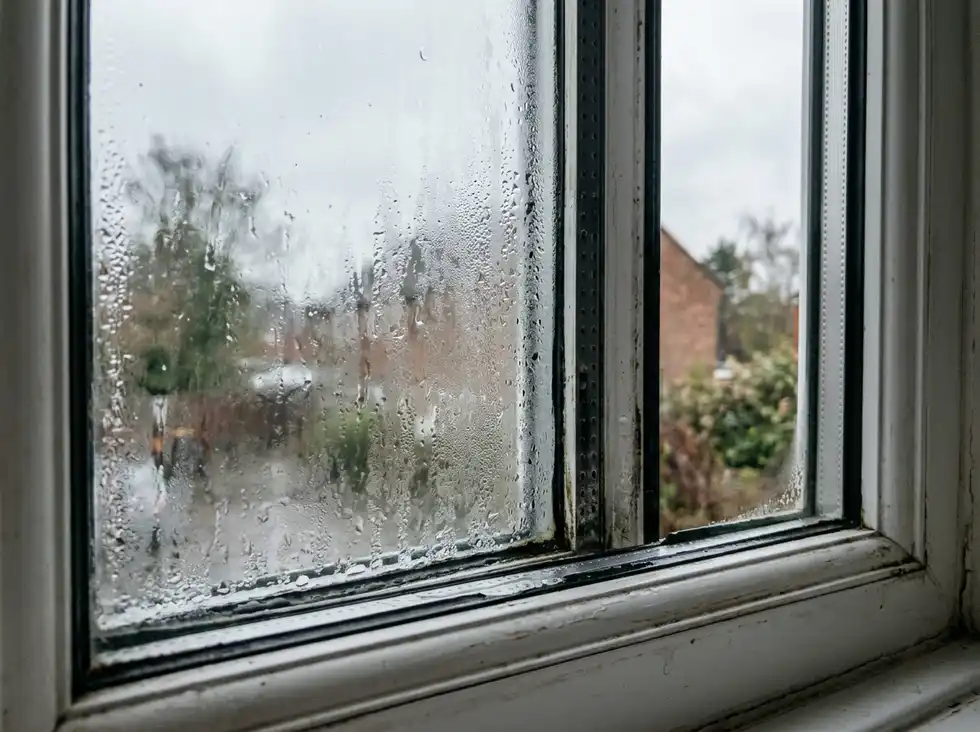
PVC windows: 25 to 30 years for the frame, but 15 to 20 years for the sealed glass unit. That distinction matters: a window can have a perfectly sound frame and a dead seal. The classic sign is fogging that appears between the two panes and cannot be wiped away.
Vinyl siding: 30 to 40 years. Fibre cement: 40 to 50 years. Brick: over a century, though repointing comes due every 50 to 80 years.
Caulking: 5 to 10 years. It is the shortest-lived component in the whole house and the most often forgotten. Cracked caulking lets water in behind the cladding, where it works unseen.
Mechanical: what fails on a Sunday
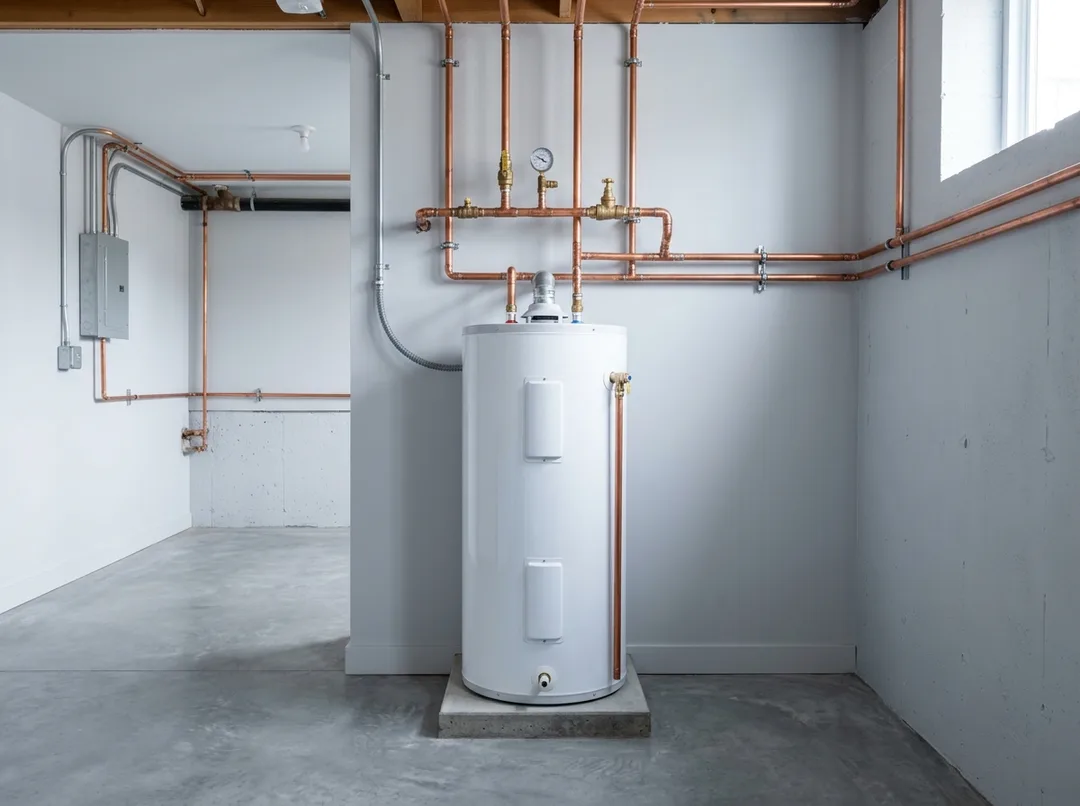
Electric water heater: 10 to 12 years. This is the single most useful number on this page. Past 12 years, a tank is no longer a performance question but a water damage risk. Our comparison of water heater types helps you choose the replacement before the emergency.
Forced-air furnace: 15 to 20 years. Heat pump: 12 to 15 years. Both lose efficiency long before they stop, so a heating bill climbing for no clear reason is often the first sign.
Heat recovery ventilator: 15 to 20 years. The motor and filters wear out before the core.
Electrical panel: 40 to 60 years. But a 100-amp panel becomes inadequate long before it wears out, as soon as you add a heat pump, an EV charger, or a finished basement.
Thermostats and detectors: 10 years for a smoke detector, even if it still passes the test button. The sensor degrades over time.
Water: the most expensive category
Copper plumbing: 50 to 70 years. PEX: 40 to 50 years. Galvanized plumbing is already at end of life whatever its age, and most insurers know it.
French drain: 30 to 40 years. It gives almost no warning before blocking, and when it blocks, the basement takes it. A plumber can run a camera inspection for around $350, which is trivial next to a full replacement.
Septic system: the tank lasts 30 to 40 years, the leach field 20 to 30 years. The field fails first, almost every time.
Aluminum gutters: 20 to 30 years, though downspouts and hangers fail sooner.
Interior: visible wear, low stakes
Good news, this is the category where wear shows and where it causes no cascading damage.
Hardwood flooring: 50 to 100 years, because it can be sanded three to five times depending on thickness. Laminate: 15 to 25 years, it cannot be sanded. Quality vinyl: 20 to 25 years. Ceramic: over 50 years, it is the grout that ages, not the tile.
Kitchen cabinets: 25 to 50 years for the boxes. Hinges and slides fail much sooner and can be replaced separately for a fraction of a new kitchen.
Interior paint: 5 to 10 years. Exterior paint on wood: 5 to 8 years.
Quartz countertop: over 30 years. Laminate: 10 to 20 years.
The full table
| Component | Lifespan in Quebec |
|---|---|
| Caulking | 5-10 years |
| Exterior paint (wood) | 5-8 years |
| Interior paint | 5-10 years |
| Smoke detector | 10 years |
| Electric water heater | 10-12 years |
| Heat pump | 12-15 years |
| Sealed glass unit | 15-20 years |
| Forced-air furnace | 15-20 years |
| Heat recovery ventilator | 15-20 years |
| Laminate flooring | 15-25 years |
| Asphalt shingles | 20-25 years |
| Vinyl flooring | 20-25 years |
| Aluminum gutters | 20-30 years |
| Septic leach field | 20-30 years |
| Flat roof membrane | 25-30 years |
| PVC window frames | 25-30 years |
| Kitchen cabinets | 25-50 years |
| Vinyl siding | 30-40 years |
| French drain | 30-40 years |
| Quartz countertop | 30 years and up |
| Septic tank | 30-40 years |
| Fibre cement siding | 40-50 years |
| PEX plumbing | 40-50 years |
| Electrical panel | 40-60 years |
| Metal roofing | 40-70 years |
| Copper plumbing | 50-70 years |
| Hardwood flooring | 50-100 years |
| Ceramic tile | 50 years and up |
| Brick | 100 years and up |
The three you should never let run to failure
Not all components are equal when they go. Three of them cause cascading damage that costs several times the replacement price.
The roof. A leak does not just destroy the roof: it soaks the sheathing, the attic insulation, the ceilings, and sometimes the wiring. A planned replacement runs $8,000 to $18,000. The same work after a prolonged leak often passes $30,000. To assess it, roofers in Montreal offer pre-work inspections.
The water heater. A tank that lets go releases 150 to 270 litres at once, plus the supply that keeps running. In a finished basement that is easily $15,000 in damage. Preventive replacement costs $900 to $1,800 installed. It is the best risk-to-cost ratio in the entire house.
The French drain. It gives no warning. When it fails, water comes up through the slab and the fix means excavating the perimeter. Budget $15,000 to $30,000 depending on access.
For everything else the logic is the same: write down the installation date of each major item somewhere, and start budgeting once you reach three quarters of its lifespan. Our monthly maintenance calendar covers the routine checks that genuinely extend these numbers, and a certified HVAC contractor documents each annual service, which doubles as proof at resale.
Frequently Asked Questions
How do I find the age of my components if I bought the house recently?
Several clues exist. Water heaters and furnaces carry a data plate with a manufacturing date. The pre-purchase inspection report usually estimates the age of the roof and mechanical systems. The seller's declaration should have listed major work. And the municipality keeps records of issued permits, which dates a roof or an addition.
Does maintenance actually extend these lifespans?
For mechanical systems and the envelope, yes, measurably. Annual furnace service typically adds three to five years of useful life, and resealing every four years on a driveway or roof changes the outcome. For passive components like plumbing or brick, maintenance changes the lifespan very little; its value is catching the problem earlier.
Is it better to replace before the end or wait for failure?
It depends entirely on the cost of the associated damage. For a water heater, a drain, or a roof, replace early, because failure damages something else. For laminate flooring, paint, or a countertop, wait, since the wear causes no collateral damage.
Does a newer house have longer-lasting components?
Not necessarily. Modern materials are often better, but recent construction also uses plenty of entry-grade components to hit a sale price. A basic shingle on a 2020 build can fail sooner than metal roofing installed in 1985.
What if several components reach end of life at once?
That is common on houses 20 to 25 years old, where the first wave arrives together. Prioritize by the cost of damage if it fails, not by the price of replacement. Roof, water heater, and drain first, finishes after. Spreading the work over two or three years is normal, as long as you do not defer those first three.
Ready to start your project?
Describe your work, choose how many quotes you want to receive, and compare qualified contractors near you. Free and no commitment.