Residential Roofing: 7 Signs It's Time for a Replacement (and What It Costs)
Your roof is your home's first and most important line of defense. It faces everything the Canadian climate throws at it: brutal winters, freeze-thaw cycles, spring downpours, and summer heat. Yet most homeowners only think about their roof when a problem becomes impossible to ignore, which is almost always too late.
A planned roof replacement typically costs $8,000 to $18,000. An emergency response after serious water damage, including carpenter repairs and interior work, can easily reach $35,000 or more. The difference between those two scenarios is knowing the warning signs.
Here are the 7 indicators that experienced roofers watch for, and what they reveal about a roof's true condition.
1. Curling, Cracking, or Missing Shingles
Asphalt shingles age in two distinct ways. Cupping (edges curling upward) happens when the underside absorbs more moisture than the surface. Clawing (tabs lifting at the edges while the middle stays flat) signals that the shingle has lost its internal flexibility. In either case, a deformed shingle no longer does its job: rainwater seeps under the joints, wind can lift weakened sections, and freeze-thaw cycles accelerate the damage.
If 20% or more of your shingles show these signs, a full replacement is almost always more economical than repeated spot repairs. At 30% or more, it's essentially unavoidable.
2. Moss, Lichen, or Algae Growth
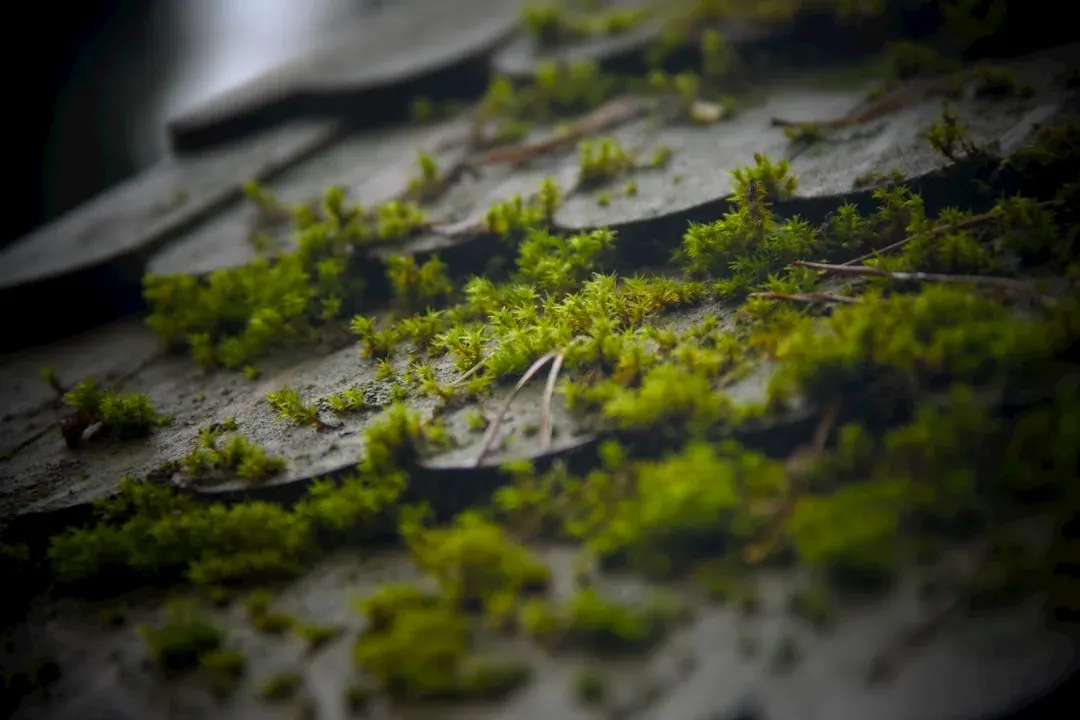
Many homeowners assume moss or algae on a roof is purely cosmetic. It isn't, it's a sign of chronic moisture retention. Moss grips the rough surface of shingles and holds water permanently against them. In winter, that water freezes, expands the shingle fibers, and creates micro-cracks that worsen with every cycle. Lichen is even more aggressive: it secretes acids that directly attack the protective granule layer.
A preventive treatment (antifungal solution plus zinc ridge strips) can slow progression on a roof that's still structurally sound. But if moss covers more than 25% of the surface, or has worked its way under the shingles, replacement is the only real solution. North-facing slopes and areas shaded by trees are affected first; a spring inspection after snowmelt will reveal the worst of it.
3. Granules in Your Gutters or Around the Foundation
Asphalt shingles are coated with a surface granule layer, tiny stones that protect the bitumen from UV radiation. As shingles age, this granule layer loosens and washes into gutters as gritty black or grey deposits. New shingles shed a few granules normally, but aging shingles lose them in volume. Once the granule layer is gone, the exposed bitumen hardens quickly under UV, cracks, and the shingle's waterproofing fails rapidly.
The visual test: clean your gutters in spring and look at the sediment. A coffee cup's worth is a moderate warning sign. A mixing bowl's worth means the clock is ticking. Also look directly at the shingles, matte, discolored patches show exactly where the granules have worn away.
4. Water Stains, Ceiling Spots, or Attic Mold
A water stain on your ceiling is usually the first visible sign something is wrong, but it's rarely the first thing that went wrong. By the time water shows up inside, it has typically been infiltrating for several freeze-thaw cycles. Common infiltration points include the eaves (where the ice-and-water shield membrane has been compromised), valleys where two roof planes meet (high-volume water channels, highly exposed), flashings around chimneys, dormers, and vents (where metal expansion eventually cracks the seal), and worn-through shingles.
A spring home inspection in your attic during a rainstorm helps spot moisture on the rafters, insulation batts, or OSB sheathing. The infiltration source is often 3-6 feet away from the ceiling stain visible below.
5. Sagging or Wavy Surface
A healthy roof should have clean, straight lines. Waves, dips, or visible sagging mean the underlying structure has been compromised. Common causes include rotting fascia from chronic moisture, swollen OSB or plywood sheathing from repeated wetting, and damaged rafters or trusses weakened by long-term water infiltration.
Localized sagging can sometimes be repaired without replacing everything. But if it spans multiple sections or has reached the ridge, it typically means structural damage requiring a complete intervention, new decking plus new shingles. The slight undulation visible on an aging cedar shake roof is normal; it's the soft, spongy feel underfoot or a visible depression that should concern you.
6. Unexplained Increase in Heating Bills
This one is less obvious but it's a real indicator. Your roof plays a key role in your home's thermal insulation envelope, particularly through attic ventilation balanced between soffits and the ridge. As a roof deteriorates, lifted shingles allow cold air infiltration, attic moisture compresses or degrades insulation, and repeated leaks create thermal bridges. The result is that your heating system works harder without another obvious explanation.
If energy bills have climbed, check your attic and roof condition before blaming the furnace. Poor attic ventilation can cause the same problem even on a roof in decent shape, make sure your soffits aren't blocked by insulation and that the ridge vent breathes freely.
7. A Roof That's 20+ Years Old
Roof lifespan depends directly on the material. Standard 3-tab asphalt shingles last 15-20 years. Architectural (laminated) asphalt shingles run 25-30 years. Cedar shakes last 20-30 years with proper maintenance. Standing seam metal lasts 40-60 years. Natural slate can reach 75-100 years. Canadian climates are hard on roofing materials, a shingle rated for 25 years by the manufacturer may realistically last only 18-20 in regions with heavy snow loads and frequent freeze-thaw cycles.
If your roof is over 20 years old and you're already making repairs, ask your roofer directly: am I patching for 3 more years, or is now the right time to replace everything? In most cases, a planned replacement today is more economical than a series of band-aid fixes on a roof nearing the end of its life.
What Does a Roof Replacement Cost in Canada?
Prices vary based on surface area, slope, material, and site accessibility. For architectural asphalt shingles (the most popular choice) a small home (1,000-1,400 sq ft of roof surface) runs $7,000 to $12,000; an average home (1,400-2,200 sq ft) costs $10,000 to $18,000; and a large home (2,200 sq ft or more) starts at $16,000. These prices typically include tear-off of existing shingles, inspection and partial replacement of decking as needed, ice-and-water shield membrane, shingles and installation, and flashings and ridge cap.
Metal roofing costs more upfront ($15,000 to $30,000 for an average home) but lasts two to three times longer. Over 50 years, the total cost is often lower than two or three shingle replacements. Factors that push prices up include steep slope (10-20% added labour), multiple existing layers to remove, decking replacement ($500 to $3,000 additional for damaged OSB or plywood), chimney flashing work ($300 to $800 per chimney), and difficult site access.
Repair or Replace
The industry rule of thumb: if repairs cost more than 25-30% of a full replacement, replace the whole roof. Partial repairs on an aging roof typically buy only 2-5 more years before the next problem appears. When talking to a roofer, ask about the condition of the decking beneath the shingles, how many existing layers are there, what the estimated remaining lifespan is if you don't replace now, and whether the manufacturer's warranty is still in effect.
How to Choose a Roofer
In most provinces, roofing contractors must hold a valid contractor's license. In Quebec, verify their RBQ license number on the Régie du bâtiment website (any roofer or home renovator working on the roof must hold a valid license). Depending on your area, you can start from our lists of roofers in Montreal or roofers in Quebec City. Elsewhere, check for a valid contractor registration and CNESST or equivalent clearance certificate.
Demand a detailed contract that specifies the exact surface area, materials with brand and product line, membrane thickness, flashing details, and warranty terms. Get at least 3 quotes and learn to compare contractor quotes, prices can vary 30-40% between contractors for identical work. Unusually low bids often signal undisclosed subcontracting, lower-grade materials, or skipped steps. Call references from 2 or 3 recent projects and ask how the first winter held up.
Frequently Asked Questions
How much does a shingle roof replacement cost?
For an average home with architectural asphalt shingles, budget $10,000 to $18,000 fully installed. A smaller home can come in at $7,000 to $12,000; a larger property will likely exceed $20,000. Metal roofing costs more upfront ($15,000 to $30,000) but lasts two to three times longer.
Can you put new shingles over old ones to save money?
One additional layer is generally permitted by most building codes. It reduces labour costs but has drawbacks: added weight stresses the structure, problems hidden under the old shingles go undetected, and the new shingle warranty may be limited. If the existing roof is in poor condition, a full tear-off is the better choice.
Do you need a permit to replace a roof?
In most municipalities, a permit isn't required for a straight shingle-for-shingle replacement. One becomes mandatory if you change the roof structure, add a dormer, or modify the pitch. Always check with your local building department, rules vary.
What's the best time of year to replace a roof?
Spring and summer are ideal: warm temperatures help asphalt shingles seal properly. Early fall before the first frost works well too. Winter installation is possible but shingles are more brittle in the cold and sealants take longer to cure. Good contractors book up fast, plan early.
Ready to start your project?
Describe your work, choose how many quotes you want to receive, and compare qualified contractors near you. Free and no commitment.