Windows are often the last thing people dress after a renovation, yet they change the whole look of a room. Well-hung curtains make the ceiling feel higher and the window look bigger. Badly hung ones, too short or mounted too low, shrink everything. Here is how to choose between curtains, blinds and sheers, and how to install them so they show the room at its best.
Curtains, blinds or sheers: what each one does
Curtains. Fabric panels that draw to each side of the window. They bring colour, texture and softness. Lined, they block light and hold in a bit of warmth in winter. Linen, cotton and velvet are the most common fabrics.
Blinds and shades. They mount inside the frame or just above the window and go up and down. Roller shades are the simplest and most discreet. Roman shades fold into soft pleats of fabric. Wood or faux-wood slat blinds let you fine-tune the light. Cellular shades, built from honeycomb cells, trap a layer of air and help keep heat in.
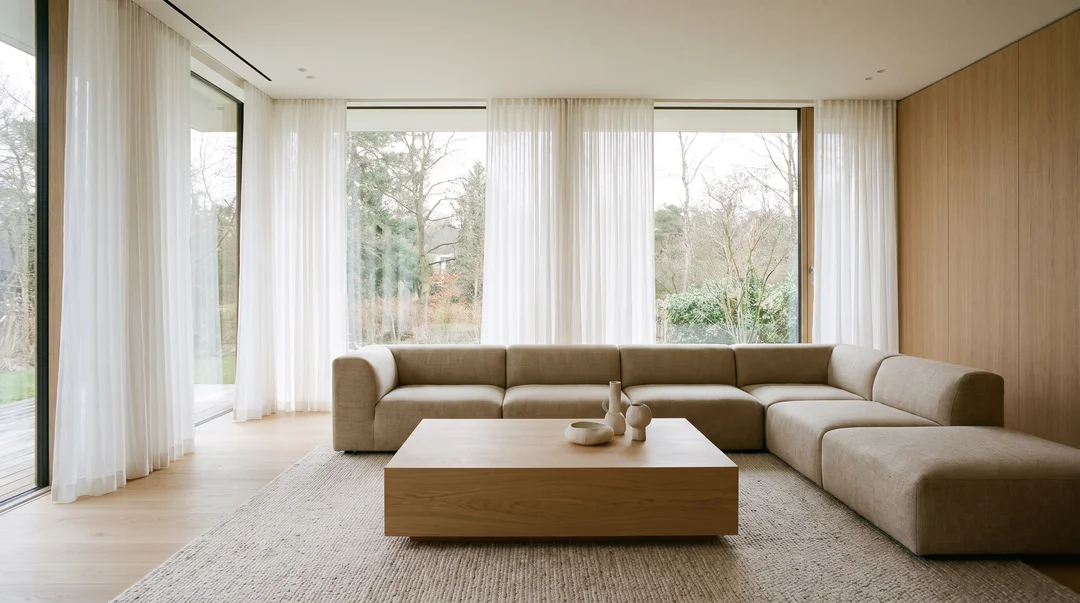
Sheers. Light, translucent fabrics. They filter daylight, soften the view of the street and give privacy during the day. One catch: at night, with the lights on inside, people can see right through.
In many rooms, the best answer is two layers: a shade or sheer for daylight, and curtains for colour and evening privacy.
Getting the height and width right
This is where a window either looks generous or looks small.
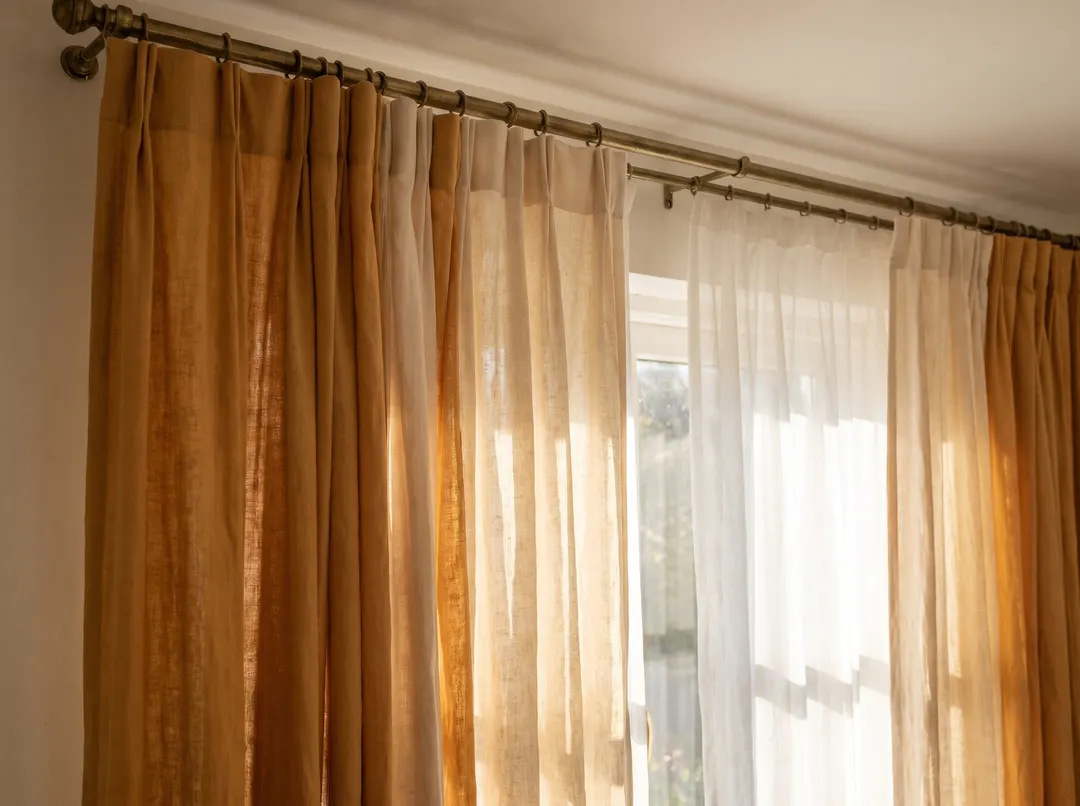
- Raise the rod. Instead of mounting it just above the frame, place it halfway between the frame and the ceiling, or almost at the ceiling. The eye follows the fabric up and the room feels taller.
- Widen the rod. Let it extend 15 to 25 cm past each side of the frame. Open curtains then rest against the wall instead of the glass, letting all the light in and making the window look wider.
- Use enough fabric. For a nice drape, the total width of the panels should be about twice the length of the rod. Panels that are too narrow look stretched and skimpy, even when closed.
- Consider a recessed track. During a renovation, a track can be built into the ceiling. Curtains or sheers then seem to fall straight from the ceiling, with no visible rod. It's the cleanest look of all.
- Pick the length. Curtains should just skim the floor, a centimetre or two above it. Curtains that stop halfway down the wall cut the room in two. Puddled curtains look romantic but collect dust.
The baseboard heater trap
In Quebec, many rooms are heated by electric baseboard heaters set right under the windows. A long curtain hanging in front of or over the heater blocks the heat and can be a fire hazard. Keep the clearance specified by the heater manufacturer.
A few ways around it:
- a shade or short curtain that stops above the heater, inside the window frame;
- long curtains on a rod wide enough that they stay off to the sides, clear of the heater;
- a wall convector or another heating option if the room is getting a full renovation. An electrician can advise on placement.
Heavy fabric closed all night also affects the glass in winter: warm room air no longer reaches the window, which can increase fogging. Our article on window condensation explains what to watch for.
Room by room
Living room. This is where curtains make the biggest impact. A heavy linen or cotton, hung high, adds warmth. A sheer behind it keeps the daylight while hiding the street. The fabric colour can echo something in the room: a cushion, a rug, a piece of art.
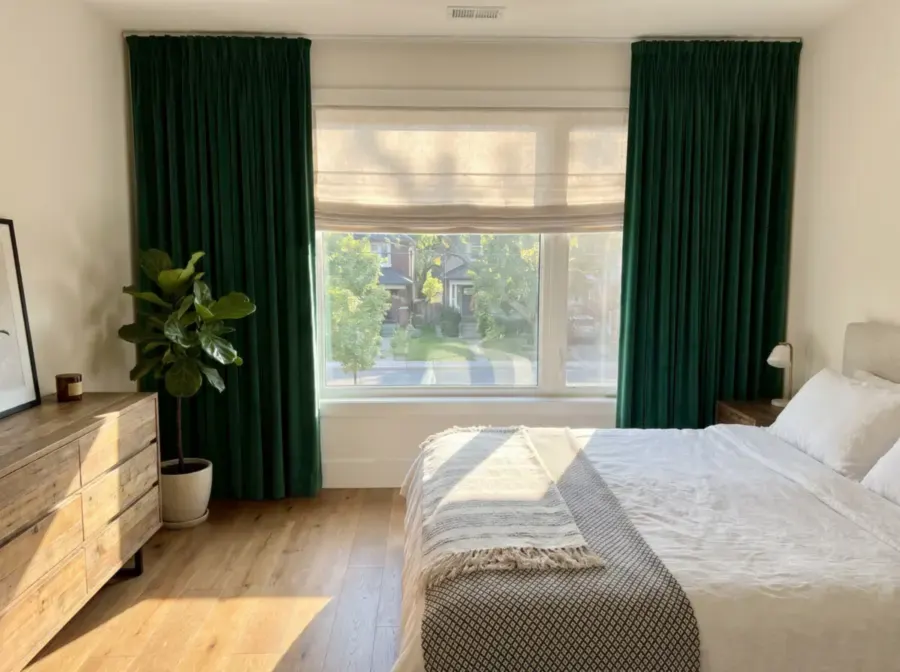
Bedroom. Here the goal is real darkness. A blackout shade mounted inside the frame, paired with lined curtains, blocks almost all the morning light. Velvet is a good option: heavy, it drapes well and absorbs sound.
Kitchen and bathroom. Moisture and splashes ruin fabric. A vinyl or treated-fabric roller shade, or faux-wood slat blinds, hold up better. Keep fabric well away from the stove.
Basement. Small, high windows don't suit curtains. A simple shade mounted inside the frame keeps the room bright without crowding it.
Choosing colour and fabric
- Light tones let light through and open up the room. They work well in north-facing rooms.
- Bold colours like terracotta, forest green or navy add character. They work best against neutral walls.
- Direct sun fades fabric. In a south- or west-facing room, a lining protects the curtain and keeps it looking good longer.
Light changes how a colour reads. To match curtains to the walls, our article on paint colour by room light helps predict the result.
Motorized shades and child safety
Motorized shades run from a remote, an app or a schedule. Battery models can be added anytime. Hardwired models need a wire at each window, so they are best planned during the renovation, before the walls are closed.
In a home with young children, blind cords are a real strangulation hazard. Products sold in Canada have had to meet strict cord rules since 2022. For older corded blinds, Health Canada recommends replacing them with cordless models.
Common mistakes
- Rod mounted tight to the frame. The most common mistake: the window looks smaller and the ceiling lower.
- Curtains that are too short. Stopping a few centimetres above the floor makes them look like they shrank.
- Panels that are too narrow. One stretched panel per side doesn't do the job.
- Fabric covering a baseboard heater. A safety risk, not just a style issue.
- Dressing a drafty window. Heavy curtains won't fix a leaking window. If cold air comes through the frame, our window replacement guide helps you decide.
Frequently Asked Questions
How high should a curtain rod be mounted?
Ideally between the top of the frame and the ceiling, halfway up or close to the ceiling. The higher the rod, the taller the room feels. Then choose curtains long enough to just skim the floor.
How wide should curtains be for a window?
The total width of the panels should be about twice the length of the rod. For a light fabric like a sheer, you can go up to two and a half times. That is what gives full, even folds, even when the curtains are closed.
Can curtains hang in front of a baseboard heater?
Avoid letting a curtain touch or cover a baseboard heater. The fabric blocks the heat and can be a fire hazard. Keep the clearance the manufacturer specifies, or choose a shade that stops above the heater.
What works best in a bedroom?
A blackout shade mounted inside the window frame, paired with lined curtains. The shade blocks direct light and the curtains cover the light leaks at the sides. Velvet or another heavy fabric also helps cut noise.
Do cellular shades help keep heat in?
Yes. Their honeycomb cells trap a layer of air between the glass and the room, which reduces heat loss. They don't replace a good window, but they make the area near the glass more comfortable in winter.

Post your project
Describe your work once, and contractors in your area who do this kind of work can get back to you. It's free, with no commitment.
Post a project