The fireplace is often the focal point of the living room, the first thing your eye looks for when you walk in. Yet in many homes it still wears the orange brick of the 1970s or a tired melamine mantel. Redoing the surround transforms the whole room without touching the unit itself. Here are the options, what stands up to heat and the mistakes to avoid.
The four main surrounds
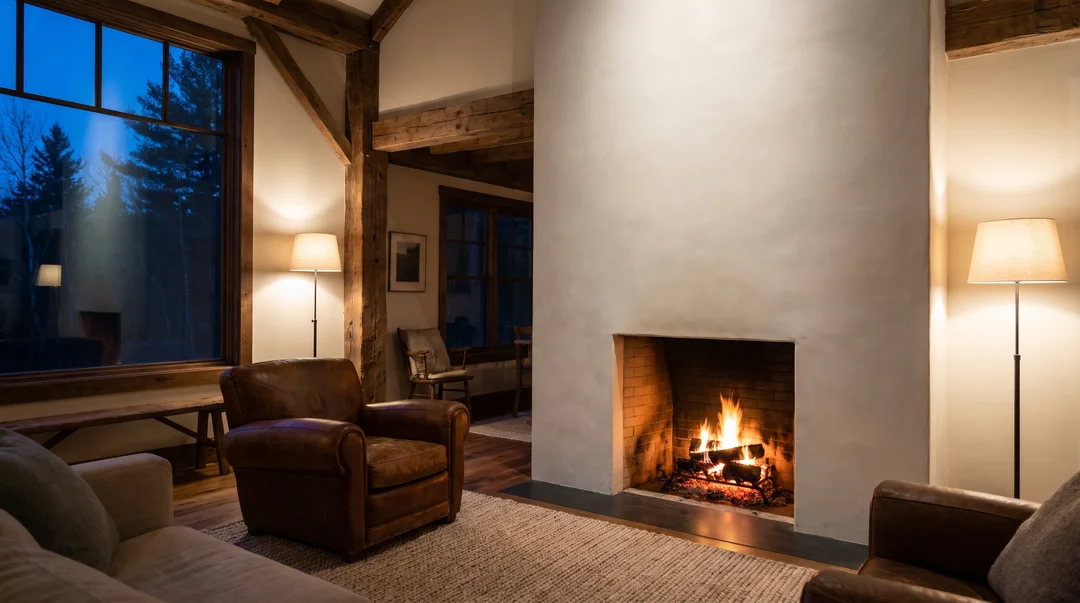
Plaster or lime finish. A smooth or lightly textured surface, often in cream, sand or warm grey. It is the softest, most contemporary look. Taken all the way to the ceiling, it suggests a massive chimney without the visual weight of stone. It works as well in a modern living room as in a country house.
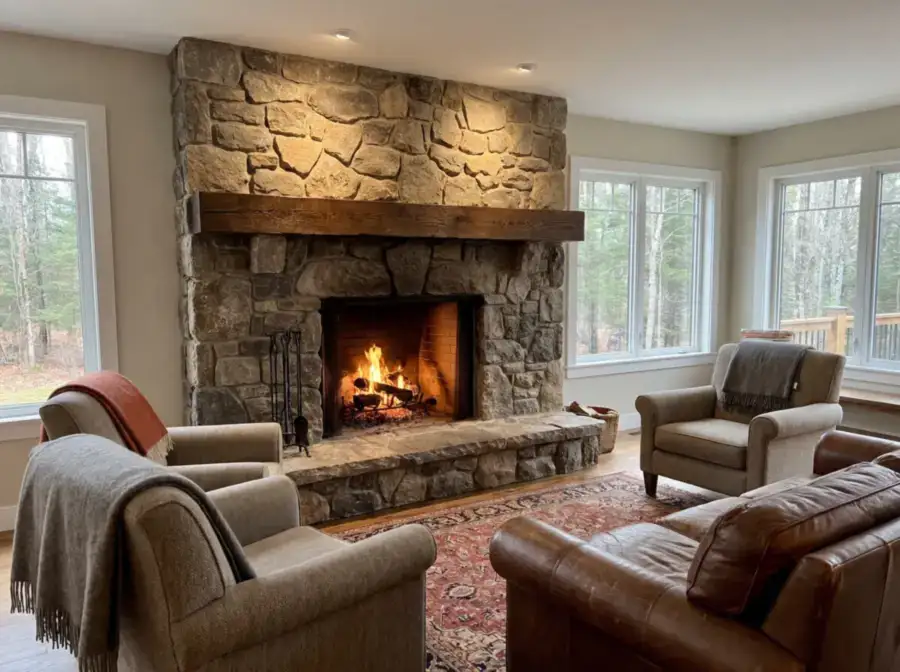
Natural or manufactured stone. The classic warm choice, common in Quebec cottages and suburban homes. Fieldstone or limestone looks rustic, while flat stone in regular courses reads more modern. Manufactured stone is lighter and often cheaper, but still needs a proper backing.
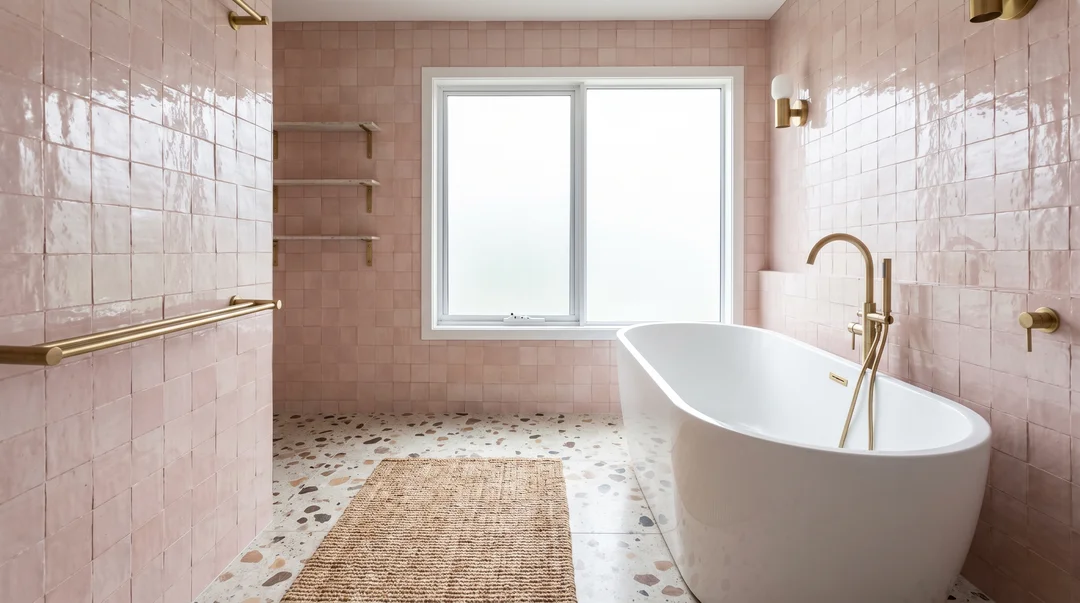
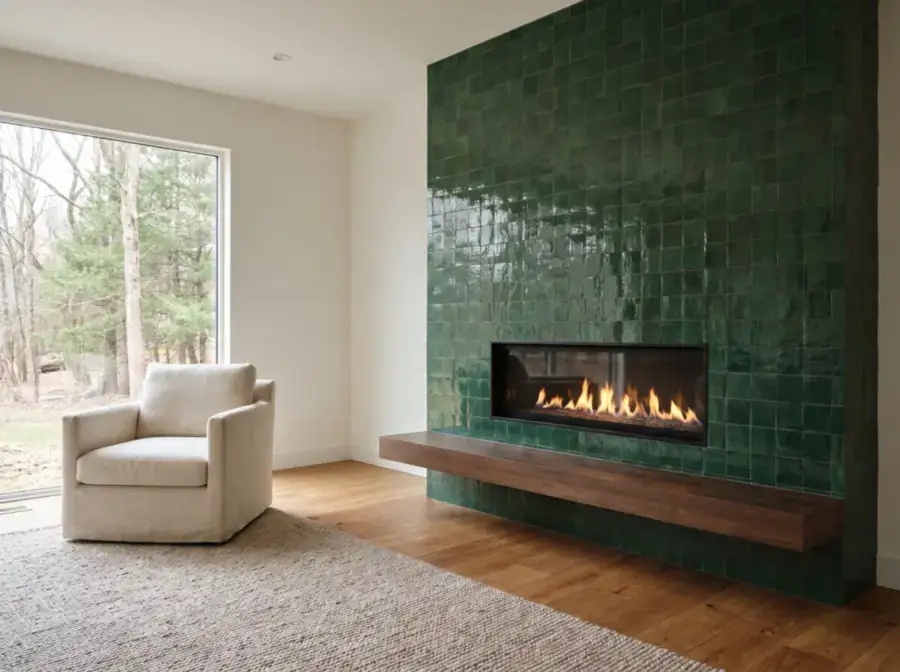
Tile. Zellige, large marble-look formats, narrow vertical tiles: tile lets you add colour and shine. A forest green or midnight blue zellige around a gas fireplace becomes a real design piece.
Wood. Often used for the mantel or to frame the whole surround, in oak, walnut or barn board. Wood adds warmth, but it is the material that needs the most attention to clearances.
What stands up to heat
You cannot put just anything around a fireplace opening. Every unit has minimum clearances: the distance required between the opening and any combustible material, such as wood, regular drywall or some decorative panels. These distances are in the manufacturer's installation guide and must be followed exactly.
The basic rules:
- Stone, brick, tile and mineral finishes are non-combustible and can generally go close to the opening, on a suitable backing such as cement board.
- Regular drywall behind tile is not a good backing near a heat source. Use cement board or the backing the manufacturer recommends.
- A wood mantel must be installed at the minimum height specified, and the deeper it projects, the higher it must go.
- Gas and electric fireplaces often have smaller clearances than wood-burning ones, which gives more design freedom, but you still have to follow the unit's guide.
For a wood-burning fireplace, check local rules too. Some cities, including Montreal, only allow certified low-emission appliances. Upgrading the unit at the same time as the surround can be worth it.
Mantel or no mantel?
The mantel, the shelf above the opening, is mostly a matter of style.
- With a mantel: more classic and warm, with room to display a few objects. A solid wood beam set on stone is a Quebec classic.
- Without a mantel: a smooth plaster or tile wall with the opening as the only feature gives a clean, very current look.
- A low bench on each side, or below the opening, sometimes replaces the mantel and adds storage for firewood.
The choice should also account for the TV. Mounting a TV above a wood-burning fireplace exposes it to heat and forces you to look up. If it really has to go there, check the recommendations of both the fireplace and TV manufacturers.
Coordinating the surround with the room
A few guidelines so the fireplace does not clash with everything else:
- One strong material per room. A heavily textured stone fireplace does not pair well with a floor, walls and ceiling that are all busy.
- Match colours to the light. A cream plaster changes a lot depending on the room's orientation. Our article on paint colour by room light helps you anticipate that shift.
- Think about scale. In a small living room, a surround that goes up to the ceiling makes the room feel taller. An oversized mantel crushes it.
Who to hire
Depending on the material, the right tradesperson changes:
- for stone or brick, a mason;
- for tile, a tiler;
- for a custom mantel, benches or wood framing, a cabinetmaker.
For a gas fireplace, only a certified technician can work on the unit and its connection. For a wood-burning fireplace, having the chimney inspected before redoing the surround avoids having to tear it all out later.
Frequently Asked Questions
Can tile be installed directly around a fireplace?
Yes, tile is non-combustible. It must go on a heat-suitable backing such as cement board, with adhesive and grout rated for high temperatures. The fireplace manufacturer's guide lists the requirements.
How far should a wood mantel be from a fireplace?
It depends on the unit and the depth of the mantel. The manufacturer's installation guide gives the minimum height. The further the mantel projects, the higher it must be installed.
Does a gas fireplace give more design freedom?
Generally, yes. Its clearances are often smaller than a wood-burning unit's, allowing surrounds closer to the opening and a wider range of materials. You still have to follow the distances set by the manufacturer.
Is manufactured stone a good option?
Yes, for a tighter budget or a wall that cannot carry the weight of natural stone. It is lighter and easier to install. Natural stone remains more durable and more authentic to the touch.
Can you mount a TV above a fireplace?
It is possible with a well-designed gas or electric fireplace, but not recommended above a wood-burning one because of the heat. Check both manufacturers' recommendations and think about comfort, since the TV often ends up too high.
Post your project
Describe your work once, and contractors in your area who do this kind of work can get back to you. It's free, with no commitment.
Post a project