The backsplash is the strip of wall between the countertop and the upper cabinets. It protects the wall from splashes, grease and moisture, but it is also the surface that adds the most personality to a kitchen for the smallest area. It is where people try a colour or pattern they would never risk on a floor.
Three questions decide a good backsplash: the material, the height, and how much upkeep you are willing to do.
Materials, from simplest to most demanding
Ceramic and porcelain. The most common choice, for good reason. Heat and water resistant, available in every size and colour, easy to clean. The small staggered rectangle remains a classic, but large formats and square tiles instantly modernize a kitchen.
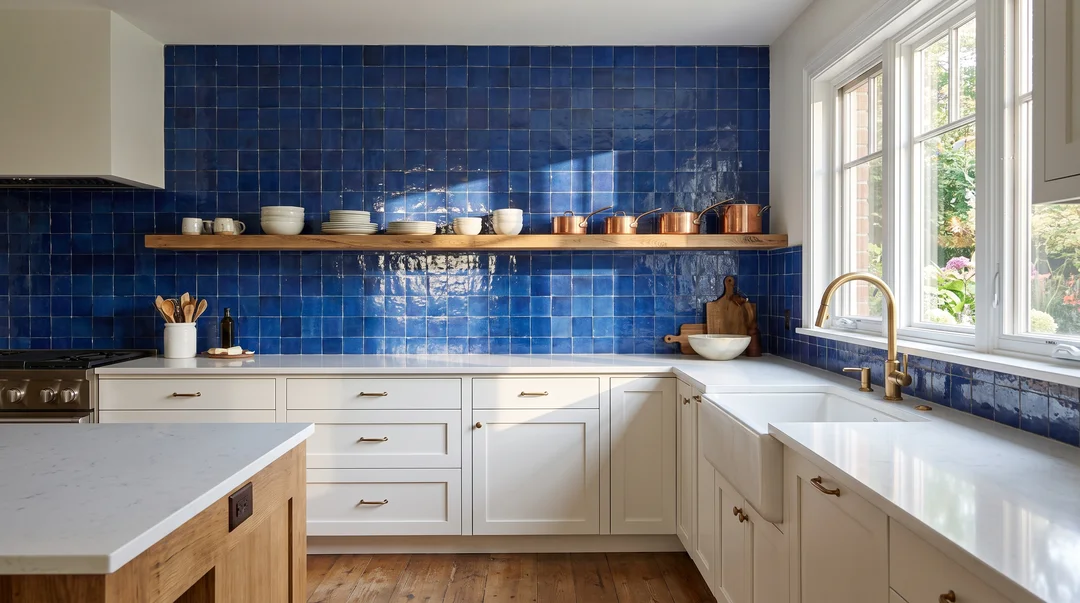
Zellige and handmade tile. Their uneven surface, colour variation and imperfect edges catch light like no factory tile can. That is what makes those lively backsplashes in magazines. Installation is slower and therefore costlier, and the wider joints need particular care.
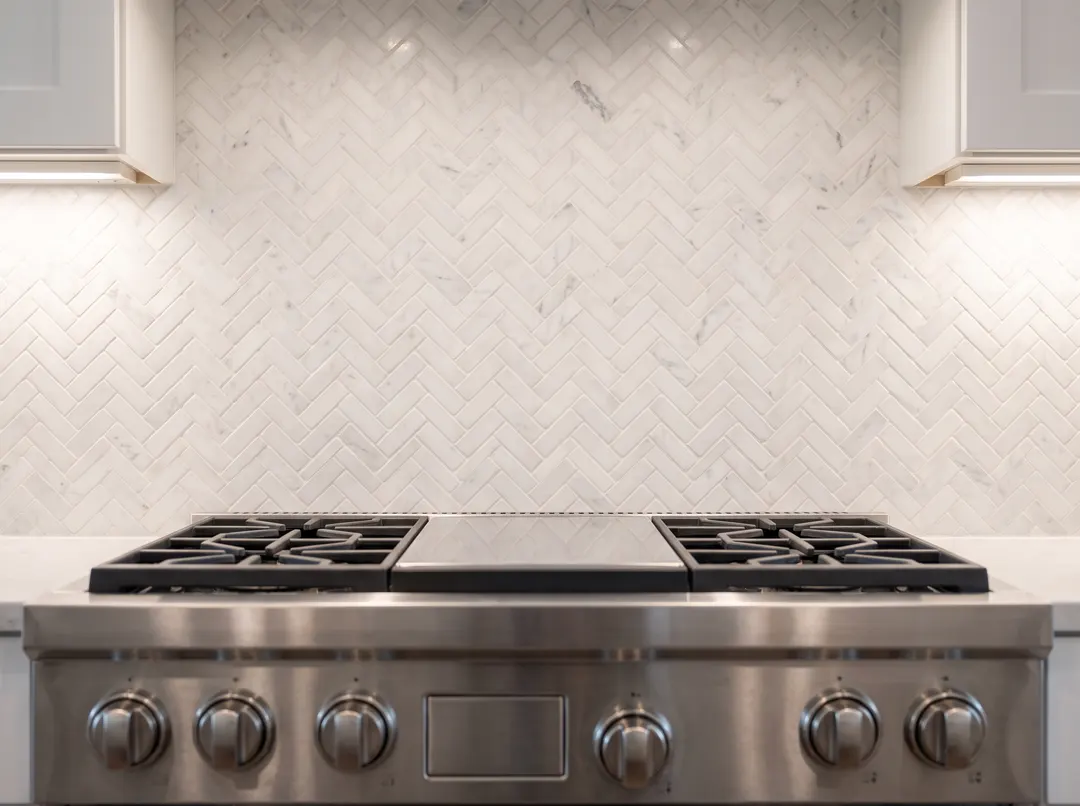
Natural stone and marble. Elegant and timeless, especially in herringbone or large tiles. But marble is porous and reacts to acids: a splash of lemon or vinegar leaves a dull mark known as an etch. It needs regular sealing, and it ages with a patina you have to accept.
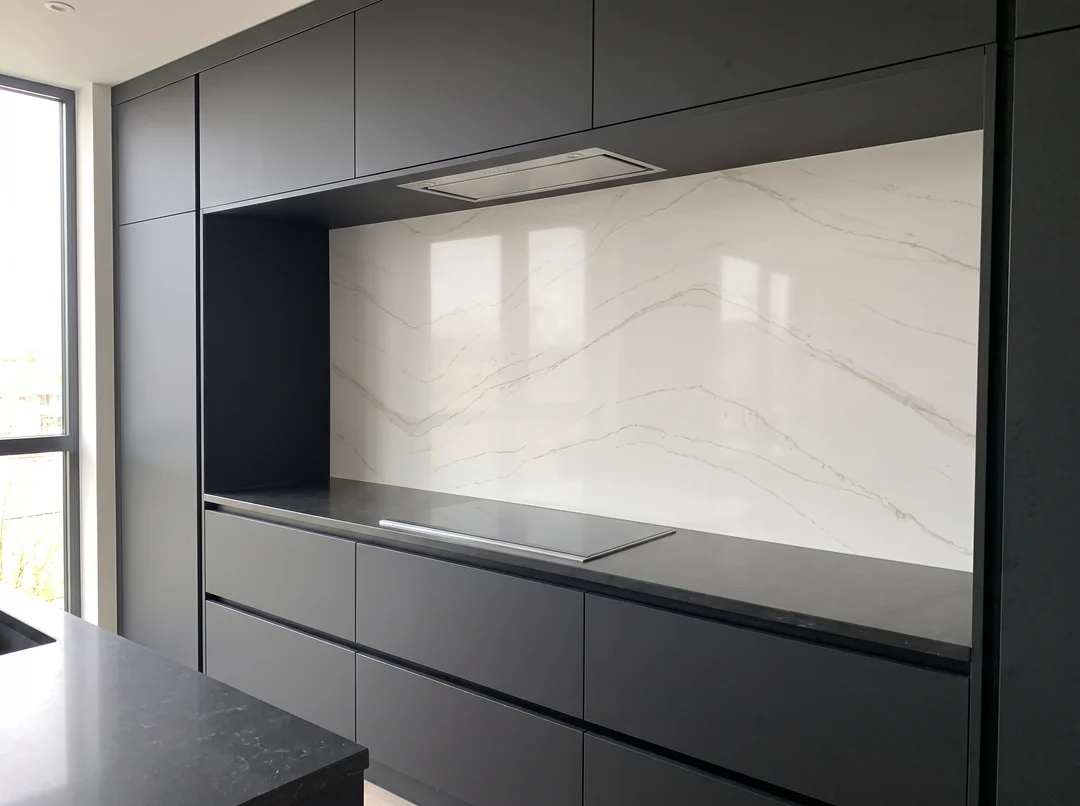
A continuous quartz or stone slab. The same slab as the countertop runs up the wall with no joints at all. It is the cleanest-looking option and the easiest to clean, since there is literally nothing to scrub between tiles. It is also the most expensive, and it requires precise coordination between the countertop fabricator and the cabinet install.
Glass and stainless steel. Less common in homes, but very practical behind a range: no joints, heat resistant, wiped clean in one pass.
Height: three approaches
Standard backsplash. It covers the space between the countertop and the underside of the upper cabinets, often around 45 cm. This is the most economical approach.
Up to the ceiling. Where there are no upper cabinets, on a wall with open shelving or a decorative hood, running the backsplash to the ceiling has a dramatic effect and makes the room feel taller.
A short splash. A simple 10 cm strip in the same material as the countertop. It is the most discreet and least expensive solution, but it leaves painted wall exposed to splashes. In a kitchen that really gets used, it quickly shows its limits, especially behind the sink and range.
Behind the range, always plan to go at least up to the hood. That is the zone that takes the most grease.
Grout: the real maintenance issue
With a tile backsplash, the problem is almost never the tile. It is the grout. Standard cement grout is porous: it soaks up grease and stains and eventually yellows, especially behind the range.
Two ways to avoid that:
- Epoxy or high-performance grout. More expensive and harder to install, but practically stain-proof. It is the option most worth its price behind the range.
- Well-sealed cement grout, with sealer applied after curing and renewed now and then.
Grout colour changes the result too. Grout matching the tile gives a calm, uniform look. Contrasting grout, dark on white tile for example, draws out the pattern but shows every installation irregularity.
Electrical outlets, decided before tiling
This is the detail you regret when it is done badly. An outlet cover that cuts a tile in half or lands crooked on a joint spoils a perfectly laid backsplash.
Three approaches:
- Align the boxes with the pattern, deciding their placement with the tiler before the electrician installs them.
- Set the boxes horizontally, more discreet on a patterned backsplash.
- Move them under the upper cabinets, with a recessed power strip, for a completely clear backsplash. This gets decided during electrical work and has to meet code requirements.
It is a good example of what needs coordinating during a renovation: the electrician, the cabinetmaker and the tiler all need to know each other's plans. Our article on kitchen lighting also explains how under-cabinet lighting can flatter or betray a glossy backsplash.
Plan the backsplash with everything else
The backsplash is chosen last among the surfaces, once the countertop and cabinets are settled, because it has to tie them together. A heavily veined countertop usually calls for a calm backsplash; a plain countertop leaves more room for a coloured or textured tile. Our guide to choosing a kitchen countertop helps make that choice first, and the one on faucets and hardware helps coordinate the metals.
Ordering too little tile is also one of the silliest kitchen renovation mistakes: plan 10 to 15 % extra for cuts and future replacements, especially with handmade tile whose batches vary.
Installing a patterned, zellige or marble backsplash calls for an experienced tiler: a herringbone pattern or irregular tile does not forgive a sloppy starting line.
Frequently Asked Questions
How high should a kitchen backsplash be?
A standard backsplash covers the space between the countertop and the upper cabinets, often around 45 cm. Where there are no uppers, it can run to the ceiling. Behind the range, it should go at least up to the hood.
Is marble a good choice for a backsplash?
It is beautiful but demanding. Marble is porous and marks on contact with acids like lemon or vinegar. It needs regular sealing and you have to accept that it develops a patina over time.
How do you keep backsplash grout from yellowing?
Use epoxy or high-performance grout, especially behind the range, or properly seal cement grout and renew the sealer now and then. A mid-tone grout also hides stains better than pure white.
Is a quartz slab backsplash worth the cost?
It is the easiest option to clean, since it has no joints, and the cleanest visually. It costs more than ceramic and needs good coordination with the countertop fabricator, but it eliminates grout maintenance entirely.
How much extra tile should you order?
Plan 10 to 15 % more than the measured area, for cuts, breakage and future repairs. For handmade tile or zellige, order it all at once, because production batches vary in colour.
Post your project
Describe your work once, and contractors in your area who do this kind of work can get back to you. It's free, with no commitment.
Post a project