Flooring Renovation: Hardwood, Laminate or Vinyl, Which One Is Right for You?
Your floor is the surface you walk on every day. It defines a room's atmosphere, absorbs sound, stands up to moisture and scratches (or doesn't) and it lasts an average of 20 to 50 years depending on the material. That's a decision worth getting right.
Solid hardwood, engineered wood, laminate, luxury vinyl plank, ceramic, polished concrete: the options have never been wider. Here's what actually differentiates them, what they cost, and how to match the right material to the right space.
The Main Flooring Types
Solid Hardwood
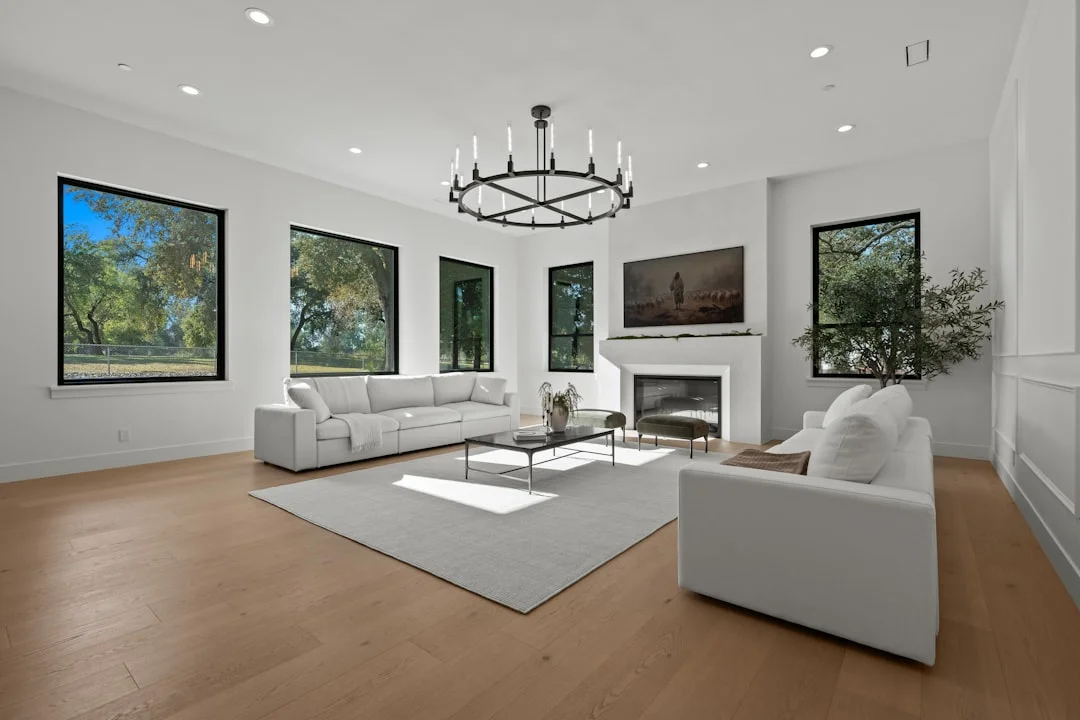
Solid hardwood (oak, maple, walnut, hickory) is the most premium option. Each plank is milled from a single solid piece of wood and can be sanded and refinished multiple times over the decades. The appeal is genuine longevity (50 years or more with maintenance), the ability to renovate rather than replace, and a place among profitable renovations at resale, and warmth that no manufactured product fully replicates. The tradeoffs are real too: solid hardwood is sensitive to humidity and temperature swings, which makes it unsuitable for humid contexts: basement renovation, bathroom renovation, or most radiant heat installations without careful precautions. It needs to acclimatize before installation and carries the highest price tag. Installed: $8 to $18/sq ft depending on species and finish.
Engineered Wood
Engineered wood consists of a noble hardwood veneer bonded over multiple layers of plywood. It offers the look of solid hardwood with significantly better dimensional stability, better moisture resistance, compatibility with radiant heat, and the ability to be installed in basements depending on thickness. The veneer can be sanded 1-3 times depending on its thickness; check that minimum is 3 mm before buying, since quality varies widely between manufacturers. Installed: $6 to $14/sq ft. Lifespan: 25-40 years.
Laminate
Laminate consists of a high-definition photo of wood or stone bonded to a high-density fiberboard core, with a resin wear layer on top. It closely mimics the look of wood at a significantly lower price, installs quickly with a click-lock system that works well for DIY, and offers better scratch resistance than solid wood. The limitations: it can't be sanded or refinished, damaged planks must be replaced individually, and it's vulnerable to standing water unless you're buying a specifically waterproof model. A thin or poor-quality underlay produces a hollow, cheap sound underfoot. Installed: $3 to $7/sq ft. Lifespan: 15-25 years.
Luxury Vinyl Plank (LVP)
Luxury vinyl plank is one of the fastest-growing flooring categories on the market, and for good reason. It's 100% waterproof, durable, quiet and soft underfoot, and installs over almost any existing surface without major subfloor prep. It works in every room including bathrooms and basements, handles in-floor heating well, and sits at a mid-range price point. The tradeoffs: it can't be sanded, some budget products off-gas VOCs (look for FloorScore certification), and it doesn't carry the same resale premium as real hardwood. Installed: $4 to $10/sq ft. Lifespan: 20-30 years.
Ceramic and Porcelain
Ceramic and porcelain tile are essential for bathrooms and kitchens, and work equally well in entryways, basements, and over radiant heat systems. They're completely waterproof, very durable, and easy to clean. The downsides are real for living spaces: cold and hard underfoot, acoustically resonant, complex to install correctly (requires a perfectly flat and rigid substrate), and grout lines that need regular maintenance. Installed: $5 to $15/sq ft depending on format and complexity. Lifespan: 30-50 years.
Choosing by Room
| Room | Primary recommendation | Alternative |
|---|---|---|
| Living / dining room | Hardwood or engineered wood | Luxury vinyl |
| Bedroom | Hardwood, laminate, or vinyl | Carpet |
| Kitchen | Luxury vinyl or ceramic | Waterproof laminate |
| Bathroom | Ceramic or luxury vinyl | Waterproof LVT |
| Basement | Luxury vinyl or floating engineered wood | Ceramic |
| Entryway | Ceramic or luxury vinyl | Hardwood (satin finish) |
How Much Does Flooring Replacement Cost?
Prices below include supply and professional installation with removal of the existing floor. Laminate runs $3 to $7/sq ft. Luxury vinyl plank runs $4 to $10/sq ft. Engineered wood runs $6 to $14/sq ft. Solid hardwood runs $8 to $18/sq ft. Ceramic or porcelain runs $5 to $15/sq ft.
For a 250 sq ft living room, that translates to roughly $750 to $1,750 for laminate; $1,000 to $2,500 for LVP; $1,500 to $3,500 for engineered wood; and $2,000 to $4,500 for solid hardwood. Additional costs to factor in: removal of the existing floor ($0.50 to $1.50/sq ft), subfloor leveling if needed ($500 to $2,000), baseboards and quarter-round ($1 to $3 per linear foot), and underlay for laminate or engineered wood ($0.25 to $1/sq ft).
DIY Installation: What's Realistically Doable
Laminate and click-lock LVP are the only flooring types genuinely accessible to a non-professional. The installation is logical, the tools are simple (a circular saw, spacers, a mallet and tapping block) and a mistake is easily fixed by lifting and relaying planks.
Nailed or glued solid hardwood, ceramic tile, and glued engineered wood require a home renovator or a flooring contractor, plus specialized tools. Depending on your area, you can start from our lists of flooring contractors in Montreal or flooring contractors in Quebec City. Amateur ceramic installation on a slightly flexible subfloor will produce cracked tiles within months. For a first installation, target laminate or LVP on a flat, dry surface. For everything else, the DIY vs contractor calculation clearly leans toward professional labour.
Common Mistakes to Avoid
Skipping acclimatization is a frequent and costly error: solid hardwood and engineered wood must rest in the room for 48-72 hours before installation to adapt to ambient humidity. Skip this step and you get warping and open joints within weeks. Neglecting the subfloor is another, any unevenness greater than 3 mm over 6 feet will be visible and audible on laminate or LVP, and leveling is mandatory before installation. In a basement, test the concrete slab's moisture level before choosing your material: plastic taped to the floor for 72 hours reveals rising moisture that rules out solid wood and many laminates.
On price: a $0.89/sq ft laminate is genuinely cheaper in the store. A quality HDF laminate at $2.50/sq ft will last twice as long, sound more solid underfoot, and won't buckle at the first spilled drink.
Questions to Ask Your Installer
Before signing off on any flooring job, ask: what is the AC rating (wear resistance) of the proposed laminate or LVP (AC3 is the minimum for heavy residential use; is the engineered wood veneer at least 3 mm thick; is the product certified formaldehyde-free (CARB Phase 2 or FloorScore); does the price include removal of the existing floor and installation of baseboards; and what does the manufacturer's warranty actually cover) wear layer, or manufacturing defects only?
A new floor transforms a room more dramatically than almost any other renovation at the same budget. Matching the right material to the right space produces a result you'll live with contentedly for the next two decades.
Frequently Asked Questions
What's the difference between laminate and luxury vinyl plank?
Laminate is made from compressed wood fibers (HDF), it closely mimics wood but is not waterproof, and prolonged water exposure causes swelling. LVP is entirely plastic and 100% waterproof, making it suitable for bathrooms, kitchens, and basements. Both use click-lock installation, but LVP handles moisture better and tends to be quieter underfoot.
Can you install new flooring over the existing floor?
Yes, in some cases. A floating laminate or LVP can be laid over existing vinyl, laminate, or ceramic tile if the surface is flat, dry, and firmly fixed. Each additional layer reduces door clearance and can create problematic thresholds, so verify the existing surface is in good condition before covering it.
How long does flooring installation take?
For a standard room of 200-300 sq ft, expect 1-2 days for a professional installer, not including removal and subfloor prep. Removing the old floor and leveling the subfloor can add another day. LVP and laminate are typically usable the same evening; glued engineered wood needs 24 hours; ceramic tile needs 72 hours.
Does hardwood flooring really increase resale value?
Yes, measurably. Real estate agents estimate that quality hardwood in good condition can increase a home's perceived value by 3-5% and accelerate the sale. Quality engineered wood has a similar effect. Laminate and LVP are essentially neutral, they don't hurt the sale but don't command a significant premium.
Ready to start your project?
Describe your work, choose how many quotes you want to receive, and compare qualified contractors near you. Free and no commitment.