Curbless Walk-In Shower Guide
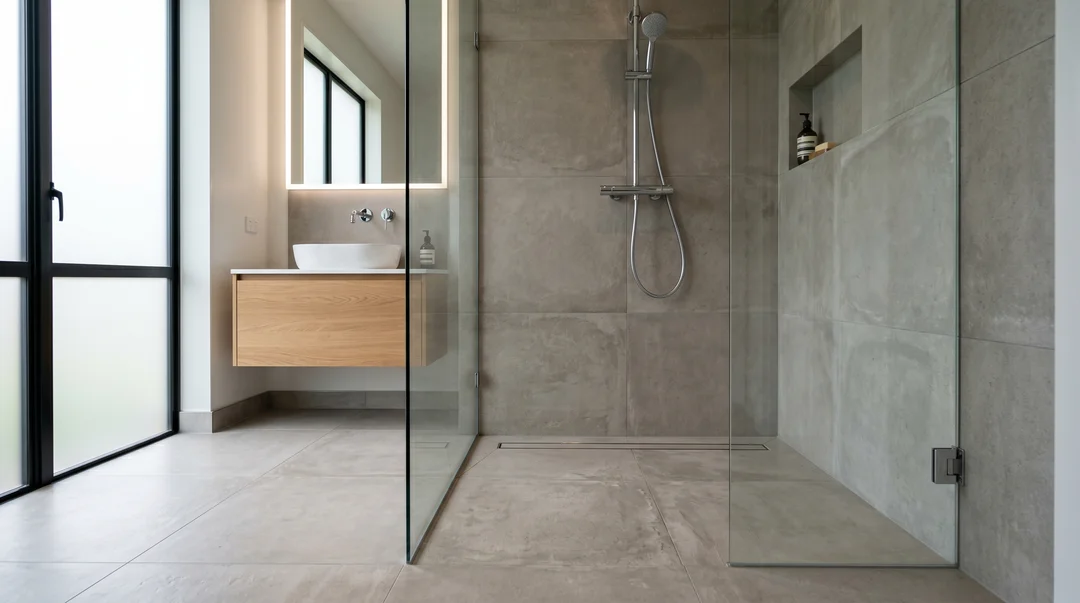
The curbless walk-in shower has become the default layout in Quebec bathroom renovations over the past five to seven years. It's been steadily replacing the classic tub-shower combo because it opens up the space visually, makes cleaning easier, and adapts better to aging in place. But behind the apparent simplicity of a slab that just meets the bathroom floor hides a set of technical constraints homeowners underestimate: floor structure, multi-layer waterproofing, precise slope, and a particular headache in condos. Here's what to know before signing.
Feasibility: the first real question
Before any tile or fixture choice, the question is whether your bathroom actually accepts a curbless shower technically. Three variables matter.
The structure under the floor. For a shower to truly be curbless, the drain and slope have to fit inside the floor thickness. On a concrete slab (basement, new condo), it's complex because you have to break the slab. On wood joists, you usually have 18 to 24 cm of clearance between the underside of the subfloor and the ceiling below, enough for the system, but it requires cutting and reinforcing joists around the drain. Plan an extra day of carpentry at the start of the job.
The drain type available. Conventional centre drain at 75 mm diameter, or a linear drain 60 to 90 cm long. The drain choice drives the slope required and the tile cuts. More on that below.
Existing rough-in. The supply and drain of the old tub are almost never positioned right for a walk-in shower. Relocating the drain (30 cm to 1.5 m) is typical and requires a licensed plumber, plus opening the floor.
If any of these three doesn't sort out reasonably, you either accept a small curb of 2 to 4 cm (often visually acceptable) or drop the curbless idea. Forcing a technically marginal project leads to infiltration within the first six years.
Waterproofing: the sandwich system
This is the line item where cutting corners is the most dangerous. A curbless shower receives all its water at floor level, and gravity carries that water everywhere: under tiles, into corners, along walls. Without a code-compliant waterproofing system, the water ends up in the floor structure within months.
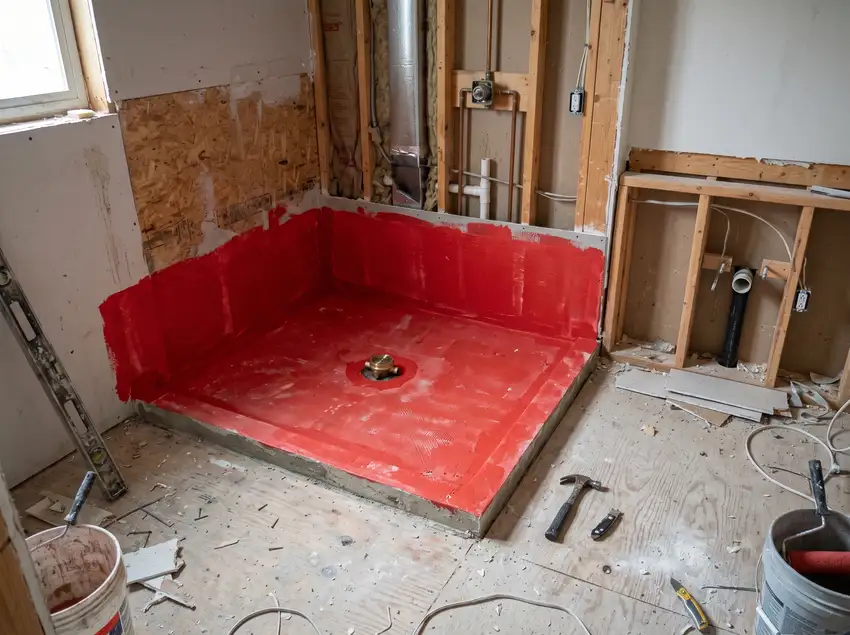
The modern Quebec standard is an integrated system (Schluter-Kerdi, Wedi, Laticrete Hydro Ban and equivalents): an impermeable panel or membrane bonded to the entire shower surround (floor, walls up to at least 1.8 m), with sealing tape at joints and a collar around the drain. Tile and grout go on top. Grout is NOT the waterproofing, contrary to common belief. The layer underneath holds back the water.
Three classic traps to avoid:
- No membrane or partial coverage (just the floor). Wall infiltration guaranteed.
- Unsealed joints between membrane sections. Water gets through the seams.
- Bad counter-slope at the edges (water flows toward the wall instead of the drain). Subtle but fatal over three to five years.
Ask to see, on site, the waterproofing system installed BEFORE the tile goes on. That's the critical verification moment. Once ceramic is set, you can no longer check what's underneath.
Linear drain or centre drain: and the slope
The traditional centre drain requires a four-way slope toward the centre, about 2 percent (2 cm per metre). On a large shower (1.5 m on a side), that forces tiles to be cut into four triangles around the drain, or pushes you toward small mosaic tiles. Visually it's more segmented.
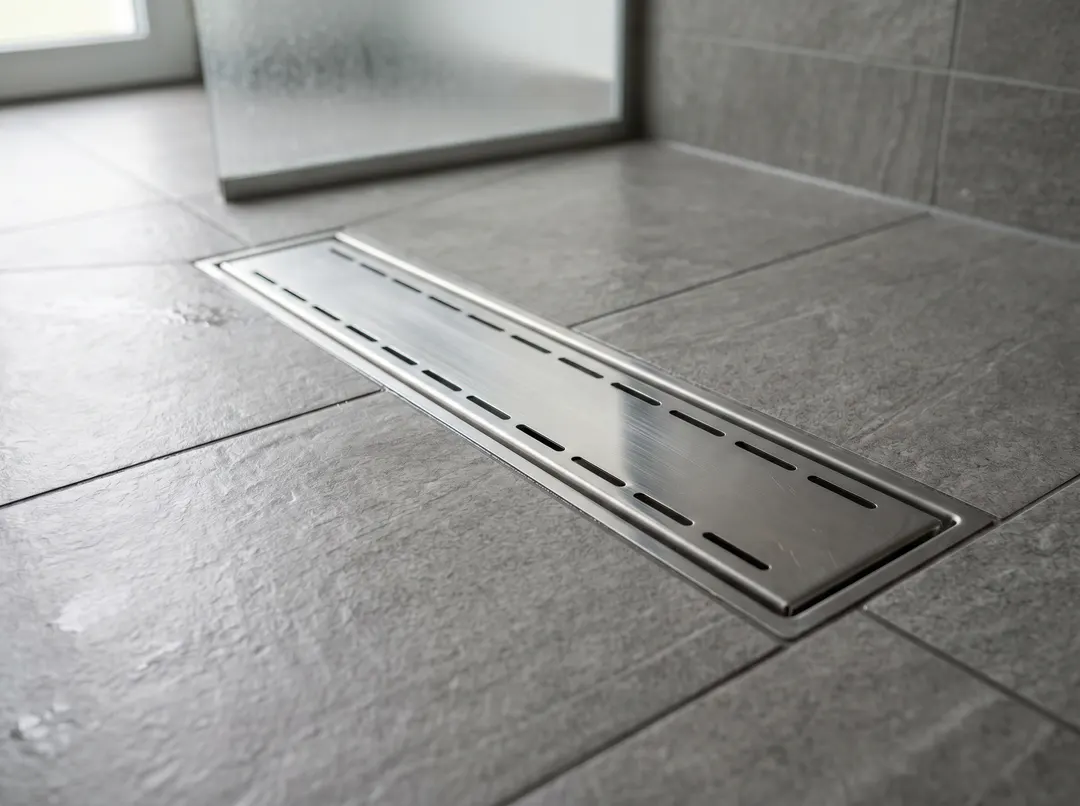
The modern linear drain creates a single slope toward a drainage line (typically against a wall). Upside: you can use large-format tiles (60 x 60 and bigger), the slope feels softer visually, and the look is more contemporary. Downside: it costs two to three times more than a centre drain, and it demands tighter coordination between plumber and tile setter.
Typical 2026 choice: linear drain for renovations over 8 000 $, centre drain for tighter budgets. Both work technically. The linear drain is an aesthetic and comfort call, not a durability question.
Condo constraints: the particular headache
If you own a condo, this project takes more than it would in a single-family home. Three obstacles to anticipate.
Condo board authorization. The declaration of co-ownership almost always governs modifications affecting load-bearing walls, common plumbing or waterproofing. A bathroom modification requires written authorization in advance. Plan for 4 to 8 weeks of administrative delay minimum.
Reinforced waterproofing toward the unit below. A leak to the floor below engages your civil liability and the condo's. Most boards require a certified waterproofing membrane plus a written contractor warranty. Confirm you can supply both documents before signing.
Limited ceiling height. In many condos built after 2000, ceilings are at 2.3 or 2.4 m, the subfloor is thin, and the concrete slab doesn't allow digging for the slope. The classic compromise: a mini-curb of 2 to 3 cm, or raising part of the surrounding bathroom floor to match levels. An experienced condo home renovator knows these tradeoffs and what to propose.
The project is feasible in condos 80 percent of the time, but always requires more planning, more coordination, and a renovation permit (both municipal and from the condo board).
Cost and project duration
The cost of a full bathroom with a curbless walk-in shower sits between an upper-end modest renovation and a serious overhaul. Variables that swing the budget: drain type, tile coverage (just the shower or the whole room), finish level (vanity, fixtures, lighting, heated floor), and complexity of the plumbing relocation. For detailed numbers by line item, see the guide on bathroom renovation cost in Quebec.
On duration, plan 3 to 5 weeks for a curbless walk-in shower in a full bathroom redo, with about half that time on waterproofing and tile (which needs cure time between layers). In a condo, add 4 to 8 weeks of administrative wait at the start. Demand is high in spring and summer, so book the specialty tile setter 6 to 10 weeks out.
Always request three detailed bids with line-item breakdown. The method for comparing contractor quotes applies line by line. On a bathroom, the spread between contractors can hit 35 to 50 percent because of differences in waterproofing systems used.
Frequently Asked Questions
Can you install a curbless walk-in shower in an older bathroom?
Yes in most cases, provided the wood joist structure offers 18 to 24 cm of clearance to fit the slope and drain. On a concrete slab (basement, condo), you either break out part of the slab or accept a small curb of 2 to 3 cm. A preliminary floor inspection by a contractor or plumber is the step that settles it.
Do you need a permit for a bathroom renovation in Quebec?
Yes whenever you modify main plumbing, the main electrical, a partition wall, or relocate a drain. Replacing tile and the vanity without touching the rest usually doesn't require one. Check with the municipality.
Why is the linear drain so much more expensive than a centre drain?
Three reasons: polished stainless steel fabrication is more costly, installation requires tighter coordination between plumber and tile setter, and the waterproofing membrane has to be adapted to the linear profile. The typical premium runs 60 to 100 percent over a centre drain, justified only by the modern look and large-tile compatibility.
How long should the project take?
3 to 5 weeks in a single-family home, 6 to 10 weeks in a condo (because of the board approval wait). The longest phase is waterproofing and tile, which needs cure time between coats. Trying to compress that phase guarantees infiltration problems later.
Is a curbless shower really an accessible aging-in-place solution?
Yes, it's one of its main arguments. No curb removes the trip risk getting in and out of the shower, and lets you use a bench or wheelchair without retrofit work. To maximize this, also plan grab bar blocking (wall reinforcement during the job so they can be added later) and a minimum 90 cm door width.
Ready to start your project?
Describe your work, choose how many quotes you want to receive, and compare qualified contractors near you. Free and no commitment.