Foundation Waterproofing Methods and Cost
A damp foundation wall, a crack that weeps after every heavy rain, a musty smell that always comes back in the northeast corner: these are the three most common symptoms of failing basement waterproofing in Quebec. The problem is sneaky because it progresses for years without breaking anything visible, until the day you discover the finished floor structure is rotting or the interior walls are colonized by mould. Two families of methods exist to fix it: interior or exterior. The right choice depends on the real source of the infiltration, and on the space available around the house.
The fundamental difference between interior and exterior
This is the first point to understand, because the two families don't solve the same problem.
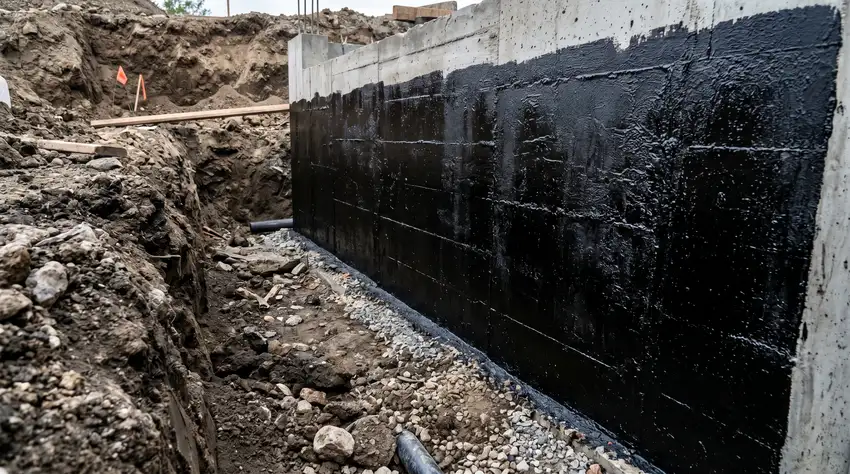
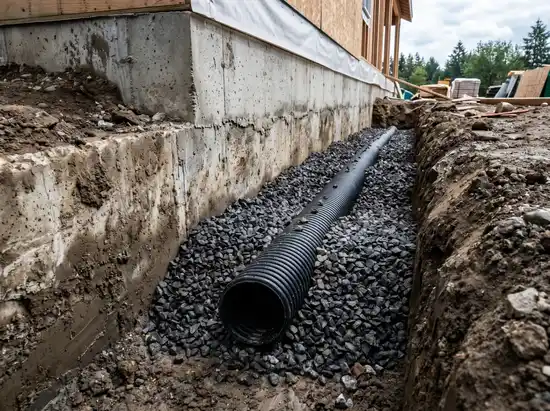
Exterior waterproofing tackles the cause: water pushing against the foundation wall from the soil. You excavate along the foundation, clean the concrete wall, apply an elastomeric or bituminous waterproofing membrane, install proper drainage and a French drain at the foundation footing, then backfill with a filtering mix. Water no longer touches the concrete. It's the "for good" method.
Interior waterproofing tackles the consequences: water passing through the concrete or cracks and entering the basement. You inject the cracks to seal them, install an interior drain that catches the water and routes it to a sump pit with a pump, then mount a membrane on the interior wall. Water keeps pushing against the wall, but it gets managed once inside. It's the "contain and evacuate" method.
The big tradeoff is invasiveness versus durability. Exterior requires digging around the entire house (3 to 6 days on site, torn-up yard) but solves the problem for 40 years and up. Interior is done without any outdoor digging (1 to 3 days, daily life preserved) but requires pump maintenance, and the interior membrane lasts 15 to 25 years.
The interior method: injection and interior drainage
This is the default choice when the infiltration source is clear and localized (one to three cracks), or when excavation is impossible (party wall, paver patio you don't want to remove, sloped lot with significant grade).
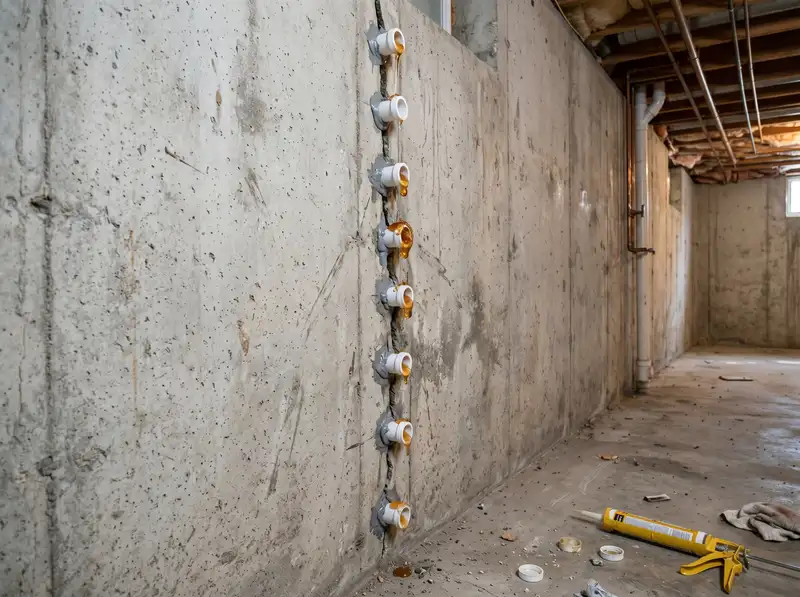
Crack injection. White injection ports are installed along the crack, then polyurethane resin is injected under pressure. The resin expands and seals the crack from inside out. Typical cost: 400 $ to 900 $ per crack for a standard vertical crack of 1 to 2 metres. It's fast (half a day), minimally invasive, and the polyurethane stays flexible for 25 years even if the concrete shifts slightly.
Interior drainage. If water doesn't just pass through one crack but also through the concrete itself (saturated wall, or multiple micro-cracks), you install a drain at the base of the wall on the interior side. The drain catches water and routes it to a sump pit with a submersible pump. Cost: 4 500 $ to 9 000 $ for the full perimeter of an average basement.
Limitations. The interior method doesn't fix structural issues if infiltration is causing erosion behind the wall, and the system depends on a pump (power outage = flooding, unless a battery backup is in place). For homes built before 1975 where the foundation wall has never had exterior treatment, interior is often a stopgap before a heavier renovation.
The exterior method: excavation, membrane, redone French drain
This is the method for serious cases: blocked French drain, multiple cracks, deteriorating wall, or a full basement finish planned right after. You want to fix the problem once and move on.
Typical steps on one side of an 8-metre house:
- Excavate down to the foundation footing (1.8 to 2.4 m deep), pile dirt on tarps
- Clean and inspect the concrete wall, seal cracks with hydraulic mortar
- Apply an elastomeric bituminous membrane with a roller or spray, in 2 to 3 coats
- Install a dimpled protection membrane (Delta-MS type) that creates a drainage gap
- Install or replace the French drain (perforated pipe in filtering gravel, geotextile wrap)
- Controlled backfill in compacted layers, lawn restoration
Typical duration: 3 to 6 days per side, 7 to 12 days for the full perimeter. An experienced crew with a mini-excavator moves fast.
Conditions to verify before signing: utilities (Hydro-Québec, Énergir gas, municipal water) must be located before any excavation, machinery access to the yard, and a municipal permit depending on the city.
Diagnose the real source before choosing
Classic trap: you spot a wet stain in one corner and order full waterproofing, when the actual problem is misaligned gutters or a single crack. Three sources to verify before signing a contract.
Surface drainage. Yard grade must slope away from the house (minimum 5 percent over the first 1.5 m from the wall). Gutters must discharge at least 1.8 m from the foundation. Many cases of basement moisture get solved with a 5-metre gutter extension and a grading touch-up at 800 $ to 1 500 $. Before excavating at 12 000 $, check that.
Failing French drain. The drain at the foundation footing, normally installed at construction, clogs over time (silt, iron ochre in Quebec, tree roots). If it's blocked, water builds up at the wall and eventually passes through. A camera inspection (300 $ to 600 $) is the diagnostic step before deciding. If the drain is blocked and you don't waterproof the wall in the same job, you fix the problem halfway.
Shrinkage vs structural cracks. Thin vertical cracks (under 3 mm) on the slab or walls are almost always concrete shrinkage cracks, structurally harmless, treated by injection. Horizontal cracks, stair-step cracks, or anything over 3 mm are structural cracks: you need a structural engineer (300 $ to 800 $ for an assessment) before any waterproofing. If you're planning to finish your basement after the work, the sequence is: fix the moisture, validate the structure, then finish.
Cost, lifespan and permit
Realistic Quebec price ranges in 2026:
| Intervention | Typical cost | On-site duration | Lifespan |
|---|---|---|---|
| Single crack injection | 400 $ to 900 $ | 1/2 day | 25 years |
| French drain camera inspection | 300 $ to 600 $ | 1/2 day | informational |
| Full interior drainage + sump | 4 500 $ to 9 000 $ | 2 to 4 days | 15 to 25 years (pump every 5-10) |
| Exterior waterproofing, one side | 3 500 $ to 6 500 $ | 3 to 5 days | 40 years and up |
| Full exterior waterproofing + drain | 14 000 $ to 28 000 $ | 7 to 12 days | 40 years and up |
A renovation permit is required for any excavation near the foundation and for installing or replacing a French drain, regardless of the municipality. Crack injection alone or interior drainage usually doesn't require one, but check with the municipality.
A home renovator or a general contractor coordinates this kind of project when exterior waterproofing is involved (machinery operator, plumber for the drain, landscaper for restoration). For injection alone, a foundation specialist is enough. Depending on your area, see foundation contractors in Montreal or foundation contractors in Quebec City.
Always request three detailed bids with line-item breakdown. The method for comparing contractor quotes applies line by line on this kind of project, where proposed methods can vary widely between contractors. Bid spreads can hit 60 percent on the same problem, often because the approaches proposed are actually different.
Frequently Asked Questions
What's the difference between crack injection and interior drainage?
Injection seals a specific crack with polyurethane resin. Interior drainage catches water passing through a generally permeable wall and routes it to a pump. Injection fixes a localized problem, drainage manages a widespread one. Many cases combine both: inject the visible cracks AND install an interior drain if the rest of the wall stays damp.
Is exterior waterproofing actually necessary, or is it overselling?
Exterior is the right answer when the French drain is blocked, when multiple cracks come back despite injections, or when you plan a full basement finish and want to eliminate the risk for 40 years. For a minor leak on one or two cracks on a newer home with a working drain, exterior is overkill and interior gets the job done.
How long does basement waterproofing last?
Polyurethane crack injection lasts 25 years. An exterior elastomeric membrane lasts 40 years and up if installed properly. Interior drainage lasts 15 to 25 years, with the submersible pump replaced every 5 to 10 years (plan 400 $ to 800 $ per replacement, battery-backup pump recommended).
Do you need a permit for this in Quebec?
Yes for any excavation near the foundation and for installing or replacing a French drain. No for crack injection alone or interior drainage under the finished floor. Check with the municipality, since some require a permit for any work on the envelope below grade.
Does home insurance cover this kind of repair?
Rarely for preventive repairs (waterproofing before infiltration). Often partially for water damage caused by sudden, unforeseeable infiltration, never for chronic moisture. Read the claim section and the "infiltration" coverage in the policy. Also check whether an exclusion applies past a certain French drain age.
Ready to start your project?
Describe your work, choose how many quotes you want to receive, and compare qualified contractors near you. Free and no commitment.