
Spring Inspection: What to Check After a Quebec Winter
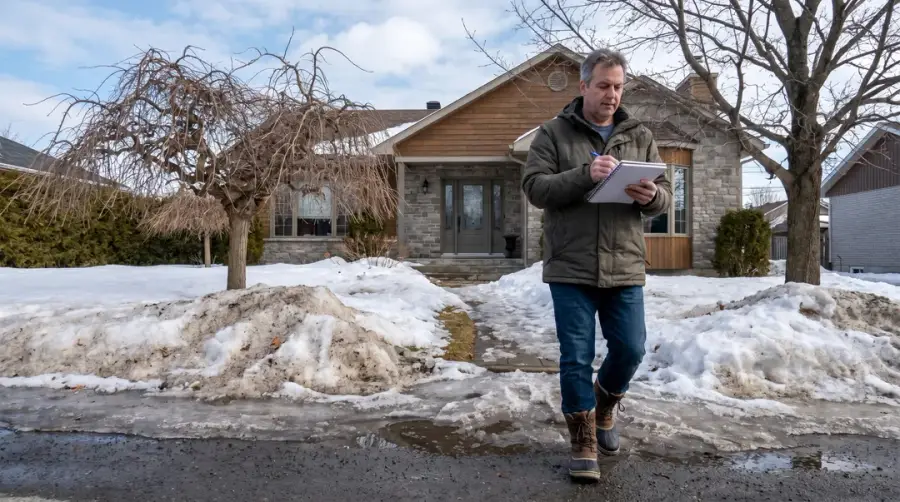
A Quebec winter works every square centimetre of a house. Freeze-thaw cycles, ice buildup, soil movement under saturated ground, 50-degree temperature swings over a few months: these are brutal stresses no material gets through without leaving marks. The good news is that most problems show up in spring in visible form, if you know where to look. A serious inspection in April or May takes two or three hours and lets you catch the work that needs to happen before small cracks turn into costly renovation mistakes.
Foundations: Where Winter Leaves the Most Lasting Traces
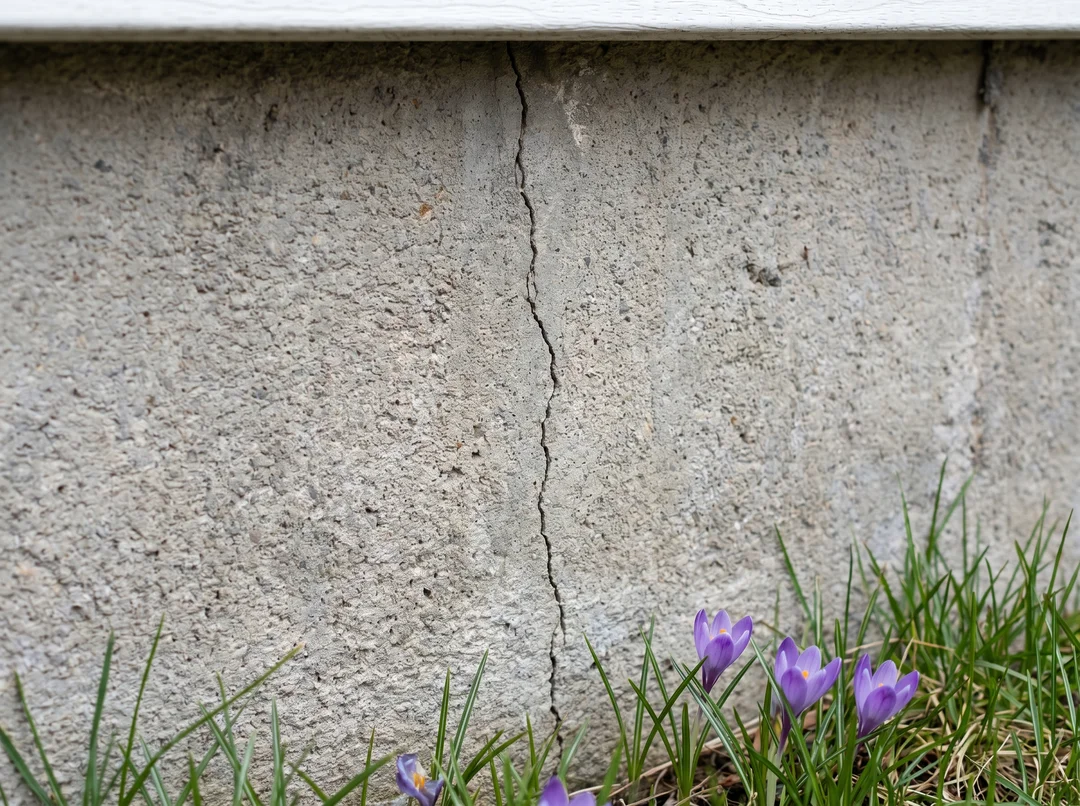
Foundations are the first place to examine. With the thaw, water seeps in, refreezes during a late spring cold snap, and works the concrete or stone. A hairline crack from last year may have widened over winter without you noticing.
Walk the entire perimeter slowly. Look for vertical cracks (usually benign but worth tracking), horizontal cracks (serious, a sign of lateral soil pressure), efflorescence (chalky white mineral stains indicating water intrusion), and zones where stucco or parging is detaching. In the basement, examine the same walls from inside: damp stains, blistering paint, water rings near the bottom of walls.
A crack under 3 mm without visible water can often wait for another season of observation. Beyond that, or as soon as there's interior moisture, it becomes a file to bring to a foundation contractor before summer.
Roof and Gutters: The Hidden Damage from Ice
Ice dams are the great enemy of Quebec roofs. When heat from the house melts snow at the top of the roof, water runs down toward the cold edge and refreezes, forming an ice ridge that forces water back up under the shingles. The result shows up in spring: ceiling stains, displaced shingles, torn or sagging gutters.
Inspect the roof from the ground with binoculars if possible. Look for shingles that have shifted (a possible sign that you may need to replace the roof), sections where granules are visibly missing, deformed flashing around chimneys and skylights. Gutters should slope continuously toward downspouts, with no sags or separations. A gutter pulling away on one side or hanging loose is a replacement signal, not just a repair.
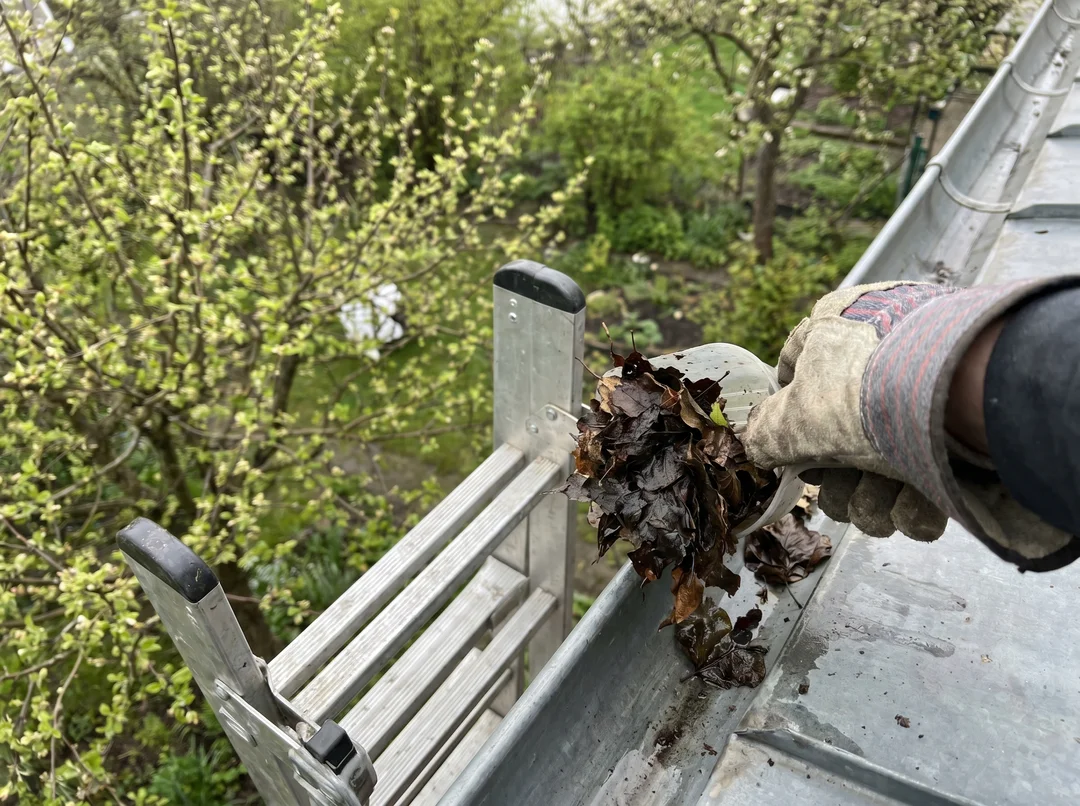
Spring gutter cleaning isn't optional. Last fall's leaves, mixed with grit washed off the roof, clog downspouts and send all the rain toward the foundation. It's one of the biggest causes of basement infiltration, and it's free to fix.
Windows, Doors, Caulking
Winter's temperature swings expand and contract every joint in the house, and caulking eventually gives. In spring, walk every exterior window and door. Look for caulking that's cracked, hardened, or detached from the frame. The joints between different materials (wood and brick, metal and stucco) are the first to fail.
Redoing exterior caulking is a weekend project on a small house. Material cost: $50 to $150. Cost of waiting a year: easily several hundred dollars in lost energy, plus infiltration risk at the joints.
Inside, also check the bottoms of window frames, especially on north- and east-facing windows. A moisture trace or warping at the base typically signals failed exterior caulking above, and sometimes that window replacement is coming.
Drainage and Grading
The ground around the house shifts during winter. Snow that compacts against the foundation can change the slope of the surrounding terrain. As it thaws, watch where water actually flows: it should run away from the house, not pool against it. Persistent puddles against walls mean the grade needs to be rebuilt to restore at least a 2 percent slope on the first few metres.
Also check downspout extensions. Ideally, they should discharge water at least 1.5 metres from the wall, either with a rigid extension or into a surface drain. A downspout dumping straight against the foundation is almost guaranteed to cause an infiltration sooner or later.
A Few More Quick Checks
A few extra minutes covers the rest.
The exterior cladding, whatever the material: detached panels, blistering paint, signs of rot at joints and window connections.
The outdoor air conditioner or heat pump: clearing leaves and debris around the unit, checking that nothing blocks the fins, restarting and listening for normal operation.
Wood decks and patios: checking the state of stain or sealer, warped or rotten boards, safety railings that may have shifted.
Bathroom fan and dryer vents: checking exterior outlets (damper opens freely, no nest or snow blockage).
Frequently Asked Questions
When is the best time to inspect a house after winter?
The ideal window is between mid-April and mid-May, once snow has melted and the ground is starting to dry, but before vegetation hides foundations and cladding. An inspection done too early (March) misses the infiltration signs that appear with full thaw. Too late (June), foliage covers part of the visible problems.
Do you need a professional inspector every spring?
Not necessarily. A careful visual inspection by the homeowner, followed by a call to a specialist contractor when there's any doubt, covers most cases. A full professional inspection ($300 to $700) is more relevant during a purchase, after a major event (severe storm, water damage), or every 5 to 10 years for a comprehensive checkup.
What is the difference between a vertical and horizontal foundation crack?
Vertical cracks generally come from normal concrete shrinkage and tend to stay stable. They deserve monitoring and a preventive repair if they exceed 3 mm or show any seepage. Horizontal cracks, on the other hand, indicate lateral soil pressure against the foundation and can evolve quickly into a serious structural issue. A horizontal crack should always be assessed by a professional before being considered benign.
How much does professional gutter cleaning typically cost in Quebec?
For a standard single-family home, professional cleaning runs $150 to $350 depending on height, access, and total gutter length. It's a tiny investment compared to the cost of a basement infiltration, which can easily reach several thousand dollars in repairs.
Ready to start your project?
Describe your work, choose how many quotes you want to receive, and compare qualified contractors near you. Free and no commitment.