Quebec Construction Holiday 2026: Dates and Impact
In brief: The 2026 Quebec construction holiday runs from Sunday, July 19 to Saturday, August 1, two weeks of mandatory shutdown affecting nearly 200,000 workers across all four sectors (residential, institutional and commercial, industrial, civil engineering). The 2026-2027 winter holiday runs from December 20 to January 2, 2027.
2026 Quebec construction holiday dates
Summer 2026
From Sunday, July 19, 2026 (12:01 a.m.) to Saturday, August 1, 2026 (midnight). Two full weeks during which the vast majority of construction sites across Quebec are closed.
Winter 2026-2027
From Sunday, December 20, 2026 (12:01 a.m.) to Saturday, January 2, 2027 (midnight). Two weeks covering Christmas, New Year and the holiday season.
These dates are fixed by the sector collective agreements of the construction industry and confirmed by the Commission de la construction du Québec (CCQ). They apply uniformly to all four sectors.
All 2026 statutory holidays in the construction industry
In addition to the two mandatory weeks in summer and winter, ten paid statutory holidays apply to all workers subject to Bill R-20. Here is the full 2026 calendar.
| Statutory holiday | 2026 date | Day of week |
|---|---|---|
| New Year's Day | January 1 | Thursday |
| Good Friday | April 3 | Friday |
| Easter Monday | April 6 | Monday |
| National Patriots' Day | May 18 | Monday |
| Quebec National Holiday (Saint-Jean-Baptiste) | June 24 | Wednesday |
| Canada Day | July 3 | Friday |
| Labour Day | September 7 | Monday |
| Thanksgiving | October 12 | Monday |
| Remembrance Day | November 13 | Friday |
| Christmas Day | December 25 | Friday |
Sectors (residential, institutional and commercial, industrial, civil engineering) may apply slightly different rules for indemnity payments or compensation for work performed on a statutory holiday. The 2026 official calendar published by the CCQ remains the authoritative reference.
Why the shutdown exists
The Quebec construction holiday dates back to a 1970 government decree, which aimed to standardize vacation time in an industry where every site ran on its own calendar. The reasoning: give everyone the same summer pause, make family planning easier, and let employers maintain equipment during two quiet weeks.
Today, these holidays are framed by sector collective agreements, themselves anchored in Bill R-20 (An Act respecting labour relations, vocational training and workforce management in the construction industry). It is not strictly a law that "shuts the industry down." It is collective agreements that mandate site closure on specific dates, and the CCQ that enforces compliance.
According to official CCQ statistics, nearly 200,000 workers were active on Quebec construction sites in 2024, and the industry is expected to exceed this annually through 2029.
Who is affected: the four construction sectors
Bill R-20 splits the industry into four sectors. Each has its own collective agreement, but summer and winter holiday dates are uniform across all four.
Residential sector. Construction and renovation of single-family homes, duplexes, triplexes and residential buildings of fewer than nine units. This sector is the one that affects the largest number of homeowners.
Institutional and commercial sector (IC). Schools, hospitals, office buildings, shopping centres, restaurants, hotels.
Industrial sector. Factories, refineries, manufacturing plants, distribution centres.
Civil engineering and roads sector. Highways, bridges, dams, public infrastructure, water and sewer networks.
A contractor whose work falls primarily under one of these sectors, and whose employees hold CCQ competency certificates, is bound by the two weeks of mandatory closure. This covers virtually every formal residential renovation contractor in Quebec.

Who is NOT affected
Many homeowners ask whether their renovator will really be closed. The answer depends on the company's status and the type of work.
Emergency and on-call repairs are allowed during the holiday. If a roof leaks during a heat wave or a water line bursts, a plumber on duty can step in. These interventions are paid at the applicable rate and do not breach the collective agreements.
Owner-builders (homeowners who carry out work on their own property themselves) are not subject to the CCQ. You can paint your fence, lay a floor or build a deck on July 24 with no issue.
Smaller residential trades outside Bill R-20 may continue during the holiday. The exact rule depends on the trade, the number of employees and the contract value; when in doubt, check directly with the CCQ.
Off-site services (material sales, interior design, architecture, horticultural landscaping) generally fall outside Bill R-20 and operate normally.
Important for standard residential renovations (kitchen, bathroom, addition, basement finish, roofing, windows): your formal residential renovator will most likely be closed for these two weeks, just like nearly the entire industry.
What it actually means if you are planning a renovation
This is where the construction holiday hits homeowners directly. Three cascading effects to plan around.
Material lead times
Material suppliers (lumber, windows, cabinets, countertops, plumbing, electrical) also close in part during these two weeks, either because they themselves operate under collective agreements or because their contractor clientele is on pause. The result: if you order something in early July, you may not receive it until mid-August. Custom cabinets, imported windows, quartz countertops and specialty doors take the worst hit (often 6 to 10 weeks of lead time in normal conditions, climbing to 12-14 weeks because of the holiday).
A renovation cut in half
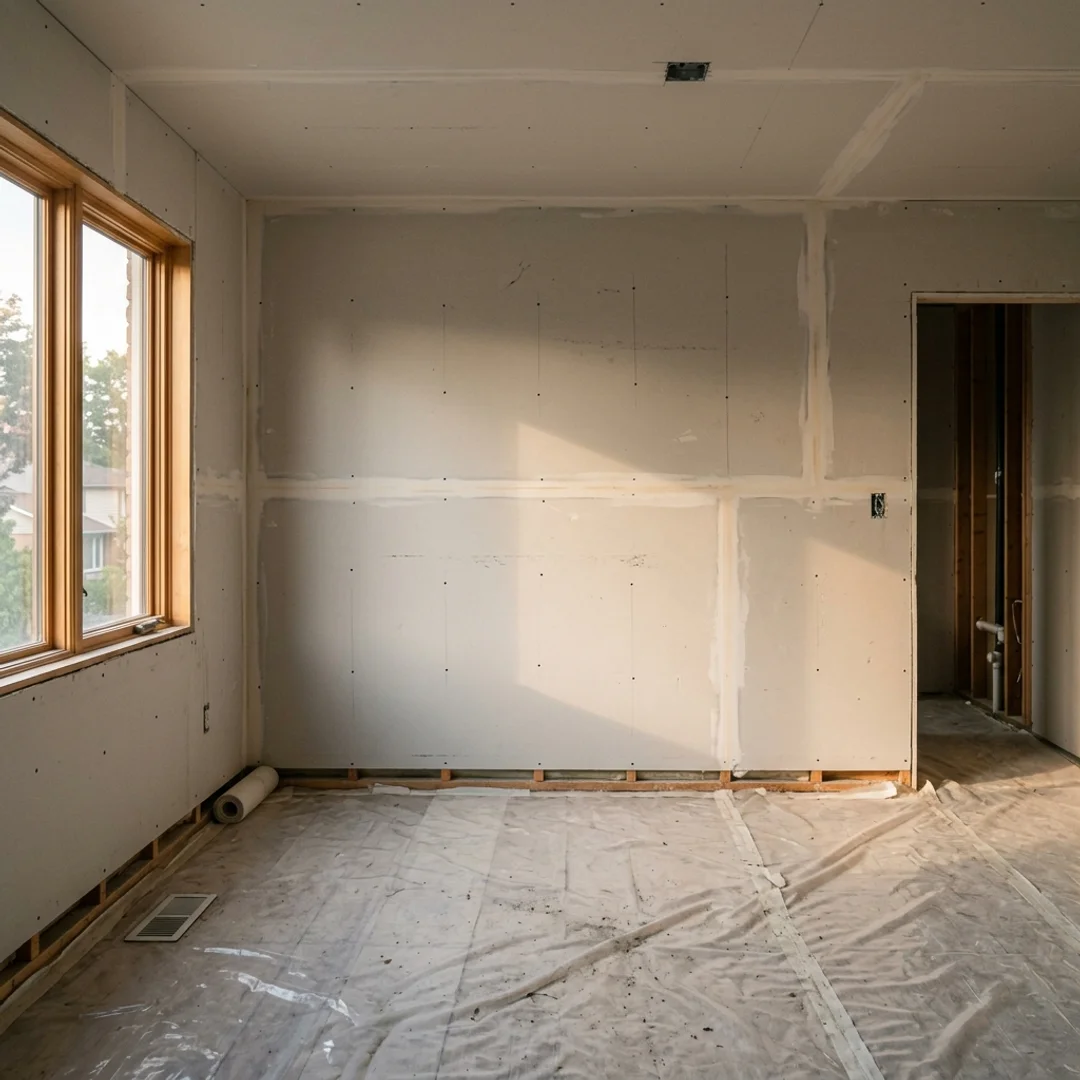
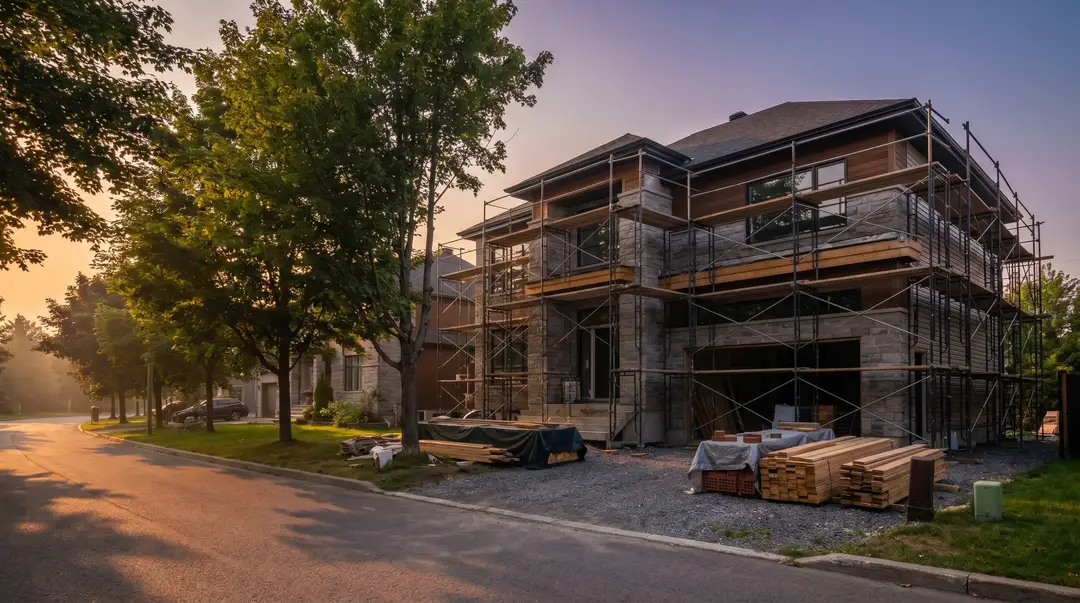
If your renovation started in late June or early July, the project gets interrupted for the two weeks. The renovator has to secure your home before leaving: tarp openings, shut off water and electricity if needed, protect fragile surfaces. The team's return on August 3 also requires a ramp-up period (checking that nothing moved, re-ordering missing materials, rescheduling subtrades).
Permits and municipal inspections
Municipal inspectors are not all on vacation during these two weeks, but many are. Lead times for issuing renovation permits can stretch in July, and mandatory job-site inspections (before closing a wall, before pouring concrete) become harder to schedule. If your project hinges on a permit to break ground, submit your application by May or June at the latest.
Living on site during the work
If you plan to stay in your home during the renovation, the holiday often hits at the worst time: openings gaping during a heat wave, air conditioning down, dust building up. Discuss the fallback plan with your renovator before signing the contract.
How to plan around the holiday
A few simple rules that apply to most residential projects.
Quotes and signing: three to six months ahead. If you want a summer start, compare contractor quotes by March or April at the latest. Strong renovators book up from January for the summer season, and many stop accepting new contracts by May.
Contracts: spell out the closure. Your renovation contract should explicitly name the summer and winter shutdown dates. The standard clause extends execution deadlines by the number of business days lost during the holiday. Without it, disputes can arise over who pays for the delay.
Material orders: add 3 to 4 weeks. For any component with a lead time over 4 weeks (cabinets, windows, countertops, doors), place the order before the end of June if you want it before the holiday, or accept a late-August delivery if the order falls in July.
Backup plan for at-risk work. Roofing, foundation work and exterior tasks that cannot wait for fall weather must be finished before July 19 or pushed past August 1. Do not start a roofing project on July 10 expecting to wrap it before the holiday.
The July 1 to 19 window. This is the riskiest stretch to launch a new project: barely three weeks before shutdown, rarely enough to close out anything substantial. Better used for finishing a project already underway, or for short jobs (painting, flooring, finish work) that wrap in fewer than ten business days.

If you are looking for a general contractor or a home renovator for a summer project, start the process in early spring. Serious contractors often turn down new contracts from May or June onward to respect their summer schedule.
Frequently Asked Questions
Will my residential renovator really be closed during the construction holiday?
If your renovator is a contractor subject to the CCQ with employees holding competency certificates, yes, the site will be closed from July 19 to August 1, 2026. A handful of small finishing jobs may continue if the renovator works alone and is not covered by Bill R-20, but that is the exception.
Can I do the work myself during the holiday?
Yes. A homeowner who performs work on their own residence (owner-builder) is not subject to the CCQ and can paint, lay flooring or build a deck during the holiday. Municipal permits and the Quebec Construction Code still apply.
Are stores like Rona, Home Depot or Patrick Morin closed?
No. Big-box hardware stores stay open and often run some of their biggest sales of the year at that time. That said, some specialty suppliers (custom kitchens, high-end windows, stone countertops) close their production shops, so fabrication lead times stretch.
If my project runs late, who pays for the shutdown extension?
In theory, the mandatory closure is known in advance and the contract should account for the schedule shift. In practice, read the contract: some renovators charge mobilization and demobilization fees (to secure the site and restart it), others absorb the cost. Clarify this at signing, especially for any project that straddles July.
Is the construction holiday mandatory everywhere in Canada?
No. The construction holiday is a Quebec-specific arrangement, framed by Bill R-20 and provincial collective agreements. Elsewhere in Canada, sites run normally through July, with individual vacation taken by employee.
How do I check the official dates for a given year?
The CCQ publishes its industry calendar every year. The reference page is ccq.org/en/avantages-sociaux/dates-conges-vacances. That is the source to check before planning a project that overlaps the critical periods.
Does a winter renovation escape the holiday?
Only partly. The winter holiday also runs two weeks (December 20 to January 2, 2027) and cuts the calendar just before the January restart. For an interior project that can run through winter, aim for a September-October start or a January restart rather than letting the timeline straddle December.
Ready to start your project?
Describe your work, choose how many quotes you want to receive, and compare qualified contractors near you. Free and no commitment.