Wood Lacework: The Ornamental Art That Defines Victorian Facades
Introduction
In old residential neighbourhoods, there's a detail that separates the houses that make you stop and look from the ordinary ones. It's not size. It's not colour. It's carved wood.
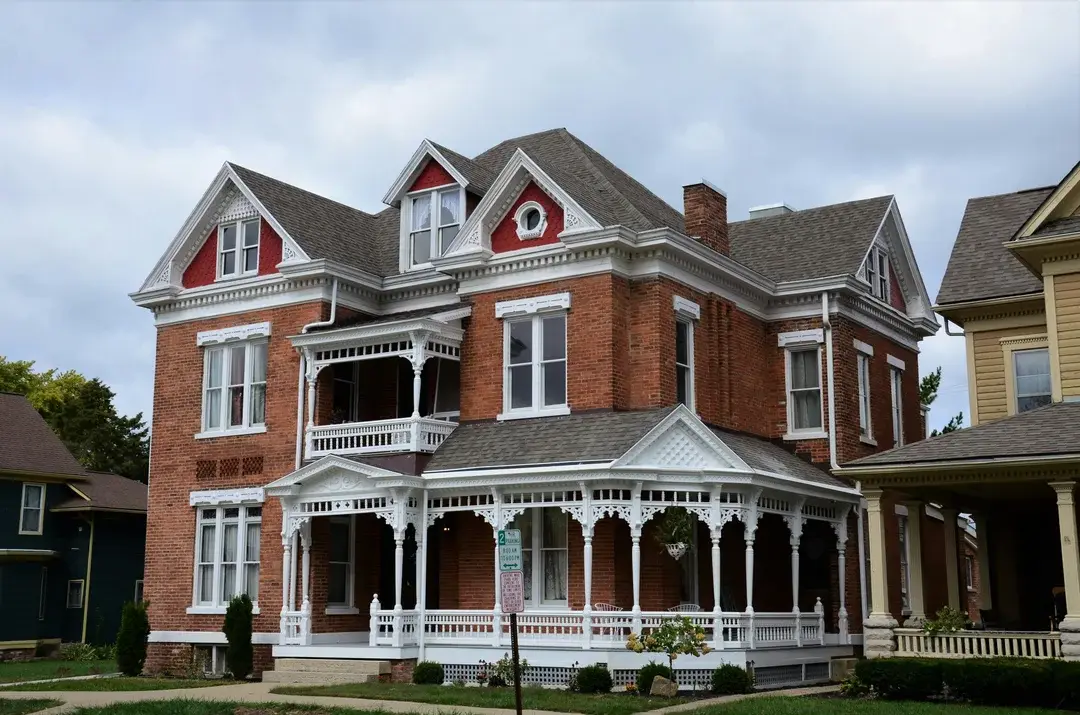
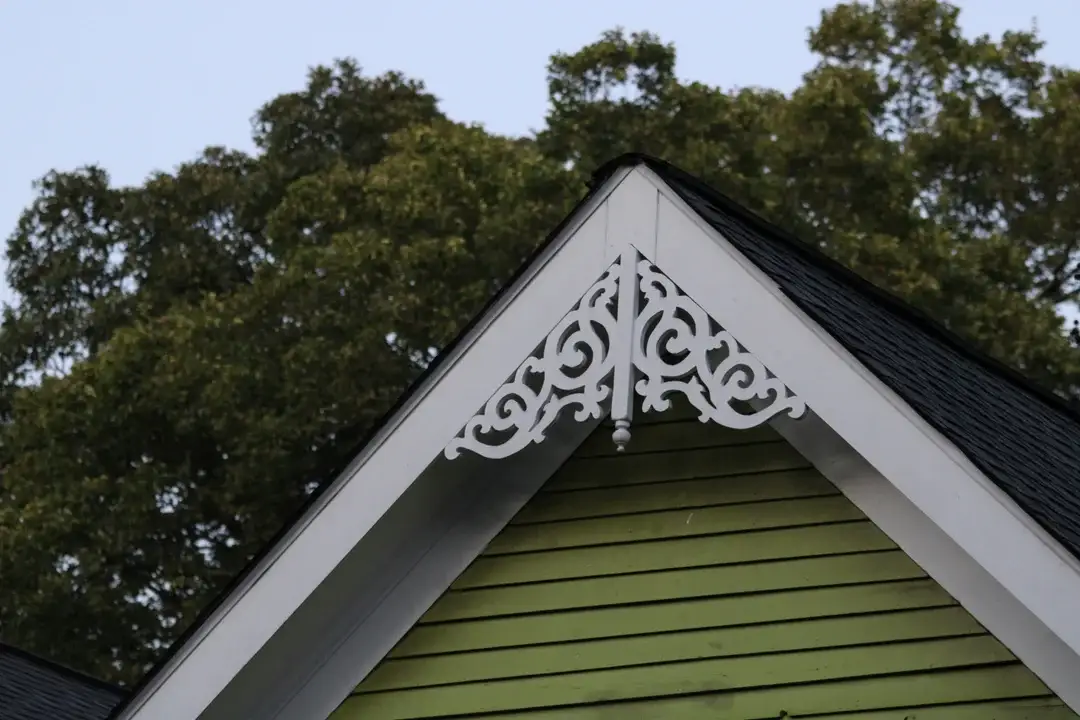
The bargeboards trimming the gables along the roofline. The turned balusters punctuating the verandas. The pierced brackets supporting the overhangs. The decorative friezes running beneath the cornices. Collectively known as gingerbread trim (or dentelle de bois in French) these ornaments transformed Quebec facades between roughly 1860 and 1910 into declarations of identity and prosperity.
Today, this heritage is threatened. Painted over, damaged, removed, replaced by smooth vinyl or simply abandoned for lack of knowledge about upkeep, wooden lacework is disappearing one house at a time. This article gives you the tools to understand it, preserve it, and when necessary, restore it.
The Origins: The Jigsaw Changes Everything
Before 1850, wood ornaments were carved by hand, work reserved for public buildings and the homes of the wealthy. Everything changed with the mechanization of the jigsaw. This machine, powered first by water then by steam, could cut complex patterns in wood: curves, arabesques, botanical forms, geometric lacework, with a speed and regularity impossible by hand.
Combined with railway expansion that made construction lumber affordable across Quebec, and with American architectural magazines spreading Victorian design patterns, this technology triggered an ornamental explosion between 1870 and 1900. Local carpenter-joiners produced ornaments individually or in runs, on commission or from catalogs.
The result: entire neighbourhoods of homes with facades dressed in a remarkably elaborate decorative vocabulary.
The Vocabulary of Decorative Woodwork
Bargeboards (Lambrequins)
Bargeboards are the pierced wood pieces bordering the gables along the roof rakes. They are the most visible ornaments from the street, framing the gable the way lace frames a face. Motifs vary: acanthus leaves, volutes, geometric interlace, floral patterns. On the most elaborate homes, bargeboards meet at the gable apex in a sculpted finial.
Porch Balusters and Railings
The veranda is the prime site of ornamental expression. Balusters (the small vertical members forming the railing) may be lathe-turned, scroll-sawn, or pierced with openwork motifs. The columns supporting the porch roof are often decorated with worked capitals and bases. The frieze beneath the porch ceiling frequently receives the finest ornaments: pierced garlands, repeated pointed arches, trefoil patterns.
Brackets and Corbels
Brackets are decorative support pieces placed under overhanging eaves, window sills, or at the junctions between post and beam. Carved or scroll-sawn, they can take very elaborate forms, floral volutes, complex geometric profiles, stacked S-curves. They're also functional: distributing loads and extending the reach of overhangs.
Friezes and Soffit Panels
Beneath the main cornice of the house, a horizontal scroll-sawn wood frieze is common in Quebec Victorian architecture. It may be continuous (a long band of repeated ornaments) or composed of separate panels. This is often one of the first elements to deteriorate, exposed to freeze-thaw cycles and frequently poorly painted.
Gable Ornaments and Finials
The gable summit is the noblest point on the facade. A sculpted finial is placed here: a flower, an acanthus leaf, a pierced lantern. This element is often the first to be removed or lost during poorly managed renovation work.
Wood Species Used
Most old ornaments are in eastern white pine, a light species, easy to work with saw and chisel, and receptive to paint. Red pine is denser and more rot-resistant, used for exposed pieces. White spruce is economical and appears in mass-produced ornaments on working-class homes. Walnut and oak, rare, were reserved for prestige ornaments. Red cedar is excellent for exterior use and shows up in balusters and porch cladding.
The wood of original ornaments is often better quality than what's available today, 19th-century logs came from old-growth forests with very tight growth rings, signalling superior density and durability.
Assessing the Condition of Existing Ornaments
Before deciding what to do, diagnose. Wood ornaments deteriorate predictably.
Surface rot shows up when paint crazes, wood darkens, and softens to the touch. Caught early, it's often limited to a few centimetres of depth and can be treated with epoxy consolidant, filled, and repainted. Deep rot, by contrast, crumbles through the full thickness and leaves the piece without rigidity, replacement is then necessary.
Longitudinal cracks are normal and can be caulked. Significant warping indicates a moisture or fastening problem. Heavy accumulated paint buildup obscures ornament detail and retains moisture, gentle stripping may reveal wood in better shape than expected.
A practical test: probe the ornament with a knife or awl. If the blade penetrates more than 6 mm easily, rot is advanced.
Restore Rather Than Replace
Restoring an existing ornament is almost always preferable to replacement. The original wood is often better quality than available new stock. Heritage authenticity is preserved. And the cost is often lower.
Two-part epoxy systems penetrate degraded wood, strengthen it, and allow missing shapes to be rebuilt, with excellent service life if well painted. For a piece too damaged to restore, a craftsperson can make a silicone mould from an intact example and cast a reproduction in epoxy, indistinguishable once painted. For simpler pieces like turned balusters and profiled brackets, a joiner equipped with a lathe and jigsaw can reproduce pieces identically from a template.
When to Replace
Replacement is justified when more than 60% of the piece is degraded, when rot has reached structural members such as porch joists or rafters, or when the piece is too complex to reproduce at reasonable cost.
In these cases, the priority is to reproduce the original profile and dimensions. Historical photographs, municipal archives, or ornaments preserved on other homes by the same builder can serve as references.
Avoid pure PVC ornaments absolutely, they yellow, crack in cold weather, and don't hold paint well long-term. Wood composite (PVC + wood fibre), such as Versatex or Azek, is a more acceptable compromise.
Preventive Maintenance
Gingerbread woodwork doesn't require much maintenance, but it does require regular maintenance. Enemy number one is standing water in the hollows of ornaments and beneath fasteners.
Repaint every seven to ten years maximum, using 100% acrylic exterior paint in a satin or semi-gloss finish. Before painting: inspect, sand lightly, and caulk open cracks with polyurethane caulk, never silicone on wood to be painted. Use stainless steel or copper fasteners to prevent rust stains that mark wood. Keep vegetation away from ornaments.
Recommended inspection frequency: spring, after freeze-thaw.
Finding a Specialist
APMAQ (Association for the Protection of Historic Houses of Quebec) maintains a member directory. Heritage councils in Montreal, Quebec City, and Laval publish reference lists by intervention type. ARQ (Association of Quebec Restorers) groups certified members in heritage restoration.
As for indicative costs: bargeboard restoration runs $25 to $60 per linear foot. Baluster replacement is $35 to $80 per unit installed. Gable finial reproduction by casting: $150 to $400 per piece. Stripping and repainting a veranda with ornaments: $2,500 to $8,000 depending on scope.
Frequently Asked Questions
Can the wood lacework be replaced with PVC to avoid maintenance?
Pure PVC doesn't hold paint well long-term, yellows under UV, becomes brittle in cold, and lacks the texture of solid wood. In a heritage zone, PVC may be restricted or require approval. Wood composite (Versatex, Azek) is a more acceptable compromise if wood is genuinely unworkable.
How do I know if my home's ornaments are original?
Several clues: original wood is often denser and tighter-grained than recent replacement stock. Original ornaments show multiple layers of old paint. Fasteners are wrought iron or copper, not stainless steel. Historical photographs from Quebec's National Library and Archives (BAnQ) may show the facade as it was at construction.
Do wood ornaments add value to the home?
Yes, directly and measurably. Heritage real estate market studies show that homes retaining their original ornaments sell on average 8% to 15% higher per square foot than comparable homes "renovated" to remove their architectural details. Buyers of old homes pay for authenticity.
What paint should I use on wood ornaments?
Premium 100% acrylic exterior paint, satin or semi-gloss finish. Avoid alkyd (oil-based) paints on complex ornaments, they form a more rigid film that cracks faster. The key is preparation: strip peeling areas, prime bare wood, caulk cracks before priming.
Is a permit required to restore or replace ornaments?
In most cases, no, like-for-like restoration is exempt from permits. But if the home is in a heritage protection zone or is classified, any change visible from the street may require prior approval. Check with your municipal planning office.
Ready to start your project?
Describe your work, choose how many quotes you want to receive, and compare qualified contractors near you. Free and no commitment.