Exterior paint: the first maintenance step for a heritage home
On a heritage home, exterior paint isn't decoration; it's the first barrier against water. When the film breaks, wood absorbs moisture, frost cracks it open, masonry fissures, and what would have been a $4,000 project turns into a $25,000 bill. For the work itself, a painter used to older homes makes the difference: see painters in Montreal or painters in Quebec City. Repainting isn't a cosmetic choice. It's the most cost-effective maintenance you can do on this kind of building.
When it's time to repaint: the signals to read
A good exterior paint job lasts 8 to 12 years in Quebec, sometimes 15 on north-facing or shaded walls. End of life doesn't show up all at once; it reads in a series of small clues:
- Crackling in a fine grid pattern on flat surfaces: the paint is breaking down like bad glaze. Stage one.
- Fading and loss of sheen on south and west elevations, exposed to sun.
- Blisters under the paint, especially on lower boards: water is migrating behind the film.
- Active flaking: this is last call. The wood underneath is already taking damage.
A simple test: press clear packing tape onto a suspicious area, pull it off in one motion. If chunks of paint come with it, it's time. If nothing lifts, you can buy another season.
The acrylic-over-oil trap
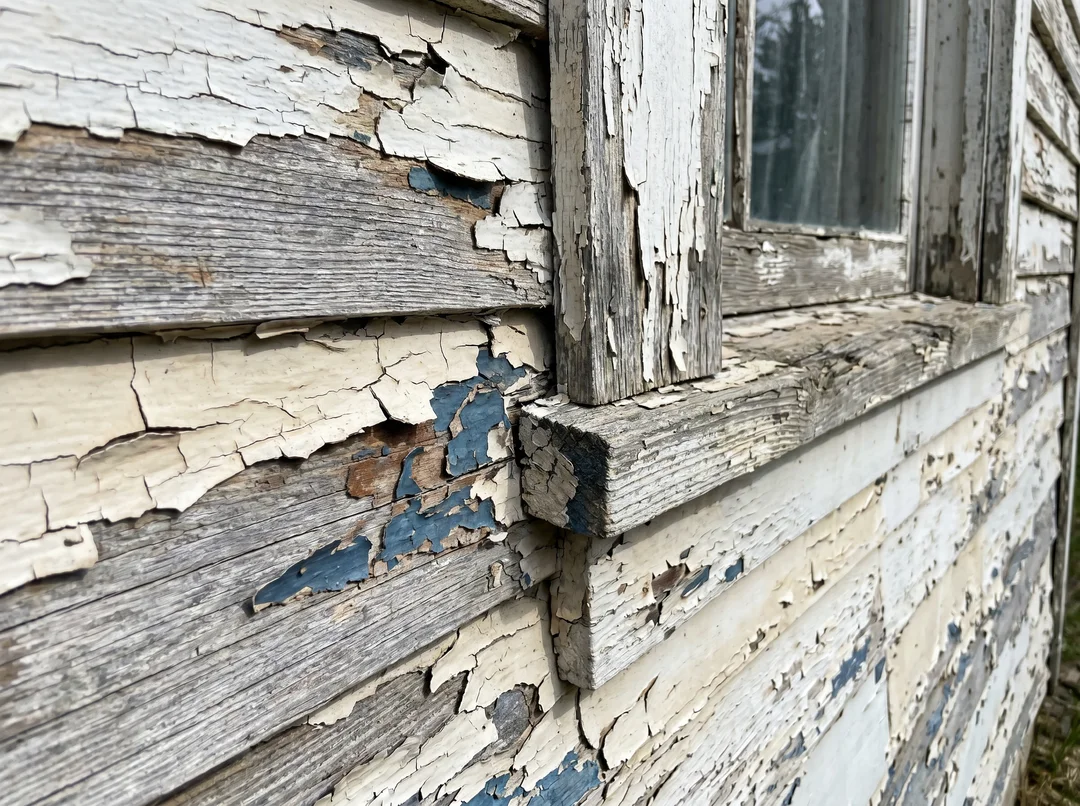
This is the most expensive mistake a heritage homeowner can make: applying modern acrylic paint directly over old oil-based layers. Oil has penetrating power that lets wood breathe. Acrylic forms a sealed film on top. Result: moisture from the wood gets trapped under the new film, and the paint starts peeling in large sheets within 2 or 3 years, sometimes less.
Before 1980, almost all exterior wood on Quebec homes was painted with oil. Many still are. To check: scrape a discreet area down to the substrate. If the deep layers are yellowed, glossy, glass-hard, it's oil. If they're matte and rubbery, it's acrylic.
With an oil base, you have two options: strip down to bare wood (long and expensive, but the only true reset), or use a specific bonding primer (e.g. Zinsser Cover Stain or XIM Peel Bond) that bridges old oil and new acrylic. Without that bridge, you'll repaint every 3 years.
Prep: where 80% of the finish's life is decided
The golden rule among heritage painters: 80% of the time goes into prep. The topcoat only lasts if everything underneath is sound.
Non-negotiable steps:
- Soft pressure wash (≤ 1,500 PSI, no more) with a mild detergent to remove pollution, pollen, dust. Higher pressure pulls nails and saturates wood.
- Scraping and sanding of loose paint. Never sand pre-1980 paint without a P100 mask; almost all of it has lead.
- Wood rot repair with epoxy (Abatron LiquidWood + WoodEpox) or grafts. Any soft area must be treated before painting.
- Caulking of joints around windows, doors, wall returns. A single open joint can reintroduce water exactly where it had no access yesterday.
- Primer on all bare wood, within 24 hours so it doesn't grey out.
A serious crew spends 3 to 5 days on prep alone for an average duplex. Crews that do it in a day and apply the finish the next morning are precisely the ones causing the acrylic-over-oil failure.
Choosing the paint and the colors
Four paint families make sense on a heritage home:
- Alkyd oil paint: the most traditional, still sold by Benjamin Moore (IronClad line) or Sherwin-Williams. Excellent on old wood because it penetrates. Lasts 12 to 15 years, but dries slowly (24 to 48 hours between coats) and emits more VOCs.
- High-quality 100% acrylic (Aura, Regal Select, Duration): excellent over a proper bonding primer. Lasts 8 to 12 years. Dries in 4 hours.
- Water-based alkyd: a useful compromise, low odor, oil-like behavior. Lasts 10 to 12 years.
- Lime or silicate paint: for painted masonry surfaces (rare in Quebec but useful on certain limestone). Breathes, doesn't form a film, lasts 15 to 20 years.
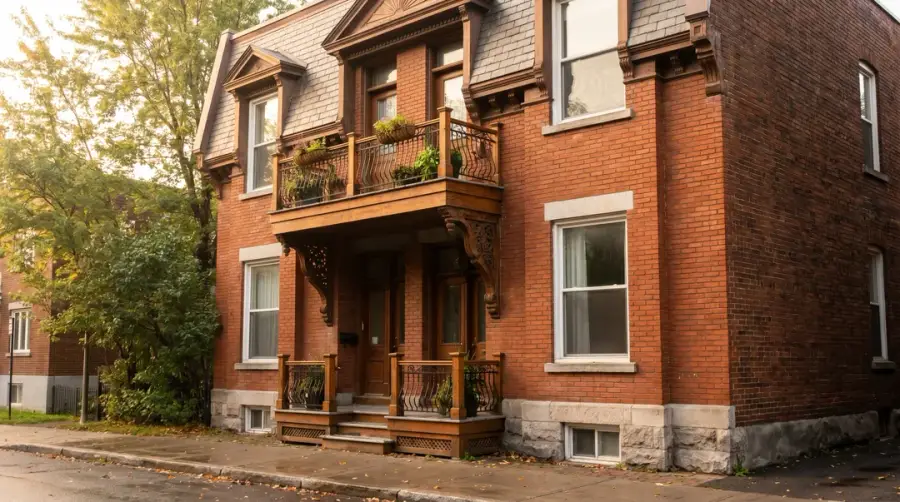
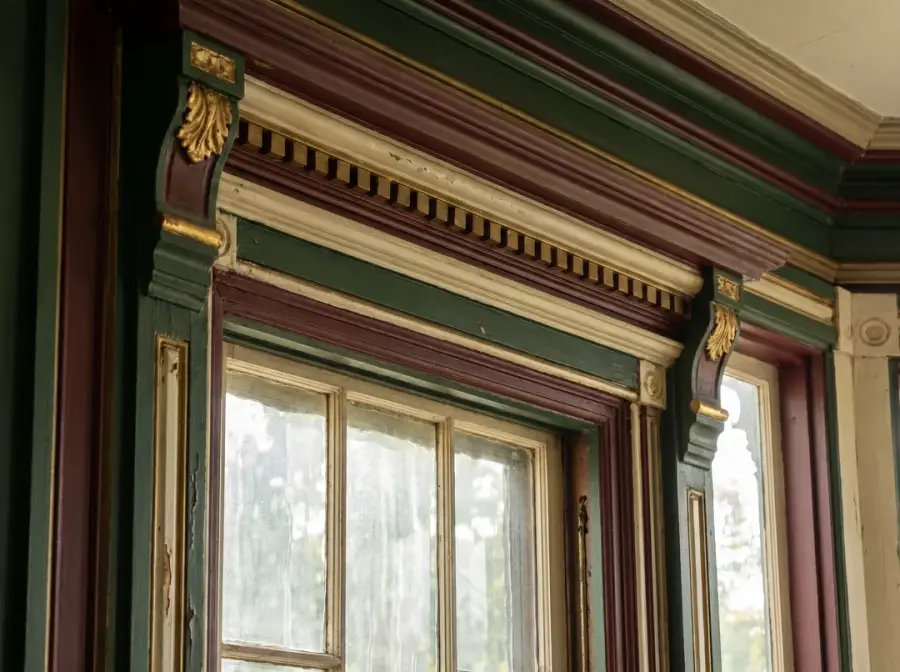
On color, traditional Quebec schemes rarely used more than 3 or 4 tones: a body color (wall or siding), a trim color (frames, cornice), an accent color (door, shutters), and sometimes gilding for ornamental details. English green, burgundy, burnt ochre, off-white, chocolate brown are the classics. Avoid bright modern colors: they date the work in five years.
If your home is in a heritage-value district (Old Montreal, Old Quebec, parts of the Plateau), a permit and CCU review may be required for any street-visible color change. Check before you buy paint.
Frequently Asked Questions
How often should a heritage home be repainted?
Every 8 to 12 years for exterior wood, sometimes 15 on shaded sides. South and west elevations, more exposed to sun and weather, often need a mid-life touch-up (wash and spot-repair) at the halfway mark.
How much does a full exterior repaint cost in Quebec?
For a typical Montreal duplex with proper prep: between $12,000 and $22,000, prep and paint included. The price depends mostly on starting condition. A home that hasn't been repainted in 20 years can run $35,000 or more because the prep becomes massive.
Can I do this myself?
Yes for one-story facades with little ornament, if you have the time (figure 2 to 3 weeks of weekends), the equipment (scaffolding, sanders, P100 mask), and the patience. No for anything above 8 feet, for homes with carved gingerbread trim, or if you suspect lead paint. The gap between an amateur and a pro shows up in five years.
When's the best time to repaint in Quebec?
Mid-May through late September, with the ideal window in June and late August when humidity is lower. Paint should never be applied below 10 °C or under threat of imminent rain. Many serious heritage crews are booked a year out; you start shopping in fall for the following summer.
Ready to start your project?
Describe your work, choose how many quotes you want to receive, and compare qualified contractors near you. Free and no commitment.