Living in Your Home During Renovations, or Not: How to Decide
The question comes up at every major renovation: stay in the house during the work, or move out temporarily? It isn't a simple call. Staying looks cheaper on paper but wears down quickly, and a lot of couples regret it midway through. Leaving costs more in cash but can save the project and the family's morale. The right answer depends on five or six concrete variables that have nothing to do with budget alone.
Staying: The False Economy
The financial argument leads. Why pay $2,500 to $4,500 a month for an Airbnb or a furnished rental when you already have a house? On paper, staying through the work can save $8,000 to $15,000 on a mid-sized project. It's a number that talks.
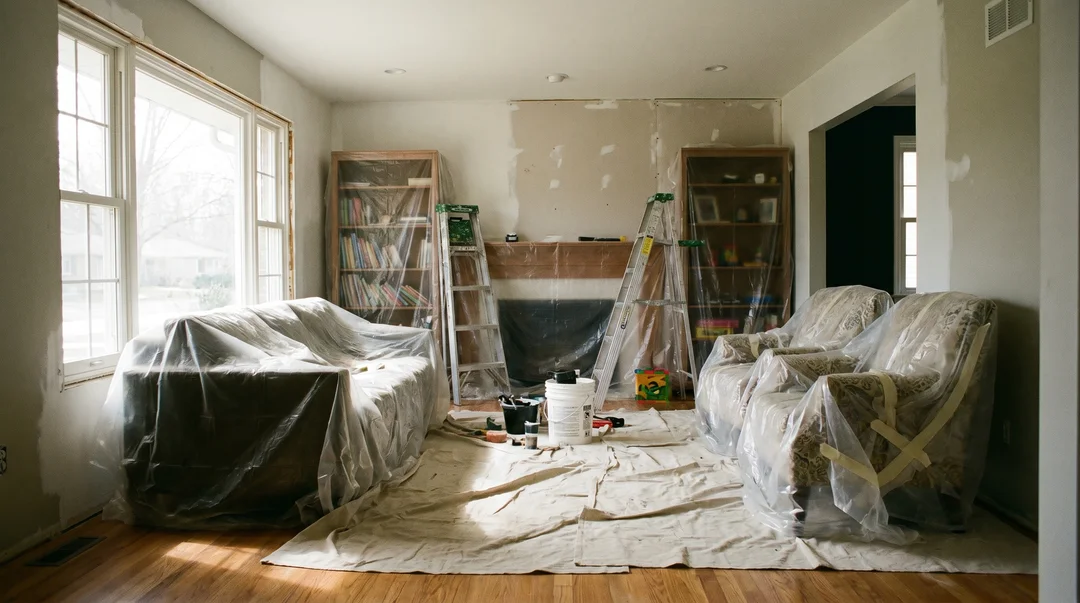
The problem is what that number hides. Living in a worksite usually means eating out or living off prepared meals, sometimes for six to ten weeks (the kitchen is almost always the longest room to redo). Add $600 to $1,500 a month in extra food costs for a typical family. Then there are the hidden costs: dust everywhere, childcare to keep kids out of the noise, temporary rentals (garage fridge, hot plates), and the stress that ends up wearing on the couple.
The other blind spot is jobsite efficiency. A contractor who has to put tools away each evening, isolate zones, protect furniture, and stop noise after 5 p.m. works 15 to 25 percent slower than on an empty site. That inefficiency gets paid for too, either in billed hours or in extended timelines.

Leaving: What You Actually Buy
When you leave the house, you're not buying comfort. You're buying speed, quality, and safety. An empty jobsite can move 30 to 40 percent faster, because the home renovator can demolish everything at once, ignore evening hours, and run several trades in parallel. Timelines compress. Unit costs sometimes do too.
It's also the only scenario that makes certain work feasible: stripping all the plumbing on a floor, redoing the floors throughout the house, blowing in major thermal insulation upgrades. These interventions are nearly impossible with a family sleeping on site. And finish quality goes up a notch when crews aren't racing the clock.
Temporary relocation in Quebec varies widely. A short-term furnished rental in Montreal or Quebec City runs $2,500 to $5,000 a month depending on neighbourhood and bedroom count. Add a few weeks of storage, two-way moving, and transitional costs. For a 4-to-8-week project, the all-in figure is typically $10,000 to $25,000.
The Middle Path: Phasing the Work
There's a third option people often forget: phase the project so you can stay. Instead of doing everything at once, isolate one zone at a time. Kitchen this fall, bedroom floor in spring, basement in summer. It demands more coordination, repeats fixed mobilization costs, and usually runs 10 to 15 percent more in total. But many families prefer this model because it makes the chaos manageable.
A variation: focus on "non-critical" rooms while you live in the house (basement, garage, playroom) and save the vital rooms (kitchen, primary bedroom) for a short window where you arrange a real exit of a few weeks.
The Questions That Decide
A few variables almost always settle the question.
Are there young children or older people in the house? Demolition dust and prolonged noise are serious for young children, people with asthma, and seniors. Beyond discomfort, it's a health question. In these cases, leaving often becomes non-negotiable.
What's the actual project scope? Redoing a bathroom you don't use (our guide on bathroom renovation cost details the numbers), finishing a basement renovation, painting three rooms: you can stay without drama. Redoing the kitchen and replacing flooring throughout, taking out walls, redoing the upstairs plumbing: most of the time, leaving saves the project.
How long, really? Under two weeks, you can tolerate any jobsite. Past eight weeks, day-to-day wear almost always exceeds the initial savings. Being realistic about timelines (and adding 20 percent) is essential to this decision.
What season? Living in a worksite in July with windows open is tolerable. Doing the same in February, with windows or walls open, can become unbearable. Season affects the math more than people expect.
Working from home? If one or two people work from the house, six weeks of noise hit productivity and revenue. Many couples underestimate that line in the calculation.
Frequently Asked Questions
What does temporary relocation cost in Quebec during a renovation?
A short-term furnished rental in Montreal or Quebec City typically runs $2,500 to $5,000 a month depending on neighbourhood and size. For a 4-to-8-week project, the all-in cost (rent, storage, two-way move) usually lands around $10,000 to $25,000.
Does home insurance cover temporary housing during a renovation?
In most cases, no. Insurance policies typically cover temporary housing after a covered loss (fire, major water damage), not after a voluntary renovation. A few premium policies offer a relocation-during-renovation rider, but it's uncommon. Always check with your broker before assuming coverage.
Can you live in the house while the kitchen is being demolished?
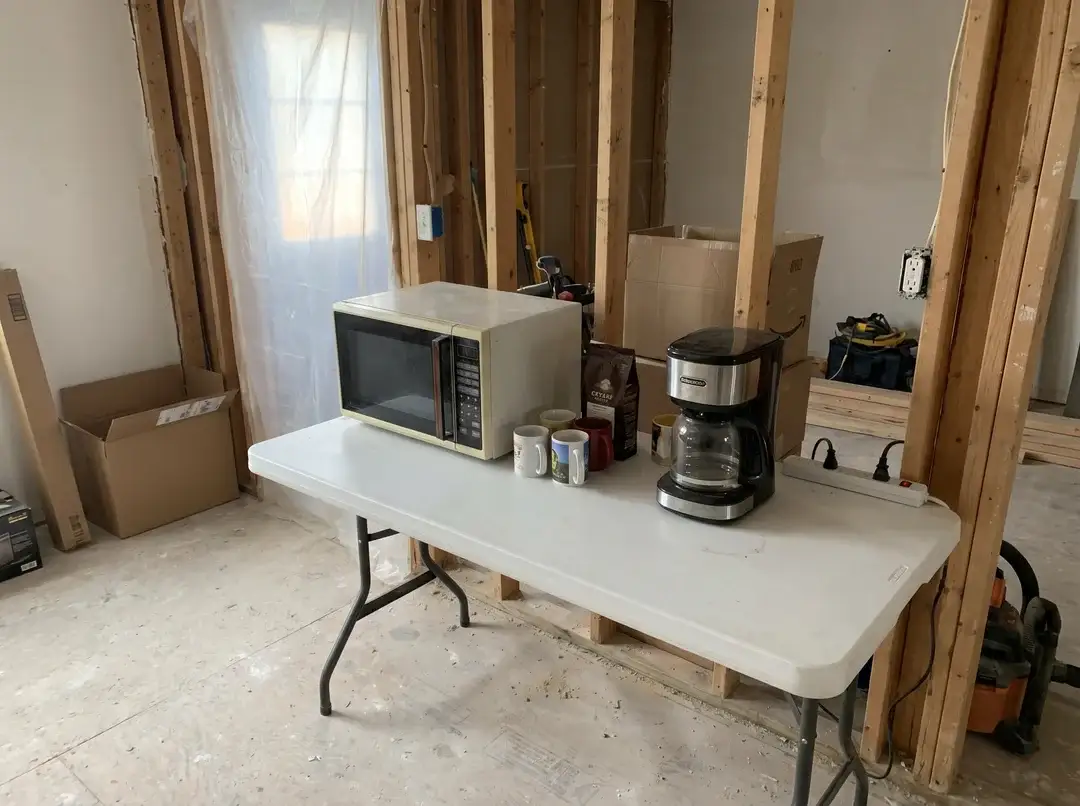
Technically yes, but it's hard. You need a temporary kitchen set up in another room (fridge, microwave, hot plate, bathroom sink for dishes), willingness to eat out often, and tolerance for dust spreading throughout. A kitchen renovation rarely takes less than 4 to 6 weeks. Most families manage up to around 3 weeks, then wear becomes serious.
Does work really go faster when no one's home?
Yes, in most cases. Without needing to protect furniture, store tools each evening, isolate rooms, and limit noise, the contractor can run several trades in parallel. An empty jobsite typically advances 25 to 40 percent faster than the same project with occupants present.
Ready to start your project?
Describe your work, choose how many quotes you want to receive, and compare qualified contractors near you. Free and no commitment.