Home Insulation: Where to Start and What It Costs
A poorly insulated home can lose between 25 and 40% of its heat through the attic, walls, and floors. That's paid-for energy escaping, reflected in unnecessarily high heating bills, cold floors, and drafts that never fully go away. The good news is that insulation is one of the rare renovation projects whose return on investment is measurable from the very first heating season.
Where do you start? Attic, walls, basement, floor over a crawl space, thermal bridges, each zone has its own challenges, materials, and price range. Here's a clear roadmap for prioritizing the work and understanding what you'll pay.
Why Insulation Is the First Investment to Make
Before installing a heat pump, replacing windows, or buying a new heating system, one principle applies: a well-insulated home needs a smaller, less energy-hungry system. Investing in the thermal envelope first maximizes the effect of everything that follows.
Good insulation reduces energy bills by 20-40%, eliminates cold floors and drafts, improves indoor air quality by reducing moisture and dust infiltration, lowers your carbon footprint, and improves resale value. The benefits show up in winter and summer alike.
Zone 1: The Attic, The Top Priority
The attic accounts for 25-35% of heat loss in a typical home. Heat rises, and if the attic floor isn't sufficiently insulated, it escapes directly. The recommended R-value for cold-climate regions is R-50 to R-60. If your attic currently has less than R-30, adding insulation there is almost always the single best-returning investment available.
Three materials are typically used in attics. Blown cellulose (made from treated recycled paper, blown directly over the existing floor) offers excellent R-value per inch (R-3.7), good air resistance, a low environmental footprint, and is often the most economical choice. Blown fiberglass is similar but slightly less dense and less effective at blocking air infiltration. Mineral wool (Rockwool) is fire and moisture resistant, but more expensive. Typical cost for an average home's attic: $1,500 to $4,000 depending on thickness added and accessibility.
One precaution before insulating: verify that attic ventilation is adequate (a 1/300 ratio of floor area between soffits and ridge vent). Over-insulating without adequate ventilation creates moisture and mould problems.
Zone 2: Exterior Walls
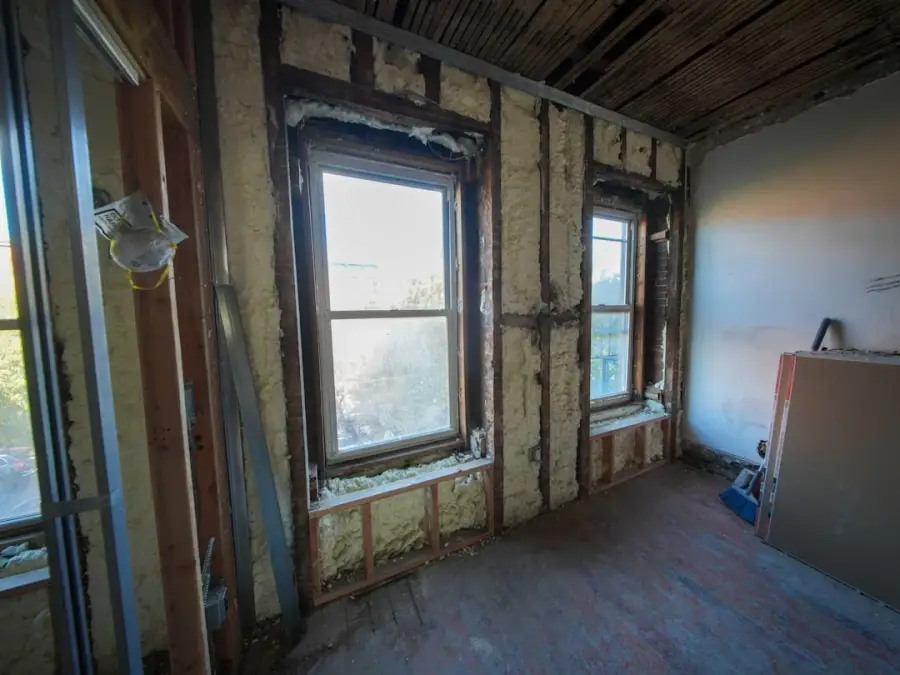
Exterior walls account for 15-25% of heat loss. They're also the most complex and expensive zone to improve, because accessing wall cavities generally requires drilling, injecting, or stripping. The target R-value is R-20 to R-25.
Three approaches exist depending on the scope of work. Injection foam is the least invasive option for intact walls: small holes are drilled from the exterior between each stud, foam or cellulose is injected, then holes are patched. It's effective when cavities are empty, less so when they already contain some insulation. Interior insulation during a major renovation (when walls are stripped) allows rigid panels or spray foam to be applied before re-drywalling and can reach high R-values, but requires a full gut. Exterior insulation (continuous rigid panels applied over the facade before cladding) is very effective at eliminating thermal bridging at studs, but it's expensive at $15,000 to $30,000 for a house, involves replacing the exterior cladding, and is best entrusted to an experienced home renovator or insulation contractor. Depending on your area, see insulation contractors in Quebec City or insulation contractors in Laval.
Zone 3: Basement and Foundation Walls
An uninsulated basement accounts for 15-20% of heat loss. Concrete and block foundation walls are direct thermal conductors to the cold outside.
The most common approach for foundation walls (typically done during a basement renovation) is applying spray polyurethane foam (2 inches minimum) directly to the concrete, or gluing XPS rigid panels followed by framed walls. Spray foam has the advantage of filling surface irregularities and creating an integrated vapour barrier. Target R-value: minimum R-10 for foundation walls.
The basement floor is often overlooked. An uninsulated concrete slab can run 7-14°F colder than an insulated floor, and 1-2 inches of XPS under a plywood subfloor or floating floor makes a significant difference in comfort. Target R-value for the floor: R-5 to R-10.
Zone 4: Floor Over an Unconditioned Space
If you have an unheated garage, crawl space, or cold room below a living area, the floor above it needs insulation. A cold floor in a living room or bedroom is a persistent comfort issue. Mineral wool or fiberglass batts installed between joists are the most common solution, with spray foam offering better performance and adhesion for difficult geometries. Target R-value: R-20 to R-30 depending on joist depth.
Zone 5: Thermal Bridges and Air Leaks
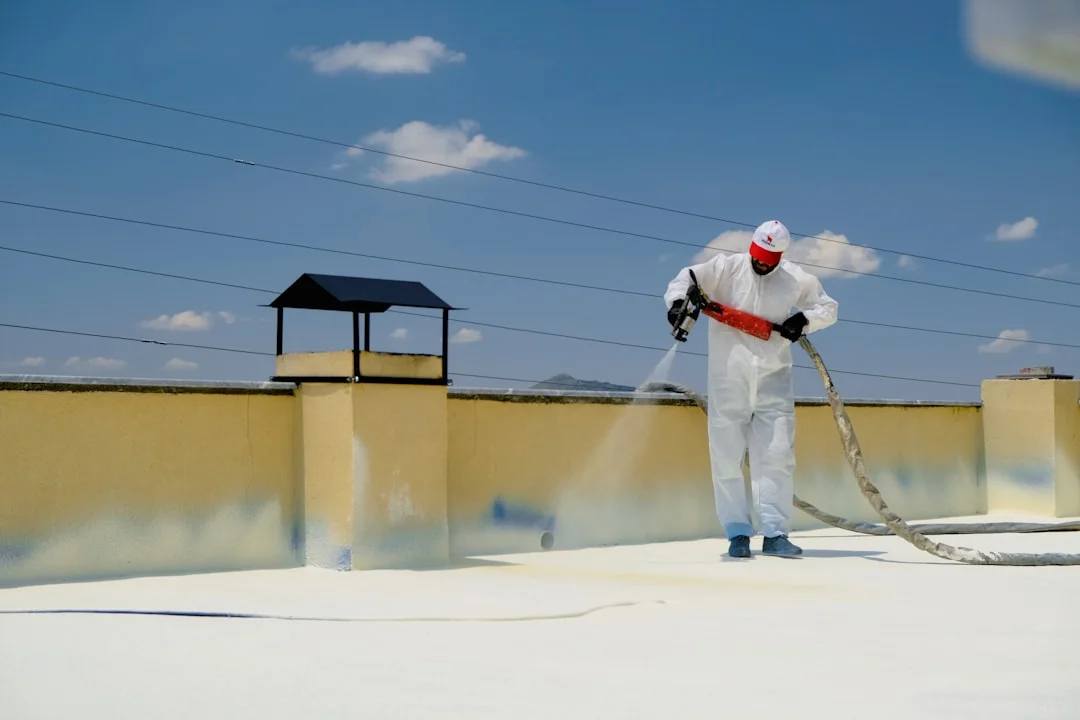
Up to 30% of a home's energy losses travel through air leakage, not conduction through materials. Around electrical outlets, recessed lights, chimney flashings, windows, and pipe penetrations, warm air escapes constantly through thousands of small cracks.
Caulking and weatherstripping are the solution. A blower door test can precisely map where the leaks are, this test is often included in certified energy audits and lets you prioritize work with accuracy. Professional air sealing costs $500 to $2,000 depending on scope, and often delivers the best cost-to-savings ratio on the entire list.
Insulation Materials Comparison
| Material | R-value / inch | Strengths | Limitations |
|---|---|---|---|
| Blown cellulose | R-3.7 | Eco-friendly, good price, air resistance | Absorbs moisture if wet |
| Fiberglass batts | R-3.1 | Easy DIY install, widely available | Less effective against air, irritating |
| Mineral wool (Rockwool) | R-4.2 | Fire and water resistant, acoustic | Higher price |
| Closed-cell spray foam | R-6.5 | Excellent vapour barrier, seals everything | High cost, pro installation required |
| Open-cell spray foam | R-3.7 | Less expensive than closed-cell, acoustic | Not a vapour barrier, moisture-sensitive |
| Extruded polystyrene (XPS) | R-5.0 | Waterproof, ideal for foundations/floors | Higher environmental impact |
| Polyisocyanurate (polyiso) | R-6.5 | Best R-value per inch | Loses R-value in very cold conditions |
Available Rebate Programs
Insulation is one of the most generously covered project types under renovation financial aid programs. The federal Canada Greener Homes Grant offers rebates for envelope insulation improvements (attic, walls, basement) certified by a pre- and post-work energy assessment. Most provinces offer complementary incentives through their energy utilities or housing agencies. For most programs, a certified energy assessment before the work begins is mandatory to qualify, and it's also the best way to know exactly where to invest first in your specific home.
What Does Insulation Cost?
Adding blown cellulose to an attic runs $1,500 to $4,000. Wall insulation by injection runs $3,000 to $8,000. Interior wall insulation during a renovation runs $5,000 to $15,000. Continuous exterior insulation runs $15,000 to $30,000. Foundation walls with spray foam or XPS run $2,000 to $6,000. A floor over a crawl space runs $1,500 to $4,000. Professional air sealing runs $500 to $2,000.
The attic remains by far the best starting point, the investment-to-savings ratio is most favorable, and the work is generally minimally invasive.
Where to Start
Get a home energy audit first: a certified assessment is required for most rebates and gives you a precise map of your losses. Start with the attic, the fastest return on investment. Address air leaks in parallel: caulking around windows, doors, outlets, and recessed lights costs very little and pays back immediately. Move to the walls during a renovation, or if bills stay high after the attic work is done. Insulate the foundation when finishing the basement or when ground-floor rooms remain persistently cold.
A well-planned insulation program can cut energy bills by 30-40%, while permanently improving comfort in both winter and summer. It's one of the rare renovation investments whose benefits are felt immediately.
Frequently Asked Questions
What R-value is recommended for an attic?
For cold-climate regions, aim for R-50 to R-60 at the attic floor. If your current insulation is below R-30, adding attic insulation is almost always the single best-returning investment in your home. A certified energy advisor can measure your current R-value and specify exactly how much to add.
Can you insulate walls without demolishing everything?
Yes, by injection: small holes are drilled between studs from the exterior, cellulose or foam is injected, then holes are patched. This method is minimally invasive and typically costs $3,000 to $8,000 for a house. It works well when cavities are empty; less so if partial insulation is already in place.
Is a vapour barrier required when insulating?
In cold climates, a vapour barrier (typically 6-mil polyethylene film) must be installed on the warm side of the insulation, which is the interior side in walls and ceilings. Closed-cell spray foam acts as its own vapour barrier and eliminates this step. Poor vapour management causes mould inside walls.
Does insulation really reduce heating bills?
Yes, measurably. A home going from insufficient insulation (attic at R-20, uninsulated walls) to a well-treated envelope (attic at R-50, walls at R-20) can see its heating needs drop by 30-50%. The exact result depends on the starting condition, heating type, and occupant behaviour.
Ready to start your project?
Describe your work, choose how many quotes you want to receive, and compare qualified contractors near you. Free and no commitment.