Choosing Exterior Siding: Fibre Cement, Vinyl, Wood, or Stone
Re-cladding a house is one of the most visible parts of any renovation, and one of the most expensive to undo if the wrong call is made. The material you pick locks the house in for 25 to 50 years, drives the maintenance budget every year, and shapes resale value directly, one of the arguments of profitable renovations. The real challenge isn't finding "the best" siding, it's finding the one that fits Quebec's climate, the way you'll actually use the house, and your budget over 30 years, not just at purchase.
Four major families dominate residential jobs in Quebec. Each one solves a different problem.
Vinyl: Cheap to Buy, with a Real Ceiling
Vinyl has been the default budget choice since the 1990s. It installs fast, costs little (often $5 to $10 per square foot installed in Quebec), and asks for no active maintenance. A wash every couple of years and that's it.
The trap is everything it doesn't do. Vinyl warps in heat, becomes brittle in deep cold after 15 to 20 years, and fades visibly under sun. On a house you plan to keep long-term, or in a neighbourhood where values are climbing, you often end up regretting the choice: it ages poorly to the eye, and full replacement becomes inevitable.
Vinyl still makes sense for rental properties, cottages, or budgets where the premium for a better material genuinely exceeds what's realistic.
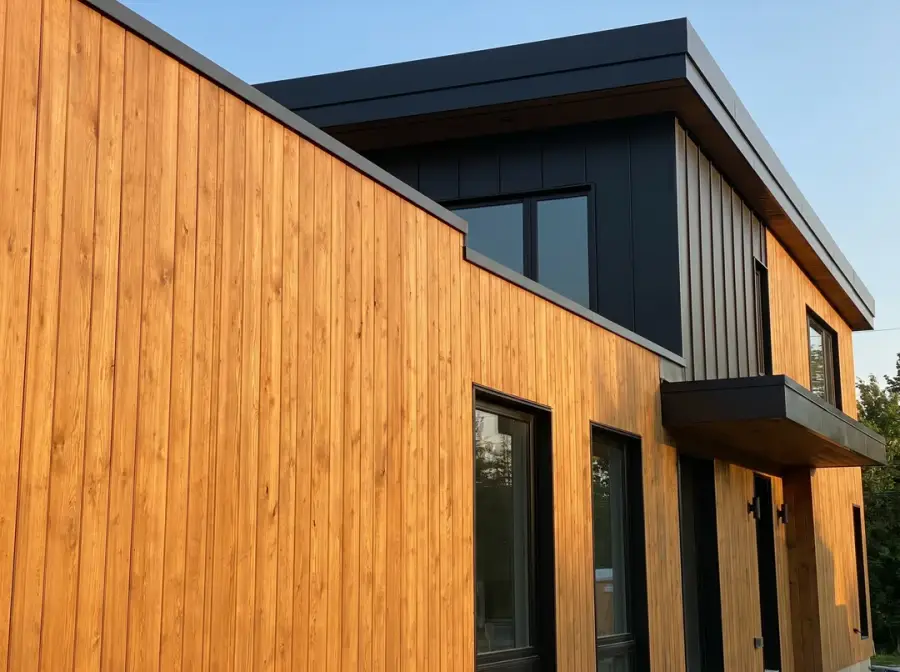
Wood: Most Beautiful, Most Demanding
Western red cedar, treated pine, larch: wood remains the siding that ages best aesthetically when it's well kept. The grey patina of natural cedar, or the warm tone of an oiled wood, give a character no industrial material reproduces.
But it's a commitment. Depending on the finish, you're looking at cleaning and treatment every 3 to 7 years. On a north-facing wall, moisture accelerates breakdown if there's no proper ventilation behind the cladding. And in Quebec, the thermal swings work wood faster than in milder climates, which has to be planned for.
Wood is the right call for someone who enjoys maintaining the house, who values aesthetics over ease, and who accepts that some annual budget will go to exterior care.
Fibre Cement: The Compromise That's Winning
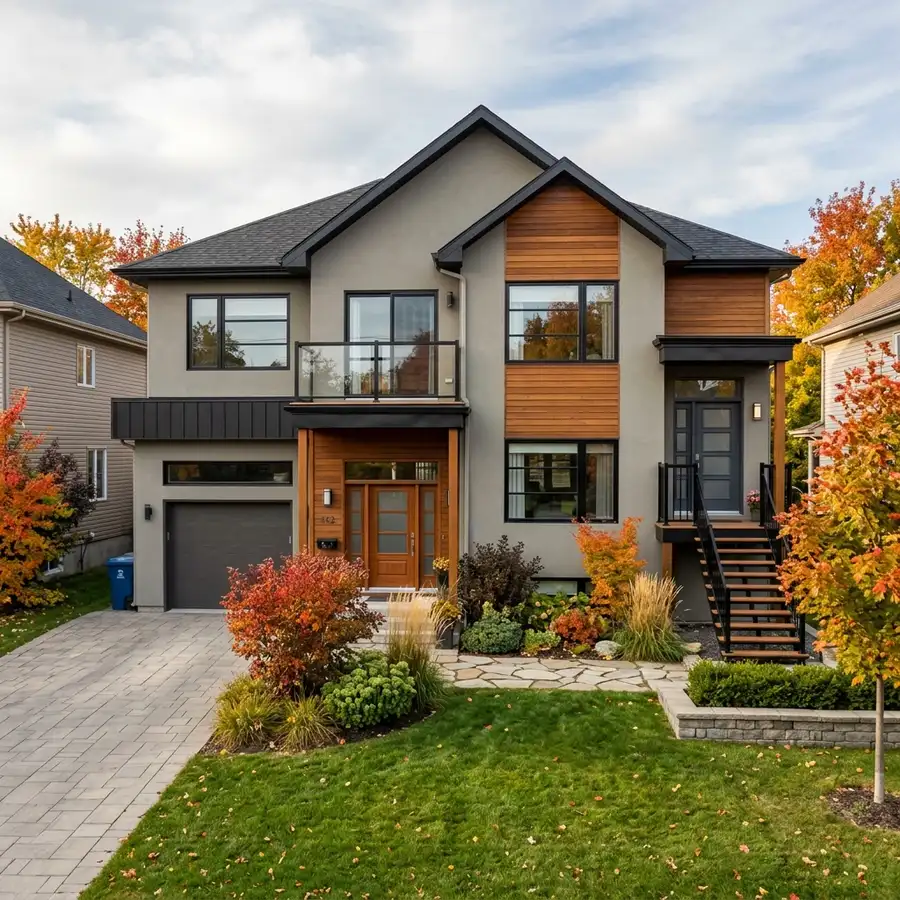
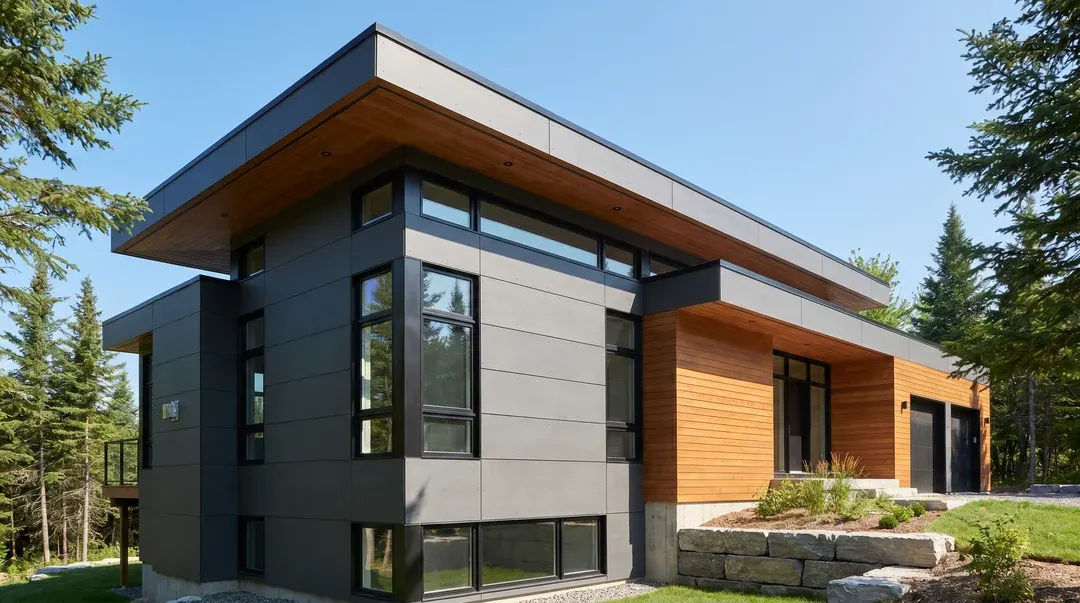
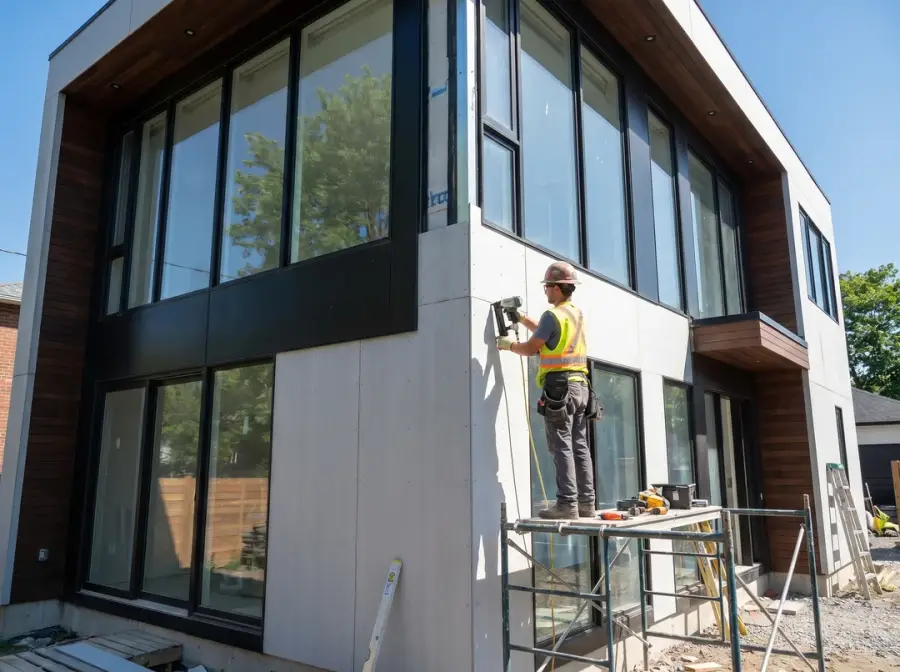
James Hardie, Allura, Maibec, and others: fibre cement increasingly dominates new builds and serious home renovator or siding contractor projects. The material is a mix of cement, cellulose, and fibres, formed to mimic wood grain or to present as flat modern panels.
Its logic is straightforward. It lasts 40 to 50 years with minimal maintenance (one paint refresh roughly every 15 years for site-finished versions, much less for factory-finished products), it handles Quebec freeze-thaw cycles well, and it accepts colour without fading. The best products imitate wood convincingly even up close.
Cost sits in the middle: $12 to $20 per square foot installed depending on brand and complexity. More than vinyl, much less demanding than real wood.
Stone, Brick, Masonry: Weight and Permanence
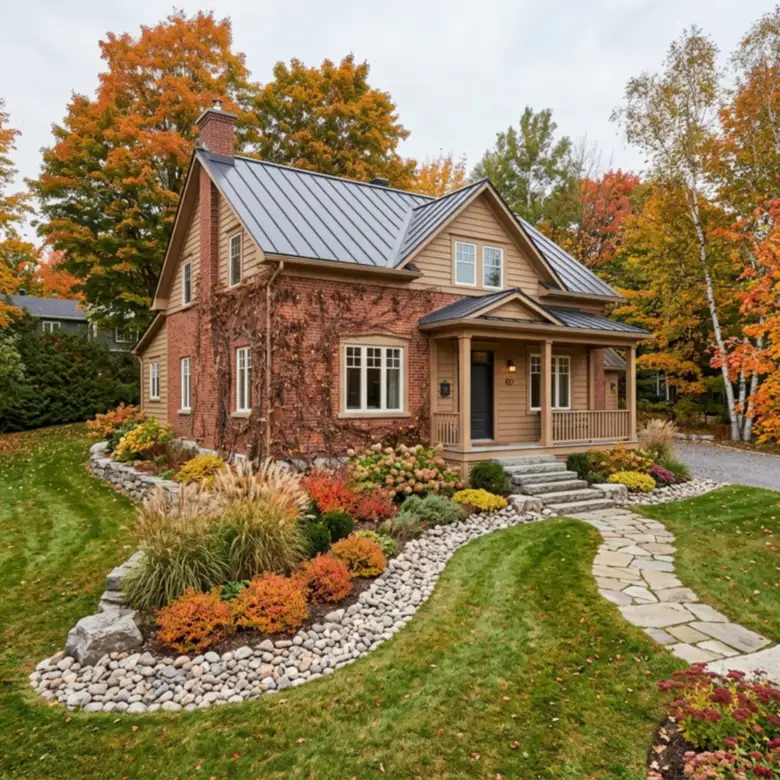
True masonry work (stone, clay brick, thin natural stone veneer) remains the most durable and expensive cladding option. A well-installed masonry wall passes the century mark without major intervention beyond periodic repointing every 50 to 80 years. Depending on your area, see masons in Montreal or masons in Quebec City.
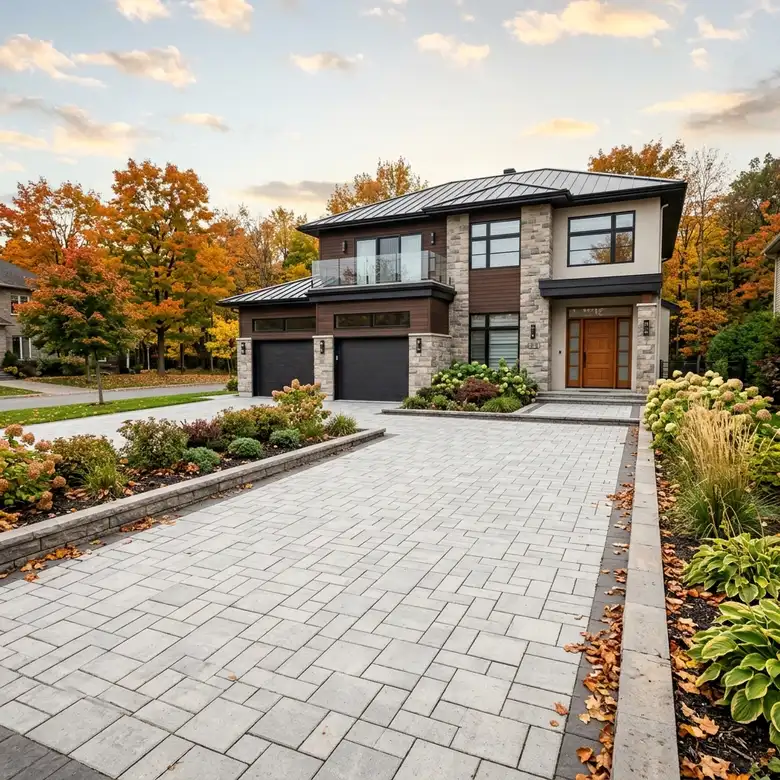
It's also the cladding that adds the most perceived resale value, especially on suburban homes or premium projects. The trade-off: high initial cost (often $25 to $40 per square foot installed), structural weight to plan for, which often requires arbitration between architect, designer or contractor roles, and the fact that the install isn't reversible. You don't swap stone the way you swap panels.
Engineered stone and thin veneers offer some of the look at lower cost, but with real durability trade-offs that need to be assessed case by case.
How to Actually Decide
Three questions almost always cut through the noise.
How many years do you plan to keep the house? Under 7 years, a more economical material often makes sense. Over 15 years, total cost favours fibre cement or masonry.
What's the orientation and microclimate of the house? A south-facing wall with no roof overhang chews through every cladding type faster. A house tucked against a damp forest faces different problems: vinyl gathers algae, wood rots earlier. The right siding isn't universal.
How much maintenance are you honestly willing to do? A lot of homeowners pick wood based on a Pinterest photo and regret it by year three. Be realistic about what you'll actually keep up with. From there, comparing quotes lets you measure concretely how each option translates into budget.
Frequently Asked Questions
What is the most durable exterior siding in Quebec?
True masonry (stone or clay brick) is unmatched on durability, with a 75-to-100-year life expectancy under normal maintenance. Fibre cement comes next at 40 to 50 years, followed by well-maintained wood at 30 to 40 years, then vinyl at 20 to 30 years.
What does it cost to re-side a house in Quebec?
For a typical 1500-to-2000-square-foot single-family home, expect roughly $12,000 to $25,000 for vinyl, $25,000 to $45,000 for fibre cement, $30,000 to $60,000 for true wood depending on the species, and $50,000 and up for masonry. These ranges include labour and materials, but vary with site complexity and region.
Do you have to remove old siding before installing new?
Not always, but it's almost always the better approach. Layering new siding over the old hides potential moisture problems, adds unnecessary weight, and can undermine the performance of new air and moisture barriers. Outside of unusual cases, a serious contractor will recommend a full tear-off.
Does siding really affect resale value?
Yes, more than people expect. Fibre cement or quality masonry can add 5 to 10 percent to perceived value compared to a similar home, while aging vinyl can subtract just as much. In Montreal and broader Quebec markets where housing costs remain high, exterior appearance is one of the first filters buyers apply.
Ready to start your project?
Describe your work, choose how many quotes you want to receive, and compare qualified contractors near you. Free and no commitment.