Spring Home Renovation: 9 Projects to Plan Before Summer
Spring isn't just about cleaning out closets and swapping snow tires. It's also the single best window of the year to tackle renovations, whether you've been putting them off since fall or winter handed you a fresh list of repairs. Mild temperatures, contractors coming out of their slow season, and long daylight hours make spring a genuinely strategic time to get work done.
Not all projects are equally urgent. Some are about repairing winter damage before it compounds; others take advantage of conditions that simply won't exist in July. And some just need early booking to avoid scrambling when every contractor in town is already committed. Here are 9 projects worth putting on your list now.
1. Roof Inspection and Repairs
Winter is brutal on roofing. Freeze-thaw cycles, ice dams, heavy snow loads, and wind can all cause damage that stays invisible until it shows up as a water stain on your ceiling six months later.
Spring is the ideal time to get up on the roof (or call a roofer) for a full inspection that identifies signs you may need to replace your roof. Look for lifted, cracked, or missing shingles that open pathways for water; check the flashing around chimneys and vents, which is a leading cause of leaks even on otherwise sound roofs; assess the membrane on flat or low-slope sections; and watch for moss and lichen, which signal chronic moisture and accelerate deterioration.
A preventive inspection runs $150 to $300. Minor repairs (a few shingles, new flashing) cost $300 to $800. Waiting until you see damage inside can easily multiply that bill by five or ten. If you go up yourself, wear non-slip soles, work with a partner, and avoid any day with frost still on the surface. On a steep-pitch roof, call a professional, a fall is the most serious DIY accident there is.
2. Gutters and Surface Drainage
Gutters clogged with fall leaves and winter debris overflow during spring rains, which is exactly when rainfall is heaviest. Water that can't drain properly always ends up somewhere: against the foundation, under the cladding, inside the soffits.
Clean and unclog gutters and downspouts, verify the slope (gutters should drain toward downspouts, not pool), make sure downspouts are directing water at least 5 feet away from the foundation, and inspect any surface drains around the perimeter of the house. It's DIY-friendly work if you're comfortable on a ladder. A gutter cleaning service charges $100 to $250 for a standard house, worth it if your basement has ever taken water.
3. Deck and Outdoor Spaces
Your deck spent the winter under snow and ice. Before you bring out the patio furniture, spend some time assessing its condition. Pressure-treated wood contracts and expands through temperature swings, and several winter cycles can leave warped boards, loose fasteners, or rot near posts and ledger connections.
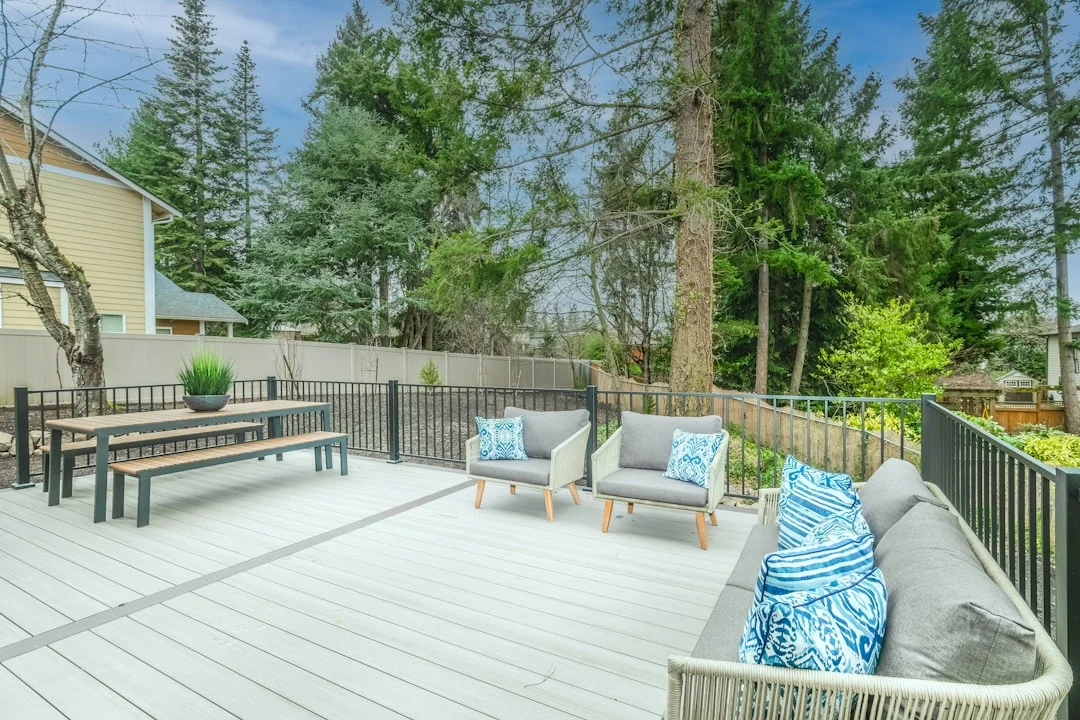
For minor maintenance (sanding and applying sealant or oil) expect $50 to $150 in materials and a day's work. Board replacement runs $200 to $600 depending on how extensive. A full deck replacement is $8,000 to $25,000 depending on size and materials. If you're planning new construction or a significant expansion, spring is the right moment: contractors are still available before peak summer and material lead times are shorter. Composite decking runs $30 to $55/sq. ft. installed, depending on brand and complexity. One practical note: if you need a permit, file the application now. Turnaround times range from 2 weeks to 2 months depending on your municipality.
4. Exterior Painting
Exterior paint has strict temperature requirements, it shouldn't be applied below 10°C, and needs several consecutive dry days to cure and bond properly. That window typically exists between mid-May and mid-September, but by July and August the best painters are usually booked solid. Scheduling now means you can choose your contractor rather than take whoever's available last-minute.
Good exterior painting work involves pressure washing, scraping, and sanding peeling areas; filling cracks; priming all prepared surfaces; and two finish coats. For a single-story house around 1,500 sq. ft., expect $3,000 to $6,000. A two-story home runs $5,000 to $12,000. Cedar shake and wood-sided homes vary significantly based on condition.
5. Window and Door Caulking
Caulking is probably the best return on investment in home renovation: a few hours of work, under $50 in materials, and real savings on energy bills. It's also one of the most consistently neglected maintenance tasks.
Silicone and caulk joints typically last 5-10 years. If yours are cracked, pulling away, or simply old, you're losing warm air in winter and air-conditioned air in summer. Check the perimeter of every window inside and out, door frames and thresholds, where exterior cladding meets the foundation, and around any exterior outlets, hose bibs, or pipes that penetrate walls.
Spring is ideal because temperatures allow silicone to adhere and cure properly. Below 4°C, most caulking products struggle to bond, which is why caulk applied in a November panic often fails by the following spring.
6. Air Conditioning and Heat Pump Maintenance
Before the heat arrives in earnest, make sure your cooling system is ready. Calling an HVAC technician during a July heat wave typically means 2-3 week wait times and inflated service rates.
For a heat pump, that means cleaning the outdoor unit grilles of leaves and debris, checking refrigerant levels, inspecting refrigerant lines and electrical connections, and testing both heating and cooling modes before the season starts. For central air, replace the air filter, clean the outdoor coils, and confirm ducts aren't obstructed or leaking. Preventive maintenance costs $100 to $200 and can prevent a breakdown that runs $500 to $2,000 depending on the failed component. Some technicians offer discounts on annual service contracts signed during the off-season.
7. Landscaping and Water Management
Drainage around your home gets underestimated until the first basement flood. Spring is the time to verify that your lot slopes away from the foundation (at minimum a 2% grade over the first 10 feet) and that snowmelt isn't pooling against the structure.
Common spring drainage projects include re-grading with topsoil to improve slope, planting shrubs or ground cover to stabilize erosion-prone areas, installing a sump pump if the basement is prone to water, and building a rain garden to absorb surface runoff. Re-grading runs $500 to $3,000 depending on scope; sump pump installation, $800 to $2,500; full landscaping is highly variable.
8. Basement Insulation
People tend to think of thermal insulation as a fall project, but spring works just as well, and contractors are still available before summer's rush. A poorly insulated basement creates humidity and condensation in summer, not just cold in winter.
For foundation walls, rigid polyisocyanurate or XPS panels on the interior are effective options. An unheated basement ceiling benefits from mineral wool or blown-in insulation between joists. For finished space on a concrete slab, insulating mats or subfloor panels are worth considering. Renovation financial aid programs like Canada Greener Homes can cover a portion of these costs, check eligibility carefully, since many require a pre-work energy audit that must be booked before any work begins.
9. Interior Painting
It's a less obvious spring choice, but worth considering. Painting interiors releases VOCs that ventilate far better when windows can stay open. In winter or mid-summer with the air conditioning running, that natural ventilation simply isn't available.

Spring also carries a natural energy that makes it a good time to refresh rooms. If you've been living with colors you've grown tired of, now's the moment. Choose low-VOC or zero-VOC paint (widely available at all price points) allow 2-3 drying days per room before moving furniture back, and work top to bottom: ceilings first, then walls, then trim. Never paint over damp or cold surfaces.
How to Prioritize
With 9 projects on the list, some decision logic helps. Start with structural urgencies (roof, gutters, drainage) because water is your home's biggest enemy. Then preventive maintenance (AC tune-up, caulking) to avoid expensive failures. Energy efficiency upgrades (insulation, windows) pay back over time. Summer prep items like the deck and exterior painting need early booking. And aesthetic projects (interior painting, landscaping) can follow based on budget and desire. The simple rule: protect the building first, improve comfort next, beautify last.
How to Get Good Prices in Spring
Spring is a sweet spot. Contractors are coming out of slow season but haven't yet filled their summer calendars. This is your best window to collect multiple quotes (aim for three per project) negotiate a schedule that suits you, and bundle projects with the same contractor to save on mobilization costs. Take time to choose a contractor by verifying licenses and liability insurance before signing anything.
Frequently Asked Questions
What's the best month to renovate in spring?
May and June tend to be ideal: temperatures are stable, contractors are available but not yet overbooked, and daylight hours are long. If you're coordinating deliveries or need extended workdays, these months give you the most flexibility.
Can you paint the exterior in April?
It depends on your region and current temperatures. The general rule is that it must stay above 10°C during application and for the following 24-48 hours. In April, overnight temperatures can still drop too low in many areas. Check a 5-day forecast before starting.
Should I get my roof inspected even if there are no visible leaks?
Yes. Infiltration can take months to appear inside. A preventive inspection every 3-5 years is reasonable, especially after a harsh winter. Catching a lifted shingle early costs around $200 to fix; waiting for the water stain on the ceiling can cost $5,000 or more.
Are there grants available for spring renovation projects?
Yes, for certain work. Insulation, window replacement, and energy efficiency upgrades may be eligible for the federal Canada Greener Homes program or provincial equivalents. Get an energy audit before the work starts, it's often a required condition for eligibility.
What's a reasonable spring renovation budget?
For standard maintenance (gutters, caulking, roof inspection, AC tune-up) budget $500 to $1,500. For more substantial projects like a deck, exterior painting, or insulation, plan for $5,000 to $20,000 or more depending on scope.
Ready to start your project?
Describe your work, choose how many quotes you want to receive, and compare qualified contractors near you. Free and no commitment.