
Architect, Interior Designer, or Contractor: Who to Hire and When
A lot of renovations go off the rails for the same reason: the wrong professional gets hired first. The couple who asks a contractor to "design" their kitchen, the homeowner who pays an architect for a project a designer would have handled for half the price, and the reverse just as often. The three roles overlap from a distance, but their actual lanes are distinct, and confusing them costs real money.
The Architect: Structure, Permits, Major Transformations
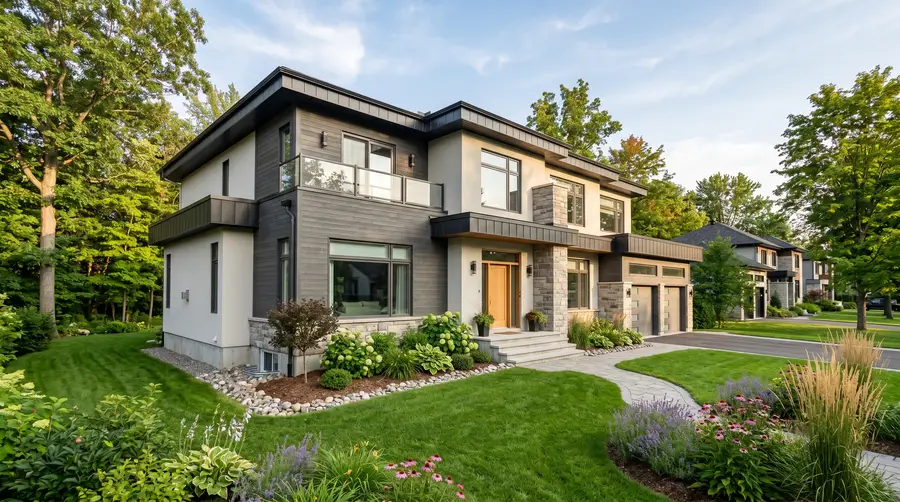
An architect thinks first in terms of envelope and structure. This is the person who knows which walls are load-bearing, how to reorganize a roof framing, what foundations support what, and how to navigate the building code and municipal regulations.
You need one when the project touches the envelope or the structural core of the house: additions, second-storey extensions, opening a load-bearing wall, turning a flat ceiling into a cathedral, putting in a major skylight. Simple rule in Quebec: if the municipality requires stamped drawings for the renovation permit, you need either an architect or an architectural technologist, and the architect's signature opens every door.
Architects are expensive on a per-square-foot basis, sometimes 8 to 15 percent of total project cost for full service, but on complex transformations they're the ones who anticipate problems before they explode mid-job. They also tend to surface solutions neither the homeowner nor the contractor would have found alone.

The Interior Designer: Layout, Atmosphere, Finishes
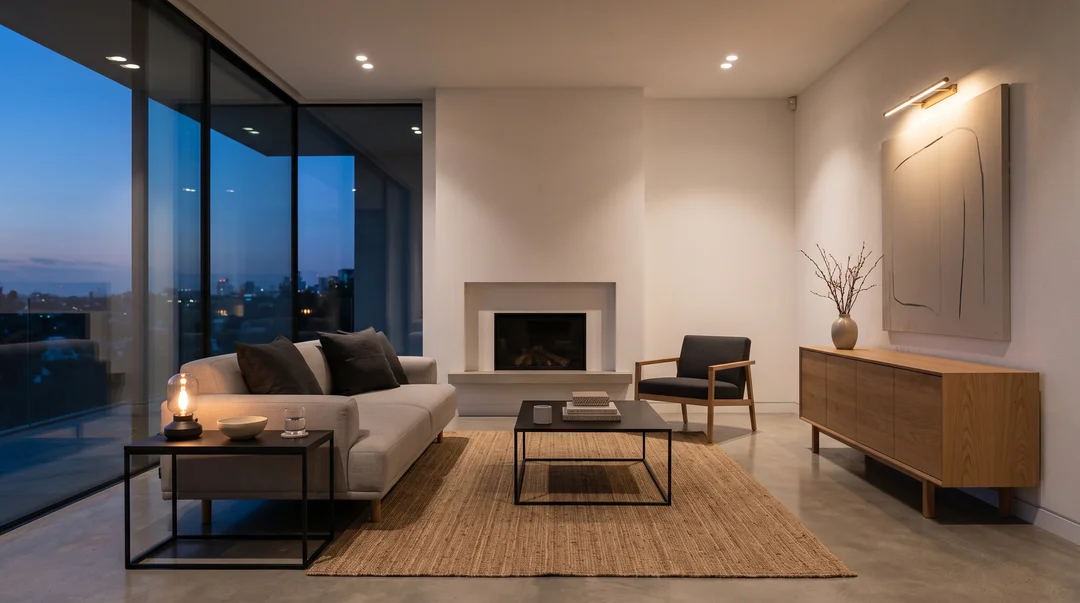
The interior designer (often confused with a decorator) doesn't touch structure. Their lane is everything you see and live with inside: flow, ergonomics, material choices, lighting, colour palette, furniture, overall harmony.
They become useful as soon as a project affects living spaces without necessarily demolishing them. Redoing a kitchen, rethinking a living room, harmonizing rooms that were never thought of together, choosing finishes that don't fight each other. Couples renovating together often hire a designer purely to have an outside arbiter on visual decisions. That's a real function in itself.
In Quebec, most designers bill hourly (typically $100 to $175 per hour) rather than as a percentage. For a kitchen or bathroom, a tightly scoped 10-hour engagement often covers what's needed: a plan, material specifications, and intervention at the critical decision moments.
The General Contractor: Execution and Coordination
A good general contractor isn't a designer. Their value is taking an existing plan or design, pricing it correctly, lining up subtrades (electrician, plumber, and so on), holding the schedule, and delivering a clean build.
For simple projects (a bathroom that stays in place, a basement finish without structural change, paint and floors), the contractor alone is often enough. For more complex projects, they should receive a clear mandate (drawings and specifications) rather than being forced to improvise design alongside execution. Contractors won't turn down "do it all" jobs, but many will admit privately that quality goes up a notch when they receive a structured plan.
In Quebec, any home renovator doing residential work over $25,000 must hold a Régie du bâtiment du Québec (RBQ) licence. Checking the licence and insurance coverage before signing prevents most known problems.

The Sequence That Works
Most projects that go smoothly follow roughly the same order.
First, the architect if there are structural, permit, or envelope questions. They define what's possible and the general shape of the project.
Then, the interior designer enters once the volumes are settled. They decide how those volumes get inhabited day-to-day and lock in the finish and material choices.
Finally, the contractor receives a complete file (stamped drawings, design specifications, ideal schedule) and prices the whole thing. At that point, bids become truly comparable, because everyone is pricing the same thing.
This sequence isn't dogma, and many smaller renovations skip the first two steps just fine. But on anything above $50,000 of investment, inverting the order almost always ends up costing more in surprises and revisions.
Frequently Asked Questions
What is the difference between an architect and an architectural technologist?
Both can produce stamped drawings accepted by Quebec municipalities, but their scopes differ. The architect, a member of the OAQ, has university training and can sign any type of residential or commercial building. The technologist, trained at the CEGEP level, is competent for residential projects up to a certain complexity threshold. For a single-family home, a technologist often suffices and costs less. For a complex addition or a multi-unit building, the architect is more appropriate.
What does an interior designer cost in Quebec?
Most charge hourly between $100 and $175, with an initial consultation flat fee sometimes set between $300 and $600. For a focused project (kitchen, bathroom, harmonizing a floor), 8 to 20 hours of service generally cover the work. A full-scope project with purchase management can run $5,000 to $15,000 depending on scale.
Do you really need an architect or designer for a simple renovation?
No. For a bathroom redone in place, a kitchen with no plan changes, or interior finishes, a good contractor alone is enough. The useful rule: if the project involves moving walls, modifying structure, or pulling a complex municipal permit, a design professional becomes nearly essential.
How do I check whether a contractor is legally allowed to do my work?
In Quebec, any contractor performing residential work totalling more than $25,000 must hold an active Régie du bâtiment du Québec (RBQ) licence. The licence number can be verified for free on rbq.gouv.qc.ca. Also ask for proof of liability insurance and CNESST clearance if the work will last more than a few days.
Ready to start your project?
Describe your work, choose how many quotes you want to receive, and compare qualified contractors near you. Free and no commitment.